If you want to control the texture of the milk yourself, a portafilter machine with a steam wand could be a good fit. Remember to allow space for making espresso, a possible separate grinder and handling the milk. For fewer steps, consider an automatic steam wand or a bean-to-cup machine with an integrated grinder and milk system, but take the overall footprint and cleaning into account. Sage describes a flat white as having a thinner microfoam layer than a latte or cappuccino – a drink name or programme alone doesn’t guarantee this texture.
Which preparation method suits you?
Buyers with limited worktop space
If you want to make espresso and milk in the same spot, you’ll need to allow room for the grinder, jug and space to operate the machine, as well as the machine itself. De’Longhi gives the Dedica Duo EC890.WI a width of 15 cm; this measurement doesn’t include the rest of your workspace.
Flat white enthusiasts
If you want to texture the milk yourself and take an active role in making your drink, a manual steam wand is a good match. De’Longhi describes the My LatteArt wand on the Dedica Duo as manual.
Busy everyday users
If you’d rather do less yourself when preparing the milk, consider an automatic steam wand or an integrated milk system. Remember to factor in cleaning after making milk-based drinks.
What should you look for when buying?
Portafilter machine with a manual steam wand
A good fit if: you want to prepare the espresso and milk yourself and have control over the texture.
Consider: grinding, tamping and texturing the milk are all part of the process. For a machine with a single heating element, Sage recommends making the espresso first, followed by the milk.
Portafilter machine with an automatic steam wand
A good fit if: you want to continue making espresso with a portafilter machine but automate the milk frothing.
Consider: automating the milk doesn’t replace making the espresso or caring for the parts that come into contact with milk.
Bean-to-cup machine with a grinder and milk system
A good fit if: you want as few separate preparation steps as possible and prefer to have the grinder and milk system in one machine.
Consider: allow room for filling and cleaning. A flat white programme isn’t independent proof of a particular microfoam texture.
| Buying priority |
What to look for |
Who it matters to |
| Space for your workflow |
Check the machine’s dimensions alongside the space needed for accessories, access to the tank and operation. An integrated grinder may change whether you need room for a separate appliance. |
If I need to do everything on one worktop, I need space for the machine, grinder and jug. This is the top priority for around 31% of consumers. |
| Fine-textured milk |
Check whether a manual steam wand or adjustable automatic milk texturing offers the level of control you’re looking for. |
If finely textured milk is important for my flat white, I want suitable settings rather than simply lots of foam. Milk texture is the top priority for around 25% of consumers. |
| Steps per drink |
Consider whether you want to prepare the espresso and milk yourself, automate just the frothing or choose an integrated drink option. |
If I want to take as few steps as possible in the morning, the process matters more to me than complete manual control. Ease of use is the top priority for around 25% of consumers. |
| Cleaning the milk system |
Check the care instructions for the exact model. Don’t assume the requirements for one milk system apply to other machines. |
If I regularly make milk-based drinks, I want to know which parts need cleaning afterwards. Cleaning and maintenance are the top priority for around 19% of consumers. |
Common misconceptions
-
Measuring only the machine’s width
Even with a slim machine, you’ll need space to make espresso and handle the milk. A separate grinder and a milk jug can take up extra room.
Measure the space needed for the whole process, including accessories, access to the tank and room to operate the machine.
-
Assuming a flat white programme guarantees a particular milk texture
The name of a drink alone doesn’t tell you whether the milk will have the fine, thin layer of foam you’re looking for.
Compare the milk system and its settings. Treat manufacturers’ claims as such, rather than as independent comparison tests.
-
Assuming automatic milk preparation is maintenance-free
Automatic systems still need looking after. Siemens requires the EQ.300 milk system to be cleaned after every use.
Read the care instructions for the exact model before buying and factor cleaning into your daily routine.
Key brands to consider
De’Longhi
According to De’Longhi, the Dedica Duo EC890.WI combines a 15 cm-wide body with a manual My LatteArt steam wand.
- Worth considering if you’re looking for a slim machine and want to texture the milk manually.
- The body width doesn’t include a possible separate grinder or the space needed to handle the milk.
Sage
Sage describes the Bambino as having a manual steam wand, while the Bambino Plus has an automatic wand with temperature and texture settings.
- The Bambino Plus is worth considering if you want to automate milk preparation but still make the espresso yourself.
- The automatic steam wand doesn’t take care of every step involved in using a portafilter machine; claims about foam quality come from the manufacturer.
Philips
Philips describes the EP3347/90 as having a grinder, a LatteGo milk system and a flat white drink option.
- Worth considering if integrated preparation and a specifically named flat white drink are important to you.
- Programme and cleaning information comes from the manufacturer and doesn’t prove a milk texture measured independently.
Gaggia
Gaggia describes the Classic E24 as a manual portafilter machine with a steam wand.
- Worth considering if you want to make both the espresso and milk yourself.
- The manufacturer’s description of the wand isn’t an independently verified guarantee of flat white quality or the space needed for the complete set-up.
Siemens
Siemens describes the EQ300 as frothing milk directly into the cup.
- Worth considering if you want to explore integrated milk preparation directly in the cup.
- The description doesn’t confirm a specific flat white programme. Siemens requires the EQ.300 milk system to be cleaned after every use.
Joybuy products for different preparation methods
These Joybuy products include bean-to-cup machines with integrated milk systems, as well as portafilter machines for manual or combined milk preparation.
 No image available
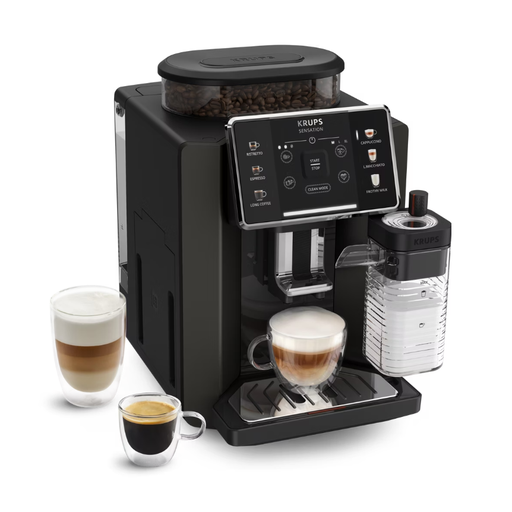
Krups Sensation Milk EA9129
A good fit if you want to use a grinder and milk system in one bean-to-cup machine.
The product description lists a removable milk container, adjustable milk and foam quantities, and six coffee or milk specialities. According to the description, only cold milk should be added to the container.
Joybuy
 No image available
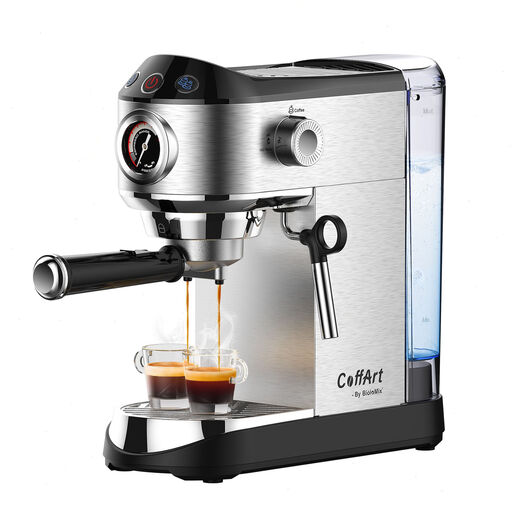
BioloMix 7008
A good fit if you want to make espresso yourself and texture the milk with a steam wand.
The product details list 20 bar, a removable 1,1 l water tank and the option to make one or two cups. The steam power is adjustable, according to the description.
Joybuy
 No image available
IAGREEA 20Bar Professional Espresso Machine
A good fit if you want to prepare the milk yourself with an adjustable steam wand.
The product name lists a pressure gauge, cup-warming tray, single and double shots, and a removable 1,1 l water tank. The product description notes its compact dimensions.
Joybuy
 No image available
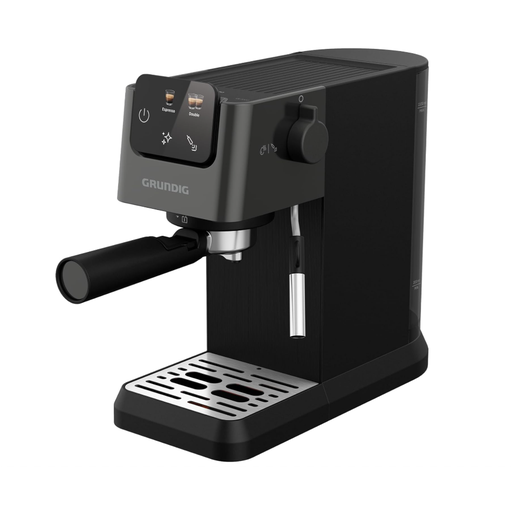
Grundig KSM 4330
A good fit if you want to make espresso from ground coffee and froth the milk with a steam wand.
The product description lists a width of around 14,5 cm, a removable water tank, a double spout and a drink-volume memory function. The stated power is 1.628 W.
Joybuy
 No image available
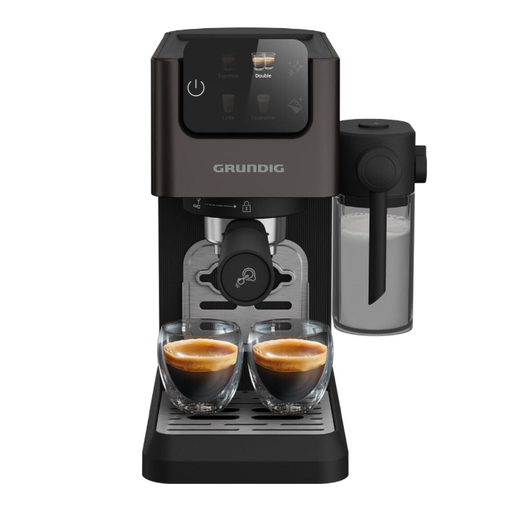
Grundig KSM 6430
A good fit if you want to make espresso with a portafilter and combine milk preparation in an integrated container.
The product description lists an integrated milk container, automatic frothing, a colour touchscreen and a double spout. The product name gives the power as 1.628 W and the pressure as 20 bar.
Joybuy
Frequently asked questions
In what order should I make espresso and milk with a machine that has a single heating element?
Sage recommends making the espresso first, then texturing the milk. Sage describes a flat white as having a thinner microfoam layer than a latte or cappuccino.
Do I need a dedicated programme for a flat white?
No, a dedicated programme isn’t essential. A flat white is made with espresso and suitably textured milk. A programme such as the one on the Philips EP3347/90 can save you a few steps, but on its own it doesn’t prove a particular foam texture has been independently tested.
What should I clean after making milk-based drinks?
Follow the instructions for your specific model. Siemens requires the EQ.300 milk system to be cleaned after every use and warns that some parts become hot; these instructions don’t automatically apply to other machines.
Who should I contact if there’s a fault?
For a consumer purchase from a business seller in the EU, you’re generally entitled to a minimum two-year legal guarantee from the date you receive the goods; contact the seller. The European Union’s Your Europe website notes that these rules don’t apply in the same way to purchases from private individuals. An additional manufacturer’s guarantee doesn’t replace your legal rights.
What should I check when buying an electrical appliance for use in Germany?
Check that the specific product on offer has an electrical configuration suitable for Germany and review its product labelling. The European Commission describes the Low Voltage Directive as applying to electrical equipment with an AC voltage between 50 and 1.000 V. CE marking is based on the manufacturer’s conformity assessment and declaration; it isn’t an independent quality mark.


