Which machine suits you?

Take control of the milk texture

If you want to pull the espresso yourself and froth the milk for your Flat White, allow time to practise and clean the machine after use. Sage describes the Bambino Plus as offering several settings for milk temperature and texture. With manual machines, you take care of the preparation yourself.

Organise a shared routine

If several people will use the machine, straightforward controls and a clear cleaning routine matter. Philips describes LatteGo as a two-part milk system with no tubes. For the EQ.6 plus, Siemens also highlights the need to clean the milk intake tube.

Make the most of limited worktop space

If you need to leave room on a shared worktop for accessories and preparation, consider the whole routine as well as the machine’s dimensions. De’Longhi publishes the dimensions of the Dedica Style EC685.M EX:4, while Philips and Siemens list the dimensions of their respective bean-to-cup machines.

What to look for when buying

Manual espresso machine with steam wand

A good fit if: You want to adjust the espresso and milk texture yourself, and everyone using the machine is willing to learn the routine and clean it.

The trade-off: Dosing, frothing the milk and cleaning are all done by hand.

Espresso machine with adjustable milk texturing

A good fit if: You want to make the espresso yourself but adjust the milk frothing using different settings.

The trade-off: Adjustable settings don’t remove the need to use the espresso machine or clean it afterwards. The description of the Bambino Plus’s milk texture comes from the manufacturer, Sage.

Bean-to-cup machine with a Flat White programme

A good fit if: Different people want to select a machine that explicitly lists Flat White as a drink. The Philips EP5447/90 and Siemens TE657503DE both include it in their drink menus.

The trade-off: Milk systems vary. With Siemens, cleaning includes the milk intake tube and regular manual care.

What matters What to check when buying Who is it particularly important to?
Milk texture and control Manual steam wand or adjustable milk texturing; alternatively, a programme that explicitly lists Flat White. If I want to adjust the espresso and milk myself, the preparation method matters. Around 31% of consumers prioritise control over milk texture and Flat White.
Milk system care at home Which parts need cleaning after each use, and what regular care the instructions recommend. If several people use the milk system, I want to know who will clean it after each drink and what that involves. Around 25% of consumers put an easy-to-organise milk cleaning routine first.
Space for the machine and accessories Width and depth, as well as space for accessories and room to operate the machine. The machine’s dimensions alone don’t account for the space needed to use it. If the worktop is shared, there must still be room for accessories and preparation alongside the machine. Around 25% of consumers prioritise the space required.
Ease of use The drink menu and operating process for the specific model; for Siemens, also check the extra steps involved in caring for the milk system. If different people use the same machine, everyone should be able to understand the drink selection. Around 19% of consumers make ease of use their top priority.

Common buying mistakes

  • Measuring only the width of the machine

    A slim machine doesn’t automatically take up little space in everyday use: you’ll also need room for accessories, a milk jug and the movements involved in making a drink. De’Longhi gives the Dedica Style EC685.M EX:4 a width of 149 mm, but that doesn’t account for the full workspace needed.

    Measure the space available and consider where you’ll keep the accessories you need and how you’ll operate the machine.

    You may need extra worktop space for preparing coffee, the milk jug and operating the machine.

  • Assuming automatic milk cleaning takes care of everything

    A cleaning programme doesn’t necessarily replace every care step. As well as a milk system programme, Siemens lists cleaning the milk intake tube and carrying out regular manual care for the EQ.6 plus.

    Read the care instructions for the specific model and agree with everyone using it who will take care of each task.

    Extra cleaning steps take time after you’ve made a drink.

  • Taking pump pressure or marketing claims as proof of a better Flat White

    A pump specification or the name of a milk system alone doesn’t prove that you’ll get your preferred milk texture or that the machine will suit everyday use in a shared kitchen.

    Compare the steam wand or drinks programme, the operating process and the cleaning routine. Treat claims about foam quality as manufacturer statements unless they’re backed by independent testing.

A guide to suitable brands

Sage

The Bambino Plus combines a manual espresso machine with a steam wand that the manufacturer says adjusts automatically.

  • Sage lists three milk temperature settings and three texture settings, which may help different users get the type of foam they prefer.
  • Users are responsible for making the espresso and cleaning the machine. The description of the foam quality comes from the manufacturer.

De’Longhi

The Dedica Style EC685.M EX:4 is a slim, manual espresso machine with an adjustable cappuccino system.

  • De’Longhi lists a width of 149 mm and says the model can make single or double espressos.
  • This model isn’t listed as having an automatic Flat White function, so you’ll need to combine the espresso and milk yourself.

Philips

The EP5447/90 bean-to-cup machine lists Flat White and combines a range of drinks with LatteGo and user profiles.

  • Philips describes LatteGo as a two-part milk system with no tubes.
  • The advertised cleaning time applies to the milk system, not to caring for the entire machine.

Siemens

According to the manufacturer, the EQ.6 plus s700 TE657503DE makes Flat White at the touch of a button and has a flexible cappuccinatore.

  • The model has a documented drinks menu and cleaning programme.
  • The milk intake tube and milk system need additional care. Siemens explains the necessary steps in its care instructions.

Gaggia

The Classic E24 is a manual alternative for anyone who wants to make the espresso and milk themselves.

  • Gaggia lists a stainless steel steam wand and filters for one or two cups.
  • That doesn’t mean it has an automatic Flat White function; descaling is done manually.

Joybuy products

This selection includes coffee and espresso machines with features for making milk drinks. Check whether your chosen drink is explicitly listed for the specific model, as the Flat White specifications vary between products. Also check the safety information for the specific product listing before you buy.
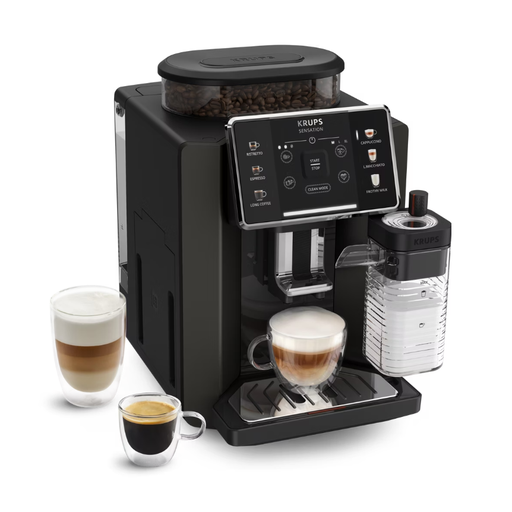
Krups Sensation Milk EA9129 bean-to-cup coffee machine, black

Krups Sensation Milk EA9129 bean-to-cup coffee machine

For people sharing the machine who want to select milk drinks using a touch control panel and remove the milk container for cleaning.

Six coffee and milk specialities and an adjustable milk quantity are listed. The milk container is removable and, according to the product description, dishwasher-safe.

Joybuy
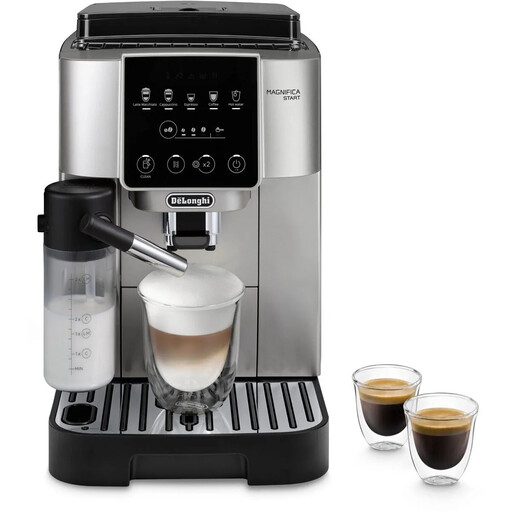
De’Longhi ECAM 220.80.SB Magnifica Start bean-to-cup coffee machine

De’Longhi ECAM 220.80.SB Magnifica Start

For anyone who wants to make espresso and selected milk drinks using one-touch buttons, without needing a separate grinder.

Features an integrated conical grinder with 13 settings and five one-touch drinks, including espresso, cappuccino and latte macchiato. The brew unit is removable.

Joybuy
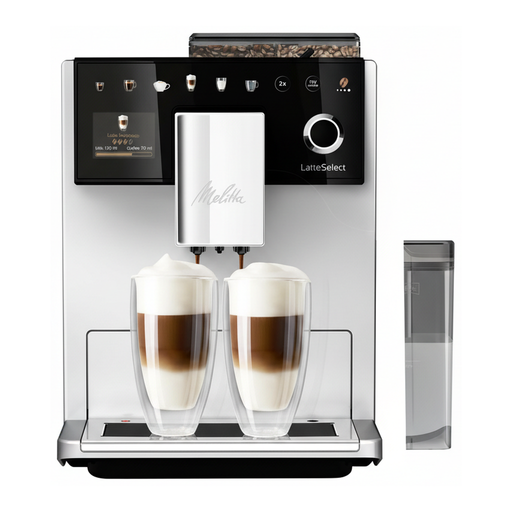
Melitta Latte Select Silver F630-212 bean-to-cup coffee machine

Melitta Latte Select Silver F630-212

For people sharing the machine who have different preferences and want to adjust drink settings and milk foam consistency.

The bean container holds 270 g and the water tank holds 1,8 l. The description lists adjustable drink settings and automatic grinding, brewing and milk frothing. Daily cleaning of the milk system and regular descaling are recommended.

Joybuy
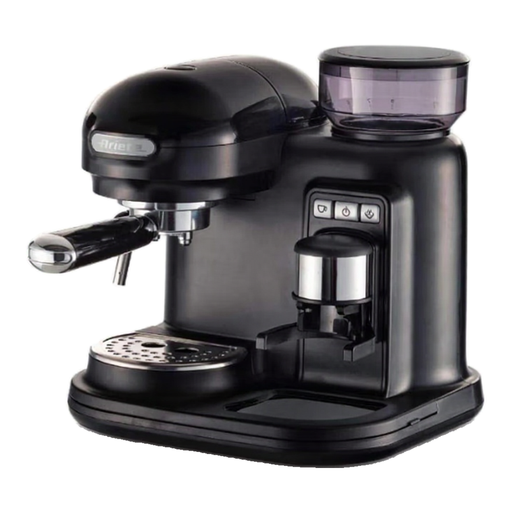
Ariete Espresso Machine Moderna 1318, white

Ariete Espresso Machine Moderna 1318

For households that want to make espresso for one or two cups and froth milk for cappuccino.

Features an integrated grinder, filters for one or two cups and a milk frother for cappuccino. The instructions recommend cleaning the grinder, brew unit and milk frother after use.

Joybuy
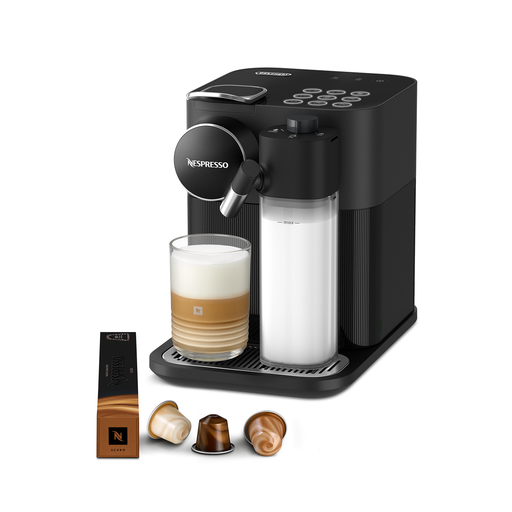
Nespresso De’Longhi Gran Lattissima EN640.B, black

Nespresso De’Longhi Gran Lattissima EN640.B

For anyone who wants to make a Flat White with a one-touch selection.

Flat White is listed as a drink. The model is designed for Nespresso Original capsules and has a milk rinse cycle for use after making milk drinks.

Joybuy

Frequently asked questions

Does a Flat White have to have its own button?

No. With a traditional espresso machine, you can make the espresso and textured milk yourself. A dedicated Flat White option is particularly useful when different people sharing the machine want to select the same drink without frothing the milk manually.

What needs cleaning after making a milk drink?

Follow the instructions for your specific machine and agree on who will take care of it. For the EQ.6 plus, Siemens specifically lists cleaning the milk intake tube and carrying out regular manual care, as well as using the milk system programme. Philips describes LatteGo as a two-part milk system with no tube.

Who should you contact if something goes wrong?

For consumer purchases, your statutory rights are generally against the seller. A manufacturer’s guarantee is separate and subject to its own terms. The Verbraucherzentrale explains the difference in its information dated 28 September 2026. It’s also worth agreeing at home how to organise maintenance and consumables.

What do CE marking and disposing of an old machine involve?

For mains-powered appliances covered by the EU Low Voltage Directive, with a rated voltage of 50 to 1.000 V AC, the relevant safety requirements must be met and the prescribed CE marking applied before the product is placed on the market in Germany. The European Commission and Your Europe explain that CE marking is a declaration by the manufacturer, not an independent quality mark. The marking alone therefore doesn’t confirm that a specific product listing has been tested. The German Federal Ministry for the Environment points out that old electrical appliances must not go in household rubbish. They must be taken to an authorised collection or return point.