Bakers with limited worktop space
As well as checking the appliance’s dimensions, make sure you can position it with the clearances specified in the instructions for that particular model.


When choosing a convection oven for flatbreads, start by checking the usable baking area and a safe place to position it, including the clearances specified in the instructions – not just its capacity in litres. A compact mini oven may suit smaller flatbreads; larger breads or baking tins call for a correspondingly bigger oven cavity and more room on your worktop. The option to select top and bottom heat, or a compatible pizza stone, gives you more ways to bake, but does not guarantee a particular result for flatbread.
As well as checking the appliance’s dimensions, make sure you can position it with the clearances specified in the instructions for that particular model.
If you want to choose between convection and top or bottom heat, or use a pizza stone, check the functions and accessory dimensions for each model.
Compare the size of your flatbreads with the usable area of the stone, tray and oven cavity. The capacity in litres alone won’t tell you whether your baking tin will fit.
First, measure the space available, including the required clearances. Then check that your flatbreads and baking surface will fit inside the oven. Heating functions and ease of cleaning are other factors to consider if they matter for the way you plan to use it.
| What matters | What to check before buying | Who is it important to? |
|---|---|---|
| Worktop space and safe positioning | Compare the external dimensions with your worktop and wall cupboards; allow for the clearances specified in the instructions for the model you’re considering. | When worktop space is limited, every centimetre counts – but the oven still needs to be positioned with the required clearances. Around 36% of consumers prioritise where the oven will sit. |
| Heating functions and baking surface | Check whether the oven has convection and separately selectable top and bottom heat, and whether a stone is included. | If you want to choose the type of heat and use a suitable stone, check the functions and stone dimensions together. Around 29% of consumers prioritise heating functions and the baking surface. |
| Suitable flatbread and tray size | Compare the diameter of your flatbreads and the dimensions of your tray with the stone, the maximum permitted baking tin size and the usable internal dimensions. | For larger flatbreads, it’s the usable area that matters, not the capacity in litres. Around 21% of consumers prioritise finding an oven that can accommodate the right bread size. |
| Energy use, cleaning and servicing | Check energy use for a comparable baking cycle; look for removable crumb trays and a repair service. | If you use the oven regularly, energy use, cleaning and servicing may all influence your decision. Around 14% of consumers prioritise running and maintenance. |
The external dimensions, internal dimensions and stone size each tell you something different. You also need to allow for the clearances required when positioning the oven.
Measure your flatbread and the space available, then compare both with the specifications and instructions for the model you’re considering.
Depending on the size of flatbread you want to make, you may need a suitably smaller tray or a different place to position the oven.
Russell Hobbs bases its claim about potential energy savings on 400 g of frozen chips compared with a conventional oven at 213 °C. This is not a comparison for flatbread.
Only compare energy use when the recipe, quantity and measurement method are the same and clearly explained.
Rommelsbacher advises that the safety clearances in the instructions for the specific model must be followed. Information about heat emission or other ovens is no substitute.
Follow the positioning instructions for your model, and don’t reduce the clearances to squeeze the appliance into a tight space.
For the TO 2068, the manufacturer specifies a 20-litre capacity, convection, selectable top and bottom heat, and a pizza stone with a diameter of 29 cm.
According to the manufacturer, the TO 26 SilverStyle is a freestanding 26-litre convection oven supplied with a pizza stone measuring 30 cm in diameter.
According to the manufacturer, the BG 1805/E has a 42-litre capacity and is designed for baking tins up to 31,5 cm in diameter.
According to the manufacturer, the KB 27 U.2 has a 20-litre capacity, continuous convection and separately selectable top and bottom heat.
According to the manufacturer, the Express Air Fry Mini Oven 26680-56 combines a 20-litre capacity with baking, grilling, toasting and air-frying programmes.
The Joybuy models below offer a range of appliance sizes and baking functions for small kitchens. For each one, check that your flatbreads and baking surface will fit, and that you have enough room to position the oven with the required clearances.
 No image available
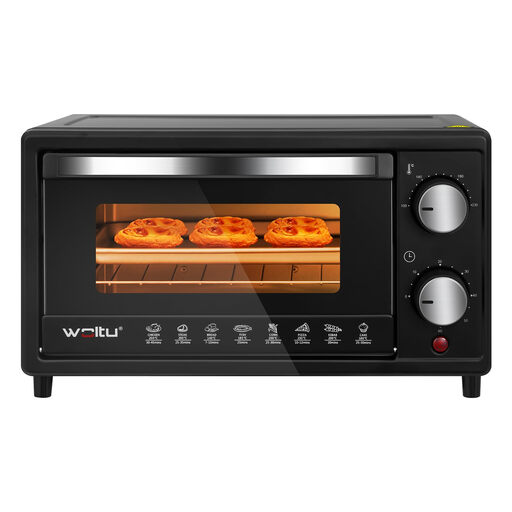
Its stated compact size may suit smaller batches, but remember to allow for the required clearances when checking the space available.
10 litres; temperature range 100–230 °C; 60-minute timer.
External dimensions: 37 × 26,5 × 21 cm. Top and bottom heat are listed.
 No image available
If your flatbread fits the stated pizza size, the listed heating modes give you another option to consider.
28 litres; specified as suitable for a 26 cm pizza.
Three heating modes: top heat, bottom heat and combined heating modes.
 No image available
The larger capacity may offer more baking space; check first that the oven will fit in your kitchen with the required clearances.
32 litres; 1600 W; temperature range 100–250 °C; 60-minute timer.
External dimensions: 52,3 × 36 × 32,2 cm. A removable crumb tray is listed.
 No image available
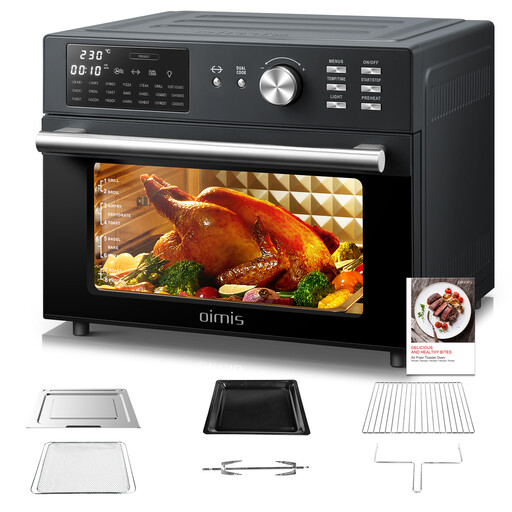
This model lists convection and a baking programme; check its dimensions against your available space and the required clearances.
30 litres; fits a 13-inch pizza; 21 presets.
External dimensions: 456 × 430 × 365 mm. 360° convection and a baking function are listed.
It depends on the usable area and the shape of your flatbread. The pizza stone supplied with the Severin TO 2068 has a diameter of 29 cm. Also compare the size of your shaped flatbread with the dimensions of the tray and oven cavity.
Only if the instructions for that particular appliance allow it and all the specified clearances are observed. Rommelsbacher explicitly warns against installing freestanding mini ovens for one of its models; the related guidance does not apply to other models.
Follow the instructions for the model you own. The Severin TO 2068 manual says to unplug the oven and let it cool before cleaning; it also says not to immerse the appliance in liquid. The Rommelsbacher BG 1805/E is listed as having a removable crumb tray.
Not necessarily. The European Commission excludes small and portable ovens from the scope of the relevant energy labelling rules for ovens. So the energy label rating of a large built-in oven is not directly comparable with a mini oven.
For a consumer purchase from a business seller, the seller is generally liable for defects under the statutory guarantee for at least two years. Your Europe, the European Union’s information portal, distinguishes these statutory rights from any additional manufacturer’s guarantee; check the terms of the latter separately.