Which setup is right for you?

Glider pilots with limited desk space

If you need to fit your stick, keyboard and mouse side by side, a single stick can make your setup simpler. Aerofly FS supports several input devices at once; with other simulators, check whether additional devices such as pedals can be used alongside your stick.

Glider pilots focused on the landing approach

If you want precise control of the airbrakes, compare the levers, axes and buttons available on the stick with the assignment options in your simulator. Aerofly FS lists airbrakes among its key control assignments.

Glider pilots who want pedals

If you want to operate the rudder separately with your feet, make room under your desk as well as for the stick. A twist grip on the stick works differently from separate pedals.

What should you look for when buying?

Single stick with twist grip

Best if: you want to start with one device on your desk and assign pitch, roll and rudder controls.

The trade-off: A twist grip is not a substitute for separate pedals; whether a basic control can be used for the airbrakes depends on the available assignments.

Stick with extra levers or axes

Best if: you want to control the airbrakes or other gliding functions using a separate analogue input on the stick.

The trade-off: You’ll need to configure the extra inputs in your simulator, and they’ll still take up desk space.

Stick with separate rudder pedals

Best if: you want to operate the rudder independently with your feet and have room under your desk.

The trade-off: Pedals are an extra device. Aerofly FS supports multiple input devices at once, but you’ll need to check support separately for other simulators.

Buying priority What to check Who is it important to?
Desk space and number of devices Allow for the available space, the device base, and easy access to buttons and levers. If I need to fit my stick, keyboard and mouse into a small space, a simple setup matters more to me than extra controls. This is the top priority for around 36% of consumers.
Precise control Check the axis type, calibration, dead zone and sensitivity; also look for adjustable spring tension or damping if needed. If you prioritise fine control of the elevator and ailerons when gliding, look for suitable axes and adjustment options. Around 29% of consumers put this kind of precise control first.
Airbrake control Check whether you can assign the function to an axis, lever or buttons in your simulator. If I want easy access to the airbrakes, I compare the available inputs with the assignments in my simulator. Direct airbrake control is the top priority for around 21% of consumers.
Rudder control Check the twist axis and whether it can be locked; if you’re considering pedals, also check simulator support and the space under your desk. If you want to operate the rudder separately with your feet, you’ll need to make room for pedals as well as your stick. Independent rudder control is the top priority for around 14% of consumers.

Common mistakes when choosing

  • Buying a separate throttle just because it’s a flight simulator

    For gliding, start by focusing on the controls you actually need. An extra throttle isn’t automatically necessary just because a device is designed for flight simulation.

    Before choosing, decide which functions you want to assign and check whether a single stick will do the job.

  • Assuming that several levers automatically mean airbrake control

    Built-in levers give you extra inputs, but you’ll need to assign one to the airbrakes function in your simulator.

    Check the available assignments in your software and test the direction of movement once everything is set up.

  • Treating a twist grip and pedals as interchangeable

    A twist grip lets you control the rudder on the stick, while pedals give you separate foot control. Aerofly FS also describes automatic rudder control in the air when no rudder axis is assigned; this does not necessarily apply to other simulators.

    Decide whether you want to control the rudder by hand on the stick or separately with your feet, then check that your simulator supports the option you prefer.

Key brands at a glance

Thrustmaster

The T.16000M FCS is a desktop stick option for a single-device setup.

  • Thrustmaster lists a grip that can be adapted for either hand, a twist axis and 16 action buttons.
  • The manufacturer’s specifications are not an independent comparison of how the controls feel. Check whether you can assign the airbrakes function in your simulator.

Logitech G

The Extreme 3D Pro is a one-handed desktop stick with a twist grip and buttons.

  • Logitech G lists 12 programmable buttons, an eight-way hat switch and a weighted base.
  • These specifications don’t tell you how much desk space you’ll need or whether every function you want is supported by your simulator.

VKB

The Gladiator NXT EVO Space Combat Edition is aimed at buyers looking for an adjustable stick mechanism and multiple inputs.

  • VKB lists a desktop base, contactless X- and Y-axis sensors and adjustable damping.
  • Features and handedness vary depending on the grip you choose, so check the exact version before buying.

Turtle Beach

The VelocityOne Flightstick combines a stick with two integrated multi-purpose levers.

  • Turtle Beach lists two levers and 27 programmable buttons. The manufacturer lists Windows 10/11 and Xbox as compatible platforms.
  • You’ll need to configure and test the levers to check that they work as intended in your gliding simulator. For PC use, Turtle Beach describes a dedicated input mode.

Flight sticks at Joybuy

This selection includes a single stick with a twist grip and a stick-and-throttle system for desk-based gliding. Before you buy, compare the dimensions with your available space and check the assignments in your simulator.
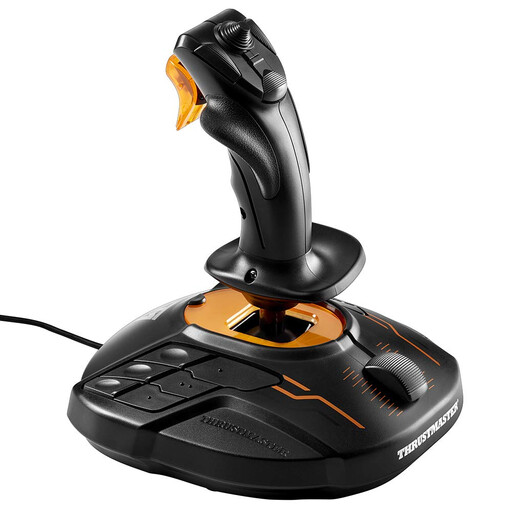
Thrustmaster T-16000M FCS Joystick

Thrustmaster T-16000M FCS Joystick

This single stick is worth considering if you want to keep your controls together on one device to begin with.

The product description lists 16 action buttons, a throttle control, an eight-way PoV switch and a twist grip. Stated dimensions: 20,8 × 19,8 × 24 cm.

View at Joybuy
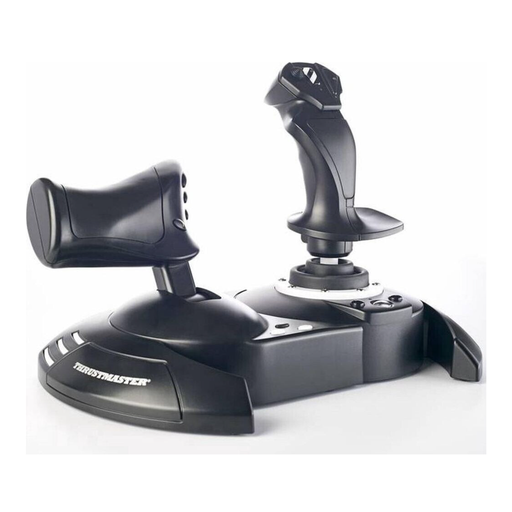
Thrustmaster T.Flight Hotas One

Thrustmaster T.Flight Hotas One

This combined stick-and-throttle system is an option if you want to use both controls together.

According to the product description, the throttle can be attached to the stick; compatible platforms listed are Windows PC and Xbox. Stated dimensions: approx. 26,5 × 26,4 × 24,2 cm.

View at Joybuy

Frequently asked questions

Do I absolutely need rudder pedals to get started?

No, not necessarily. Aerofly FS describes automatic rudder control in the air when no rudder axis is assigned. If you want to operate the rudder independently from the stick with your feet, check the pedals and their support in your simulator; the information about Aerofly FS does not necessarily apply to other software.

How do I set up the airbrakes and axes?

In Aerofly FS, you’ll find airbrakes among the key control assignments. You can also check calibration, dead zone and sensitivity in the input devices menu. Assign the function you want and check the direction of movement; for other software, refer to its own control instructions.

What should I check if the VelocityOne Flightstick doesn’t respond as expected on a Windows PC?

Turtle Beach notes that the stick is set to Xbox input mode by default. For Windows 10/11, the manufacturer explains how to switch to PC mode using the configuration dial. Then check the axis profile and assignments in your simulator.

What rights do I have if a flight stick bought online is faulty?

According to information from Your Europe, the European Union’s portal, purchases from a business seller are generally covered by statutory consumer rights: if the product has a qualifying fault, the seller must repair or replace it free of charge. The minimum period is two years from the date you receive the goods. This is separate from any voluntary manufacturer’s guarantee.

Can I return a flight stick bought online if it doesn’t fit on my desk?

For a distance contract with a business seller in Germany, you generally have a 14-day right to withdraw from the contract, starting from delivery. According to information from Your Europe, you may have to pay the return costs; exceptions apply. The right to withdraw is separate from your rights if the product is faulty.