Taxiing practice with a focus on braking
You want to operate the left and right brakes separately when taxiing virtually. So check whether you’d prefer to assign the brakes to buttons or use pedals with separate toe brakes.


For virtual taxiing practice, a flight stick with an assignable yaw axis and an easy-to-reach throttle is one possible starting point, provided your simulator supports these inputs for the aircraft you’ve chosen. If you want to operate the left and right brakes separately with your feet, you’ll need separate inputs, such as pedals with toe-brake axes. Check how they’re assigned and how they work in your particular simulator, too.
You want to operate the left and right brakes separately when taxiing virtually. So check whether you’d prefer to assign the brakes to buttons or use pedals with separate toe brakes.
You want to start by controlling the rudder with the stick’s twist and the throttle with an easy-to-reach lever, before adding more devices.
You can leave your equipment set up in your games room and want to weigh up a separate throttle or extra pedals against the space and effort needed to set them up.
Start by deciding which inputs you actually need for your taxiing practice, then check that they can be assigned in your simulator and for your aircraft. Microsoft Flight Simulator notes that the right peripherals also depend on the type of aircraft you prefer.
A good fit if: you want to control the rudder and throttle with just a few devices.
What to consider: A twist axis is no substitute for separate left and right toe brakes.
A good fit if: you want to operate the stick and throttle with different hands and position them separately.
What to consider: The extra lever takes up space and doesn’t provide separate toe-brake axes.
A good fit if: you want to control the rudder and operate the left and right brakes separately with your feet.
What to consider: Pedals need floor space and must be assigned correctly in your simulator.
| Priority | What to check before buying | Who is this important to? |
|---|---|---|
| Rudder and ground steering | Check for a twist or pedal axis, and how it can be assigned in your particular simulator and aircraft. | If my main priority when taxiing is controlling direction, I need a rudder or yaw axis that I can assign as required. Around 36% of shoppers focus on steering. |
| Separate braking | Look for two separate brake axes and test how they’re assigned in the simulator. | If I want to practise using the left and right brakes separately, the inputs must be available independently. Around 29% of shoppers focus on braking. |
| Throttle control | Check whether the model has an integrated throttle or a separate or detachable lever, and how it can be assigned. | If I want to keep the throttle within easy reach when taxiing, I’ll compare integrated throttles with ones I can position separately. Around 21% of shoppers focus on throttle control. |
| Setup and compatibility | Check the platform, simulator version, preferred aircraft type and available space. | If I’m setting up a permanent cockpit, the equipment and control assignments need to suit my space and platform. Around 14% of shoppers focus on their setup. |
A documented twist axis is used to control the rudder. It doesn’t mean that two separate foot-brake axes are included.
If you want to practise braking separately on the left and right, check specifically for both brake axes and how they can be assigned. You may need suitable additional pedals.
Microsoft Flight Simulator’s developer documentation describes aircraft-specific settings for differential brakes and toe brakes.
Test the input with the specific aircraft you want to use for taxiing practice.
heise online / TechStage published its top-seven list on 20 February 2023. Its rankings don’t confirm current availability or provide an up-to-date comparison of performance or buying terms.
Use the list to explore different models and designs, then check the latest product description and the inputs you need before buying.
The product ranges mentioned include standalone sticks, HOTAS sets and Airbus-inspired controls.
The products mentioned include HOTAS controls such as the X56, as well as Flight Sim Rudder Pedals, available separately.
The VelocityOne Flightstick is designed for users who want to bring together multiple cockpit controls and levers on a single stick base.
The options below include flight sticks with a twist axis or separate throttle, as well as two TCA SKY YOKE flight yokes. The Yoke models aren’t flight sticks and are only worth considering if you specifically want a yoke-style control for your setup.
 No image available
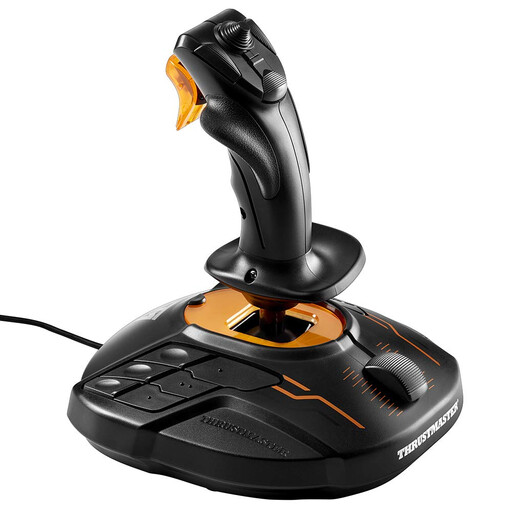
A possible option for a simple setup if you want to control the rudder and throttle from the stick.
Four axes, including a twist axis for rudder control, plus an integrated throttle. Check that your simulator can assign the axes as needed for your chosen aircraft.
 No image available
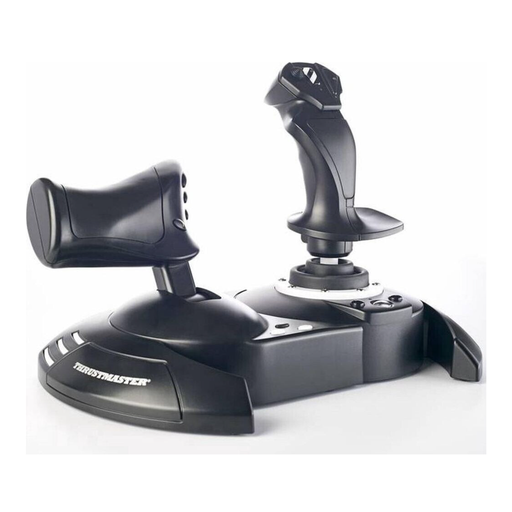
A possible option if you want to operate the stick and throttle separately, or position them apart in your games room.
The set includes a stick and detachable throttle. Twist grip or rocker control is described for rudder operation, but separate toe brakes aren’t confirmed.
 No image available
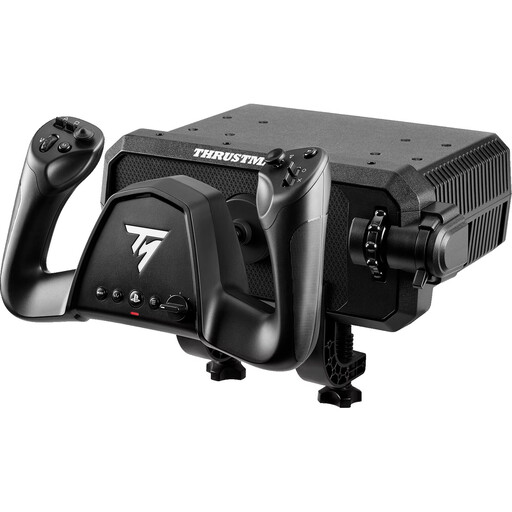
This yoke is only a good fit if you specifically want a yoke-style control rather than a flight stick for your setup.
The product name lists seven axes, 24 action buttons, 180-degree rotation and 16-bit resolution. Check compatibility with your platform and simulator version.
 No image available
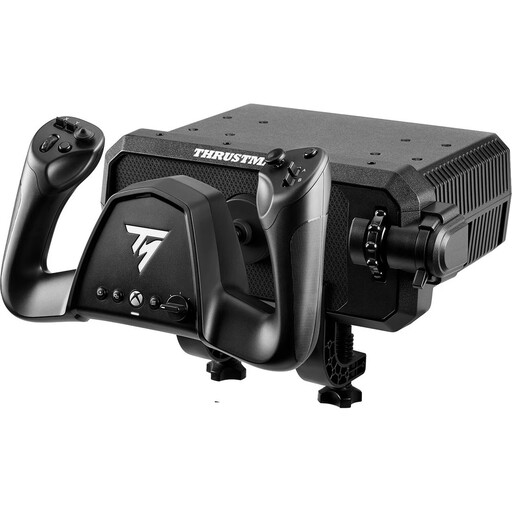
This model is worth considering if you specifically want a yoke rather than a flight stick for your setup.
The product name lists seven axes, 24 action buttons, 180-degree rotation and 16-bit resolution. A desk clamp is also mentioned in the product description. Check that the platform and simulator version match your setup.
First, assign the rudder axis in your simulator. If you’re using pedals with toe brakes, assign the left and right brake axes separately as well. Test the inputs in your chosen aircraft. The assignment guide described here is for MSFS 2020, so menus and presets may differ in other versions.
No, not just for virtual practice. If you want to replicate the controls of your preferred aircraft type, compare a stick with a yoke. The Microsoft Flight Simulator team says a yoke is a better match for aircraft such as a Cessna 172 or Boeing 787, while a stick suits other types of aircraft.
Before practising, check the axis assignments and their direction. If you’re using pedals, test the left and right brakes separately in the simulator. The MSFS 2020 guide also explains how to reverse an axis that’s working in the wrong direction.
When you buy as a consumer from a trader, you have statutory rights against the seller if the product is faulty. The European Union’s Your Europe website states that these rights apply for a minimum of two years from the date you receive the goods. An additional manufacturer’s guarantee doesn’t replace them.
For a qualifying distance contract with a trader, you generally have a 14-day right to cancel from the date of delivery. Whether you’ll have to pay return postage depends, among other things, on whether the seller covers the cost or properly informed you about it in advance. Check the terms of your specific contract.