
Lieferung heute & morgen

Qualitätsgarantie

Willkommens-Angebote freischalten: KOSTENLOSE Lieferung | Bis zu 80 % RABATT | Kostenlose 30-Tage-JoyPlus-Testphase
App herunterladen
A wall shelf can transform a room. It not only creates valuable storage space but also adds decorative accents. However, the selection is vast, and not every shelf lives up to its promise. Many buyers get frustrated with sagging boards, unsightly scratches after a short time, or a complicated assembly that leads to wobbly results. As your Joybuy Product Recommendation Officer, I'll help you avoid the common pitfalls and make an informed decision.
Before you decide on a model, you should be aware of the most common problems that often only become apparent after the purchase.
wall shelf with a wood look is not the same as a shelf made of solid wood. Inexpensive MDF (Medium-Density Fibreboard) can swell when exposed to moisture—a deal-breaker for use as a kitchen wall shelf or in the bathroom. The coating is also crucial, as it can scratch or peel off quickly.floating shelf can become a test of patience due to imprecise manufacturing or a poorly designed invisible mounting system. If the shelf is not perfectly level after installation or protrudes from the wall, the floating effect is lost.To avoid a bad purchase, focus on three essential features that determine quality and longevity.
The material determines not only the look but also the stability and intended use.
wooden wall shelf is ideal as a wall-mounted bookshelf because it can support heavy loads.white wall shelf with a matte lacquer finish is low-maintenance and modern.The specified maximum load capacity is an important benchmark. Check if it is sufficient for your needs. A shelf for light decorations requires less load capacity than a wall-mounted bookshelf. The mounting system is critical. A good hanging shelf comes with high-quality screws and wall plugs. For a floating shelf, a sturdy, concealed metal rail provides the necessary support and a flawless look. Before you buy, determine what type of wall you have (concrete, brick, drywall) and whether the included hardware is suitable for it.
Measure the available space accurately. Consider not only the width and depth of the shelf but also the height at which it will be mounted. A wall board that is too deep can be an obstruction in a walkway, while a shelf that is too small can look lost in a living room shelving setup. Think about what you want to place on the shelf. For books, a depth of at least 20 cm is recommended, while 10-15 cm is often sufficient for spices in the kitchen.
Here are some recommendations tailored to different needs and interior styles.
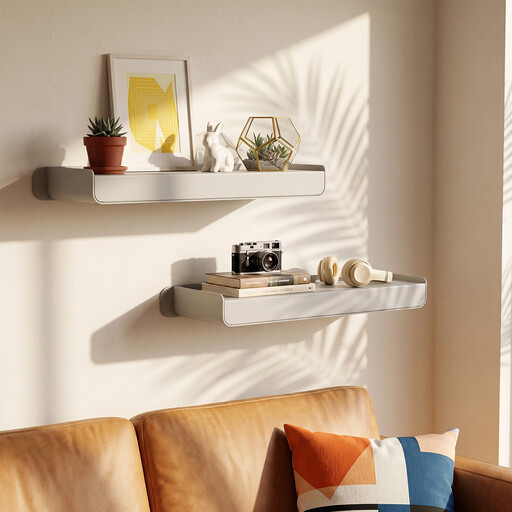
Why it's a great fit: Ideal for anyone seeking a clean, minimalist aesthetic without compromising on quality. The design won the German Design Award 2022 and integrates seamlessly into modern living concepts.
The robust aluminium construction is water-resistant and rust-proof. With a specified load capacity of up to 20 kg and a rubber pad to adapt to uneven walls, the risk of instability and material fatigue is minimised.
High-quality material (aluminium) and a high, reliable load capacity in an award-winning, minimalist design.
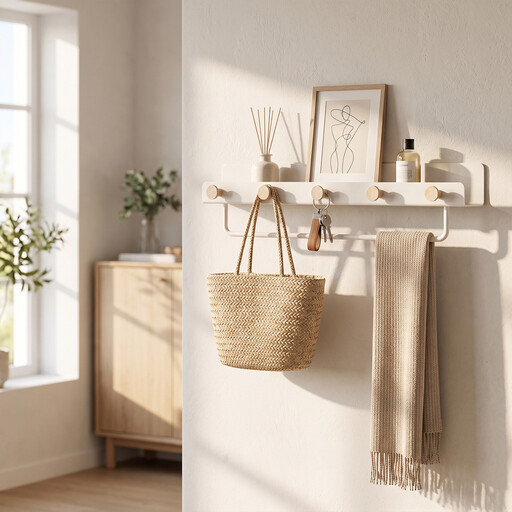
Why it's a great fit: Perfect for anyone who needs maximum functionality in a small space. This shelf is ideal for the entryway, bathroom, or kitchen to create order while decorating in style.
The combination of FSC-certified rubberwood and powder-coated steel offers a robust 3-in-1 solution. The high load capacity of 20 kg ensures that even jackets and bags are held securely without the shelf sagging.
Combines a shelf, hook rack, and towel bar in one product. The material combination is both durable and visually appealing.
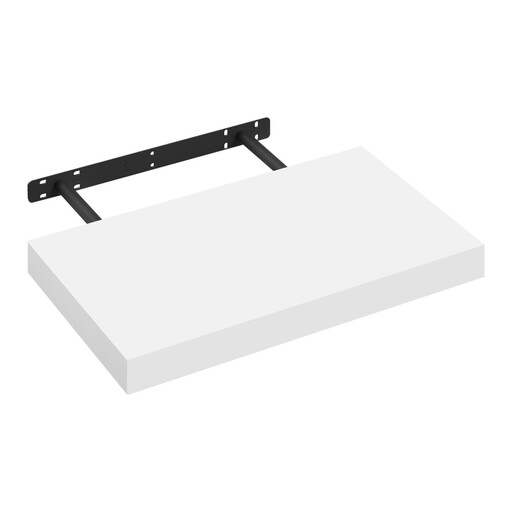
Why it's a great fit: A straightforward and reliable solution for anyone looking for a functional floating shelf without a high price tag. The classic white design matches almost any interior style.
This shelf uses E1 grade MDF and a moisture-resistant finish, making it more durable than no-name products. The clear specification of a 10 kg load capacity and the sturdy metal bracket ensure reliable mounting.
Solid value for money with transparent material and performance specs. The simple assembly and timeless design make it a practical choice.
We have compiled a complete, up-to-date list of products that fully meet these strict selection criteria and German safety regulations.
Standard wall plugs are unsuitable for drywall (plasterboard). Instead, use specialised hollow-wall anchors (e.g., toggle bolts or metal expansion anchors). These expand behind the plasterboard, distributing the weight over a larger area. Be sure not to exceed the maximum load capacity of the anchor.
Solid wood is a natural product made from grown timber. It is generally more stable, more durable, and can be sanded down and refinished if damaged. MDF (Medium-Density Fibreboard) is made from glued wood fibres. It is less expensive and more dimensionally stable, but it is more sensitive to moisture and can permanently sag if overloaded. With MDF, look for a high-quality, sealed surface.
The load capacity of a floating shelf depends on three factors: the stability of the shelf board itself, the quality of the concealed bracket, and the condition of the wall. Compact floating shelves made of MDF often support between 5 and 10 kg. High-quality models made of solid wood or with a robust metal construction can support 15 kg, 20 kg, or more. The crucial prerequisite is always proper installation on a load-bearing wall.