
Lieferung heute & morgen

Qualitätsgarantie

Willkommens-Angebote freischalten: KOSTENLOSE Lieferung | Bis zu 80 % RABATT | Kostenlose 30-Tage-JoyPlus-Testphase
App herunterladen
A floating shelf is an elegant, space-saving solution for making functional use of empty walls. Whether you're displaying books, decorative items, or need practical storage in the kitchen and bathroom, choosing the right one is crucial for both aesthetics and stability. Many people look for a wall-mounted shelf that is not only practical but also seamlessly integrates into their interior design.
This guide serves as an objective resource. It introduces various materials and designs, providing you with factual criteria to make an informed decision for your next wall shelf.
Before you choose a model, there are a few fundamental aspects to consider. Your wall type, the desired material, and the intended load are the most important factors.
The material determines not only the look of the shelf but also its durability and where it can be used.
The maximum load capacity is a manufacturer's specification that must be strictly followed. It depends on the shelf's construction and the included mounting hardware.
A hanging shelf is only as stable as its anchor to the wall. Before buying, check your wall type. Solid concrete or brick walls provide the most secure hold for heavy loads. For plasterboard (drywall), special hollow-wall anchors are required, and the maximum load capacity may be lower. Most products come with a standard mounting kit, but you may need to adapt it to your specific wall situation.
Here is a selection of shelves that stand out for their materials, design, and functionality.

Why it stands out: This shelf combines the warmth of FSC-certified solid rubberwood with the clean lines of aluminium alloy brackets. According to the manufacturer, the design has won the Muse Design Award and the French Design Award. The visible brackets provide extra protection against items falling off.
Pros:
Who is it for? Ideal for users looking for a sturdy yet stylish wallboard for the living room, office, or kitchen. It's perfect for storing books, plants, or collectibles and makes a deliberate statement with its mix of materials.
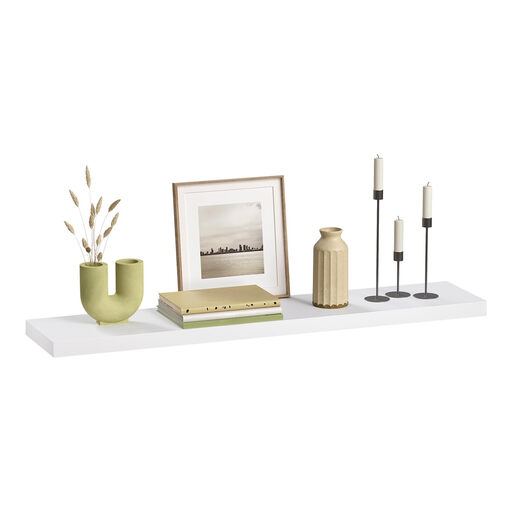
Why it stands out: This floating shelf is distinguished by its invisible mounting and clean, minimalist look. Made from an E1-grade MDF board with a matte finish, it appears to be an integral part of the wall. A key advantage is the wide range of available widths, from 25 cm to 120 cm.
Pros:
Who is it for? Perfect for minimalists looking for a discreet display surface for picture frames, decorations, or CDs. Thanks to its moisture-resistant surface, it can also be used in bathrooms or kitchens for lighter items.

Why it stands out: This shelf is made entirely from a robust aluminium alloy, making it extremely stable and durable. According to the manufacturer, it is waterproof and rustproof. A special feature is the rubber pad on the back, which protects the wall and compensates for minor unevenness. The manufacturer also states that the design was honoured with the German Design Award 2022.
Pros:
Who is it for? An excellent choice for high-demand areas, such as a kitchen wall shelf for spices and cookbooks or a bathroom shelf for toiletries. It appeals to users who prefer a durable, low-maintenance, and heavy-duty solution with a modern, high-tech look.
If the models featured here don't exactly match what you're looking for, especially if you need solutions for humid environments, you can find a wider selection in our bathroom furniture category. There, you can discover more designs, materials, and sizes specifically conceived for the demands of that space.
Discover more shelves for the bathroom wall.
A floating shelf's load capacity varies greatly depending on the shelf's material, the bracket design, and, most importantly, your wall type and the quality of the installation. Manufacturer specifications range from around 10 kg for lighter MDF shelves to 20 kg or more for solid models made of wood or metal. It is crucial not to exceed the stated maximum load capacity.
The "floating" appearance is achieved with a concealed mounting system. This involves securely screwing a metal rail with two or more rods to the wall. The shelf, which has corresponding holes on its back, is then simply slid onto these rods. This creates the impression that the wallboard is floating on the wall without any visible support.
For a bathroom shelf, it's crucial to choose materials that are resistant to high humidity and water splashes. A metal wall shelf, especially one made of aluminium or powder-coated steel, is an excellent choice as it does not rust. Plastics or specially sealed woods and MDF boards with a waterproof coating are also suitable for this environment. Untreated wood or particle boards not rated for humid conditions should be avoided.