
Lieferung heute & morgen

Qualitätsgarantie

Willkommens-Angebote freischalten: KOSTENLOSE Lieferung | Bis zu 80 % RABATT | Kostenlose 30-Tage-JoyPlus-Testphase
App herunterladen
A floating shelf seems like a simple solution for more storage and decoration. But behind the minimalist facade, pitfalls are often lurking, only becoming apparent after the purchase. Many buyers get frustrated with sagging boards, damaged walls, or an aesthetic that doesn't meet their expectations. Before you make a decision, it's crucial to know the most common traps.
A widespread issue is the concealed mounting, which looks elegant in product photos but often fails to provide the promised stability in practice. Especially with drywall, improper installation can quickly lead to wobbly shelves and unsightly holes. Another critical point is the material. Inexpensive particleboard can start to sag under load after just a few months or swell with moisture, making it unsuitable for kitchens or bathrooms. Furthermore, the load capacity ratings from manufacturers should be taken with a grain of salt, as they assume ideal wall conditions and perfect load distribution.
To find a durable and functional solution that suits your home, you should check three key parameters. These will help you objectively evaluate a product's quality and tailor it to your needs.
The material is a key determinant of your shelf's longevity and load-bearing capacity.
white shelf with such a finish fits seamlessly into modern living concepts.wooden shelf made from materials like rubberwood is often more durable and less prone to warping than cheaper engineered woods. Look for certifications like FSC, which verify sustainable forestry.The type of fastening is crucial for safety and stability.
wall bracket as a stylistic element, adding extra character to the wall board.Think carefully about what you want to place on the shelf. A deep bookshelf for the wall requires a more robust construction and fastening than a slim decorative shelf for picture frames or small plants. Measure the available space precisely and check if the shelf's proportions fit the room, whether it's a shelf for the living room or the hallway.
Instead of making a one-size-fits-all recommendation, we have identified products tailored to specific use cases and living situations.
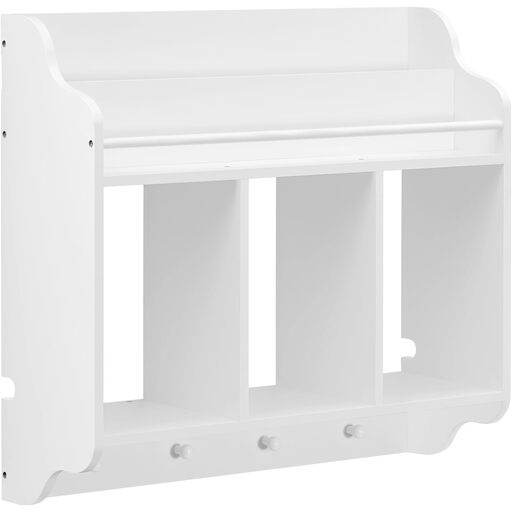
Why it's a great fit: This shelf is tailored to the needs of a child's room. It combines open storage for books and toys with practical hooks for bags or jackets.
The design with rounded corners minimizes the risk of injury. An additional rod on the top shelf prevents items from falling off—a thoughtful detail missing from simple floating shelves.
Multifunctional thanks to the combination of shelves and hooks. The material (E1 class MDF) is specified, and the lacquered surface is water-repellent and easy to clean.
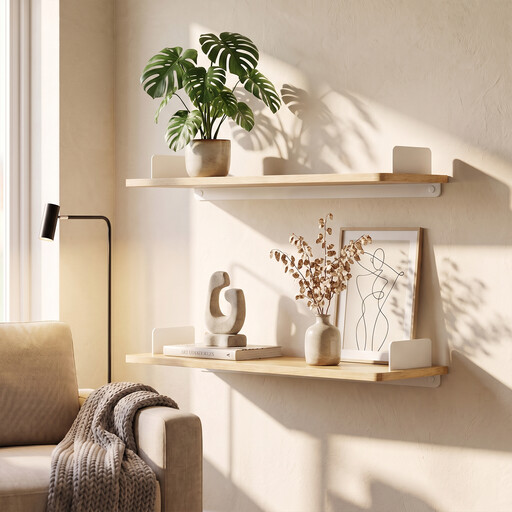
Why it's a great fit: Ideal for those who value aesthetics and high-quality materials. The combination of FSC-certified solid wood (rubberwood) and metal brackets creates a modern, premium look.
Instead of insecure concealed hardware, this shelf relies on visible, sturdy brackets made of aluminium alloy. The solid wood is more resistant to sagging than cheap particleboard.
According to the manufacturer, the design has won the Muse Design Award and the French Design Award. The load capacity is clearly specified at up to 20 kg (44 lbs).
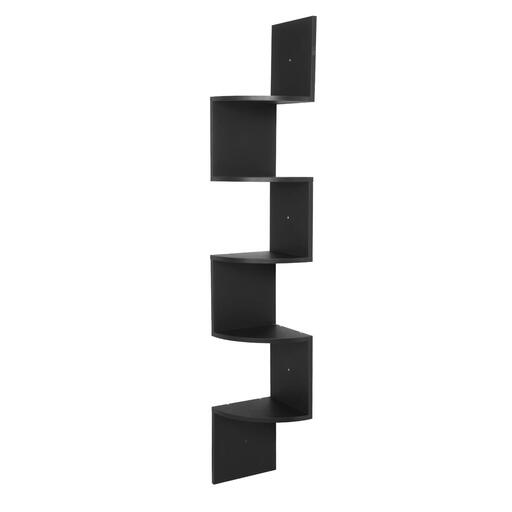
Why it's a great fit: This shelf utilises room corners that often remain empty, creating vertical storage space on five levels for books, CDs, or decorative objects.
The zigzag design provides inherent stability. The manufacturer explicitly states that the shelf is not suitable for drywall, thus preventing installation errors on unsuitable walls.
Maximum use of dead space in corners. The integrated, invisible hanging system ensures a clean look on solid walls without any visible brackets.
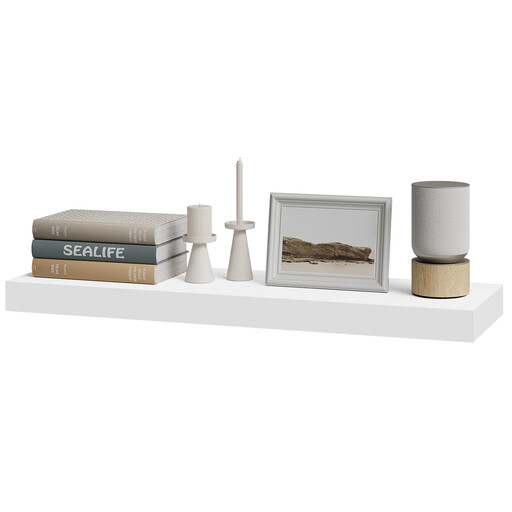
Why it's a great fit: This shelf combines a floating display surface with an integrated drawer. Perfect for an entryway to discreetly store keys and mail.
The drawer features a stop-lock mechanism to prevent it from falling out—a quality feature often missing in budget products. It is mounted using an included metal rail, which provides a more stable attachment than simple pins.
Combines an open decorative surface with closed storage. The simple, matte design blends unobtrusively into various interior styles.
We have compiled a complete, up-to-date list of products that fully meet these strict selection criteria and UK safety regulations.
The load capacity specified by the manufacturer is a guideline under ideal conditions. The actual capacity depends on three factors: the shelf material, the quality of the included hardware, and, most importantly, the condition of your wall. A solid concrete wall can support significantly more weight than drywall. Distribute the weight evenly and place heavy items as close to the wall and brackets as possible.
Yes, it is possible, but it requires special care. Use special hollow-wall anchors (e.g., toggle bolts or metal expansion anchors) that expand behind the board. However, the load capacity is considerably lower than on a solid wall. Always follow the shelf manufacturer's instructions; some models are explicitly not designed for installation on drywall.
Choose a material with high density and rigidity, such as solid wood or high-quality MDF, instead of simple particleboard. Never exceed the recommended maximum load capacity. Even weight distribution is also crucial. If you are installing a long shelf board, check if additional, centrally placed brackets can help provide stability.