
Lieferung heute & morgen

Qualitätsgarantie

Willkommens-Angebote freischalten: KOSTENLOSE Lieferung | Bis zu 80 % RABATT | Kostenlose 30-Tage-JoyPlus-Testphase
App herunterladen
The selection of floor cleaning appliances is vast, and manufacturers' advertising claims are often grandiose. However, not every device that promises high performance delivers satisfactory results in everyday use. False expectations, based on marketing buzzwords, frequently lead to disappointment and unnecessary expenses. This guide will help you identify the crucial features and make an informed decision for your needs.
Before diving into the different types of devices, it's helpful to know the typical marketing traps that often lead to a bad purchase.
To make the right choice, you should focus on objective, verifiable criteria that directly address your cleaning needs.
A high-quality filtration system is crucial to prevent fine dust, pollen, and other allergens from being released back into the room's air. Look for multi-stage systems, ideally with a HEPA filter (High-Efficiency Particulate Air). According to the standard, these filters are capable of capturing over 99.9% of particles as small as 0.3 micrometres. This is particularly important for allergy sufferers and households with children or pets to ensure a hygienic environment and clean indoor air.
No single device is perfect for every task. Choosing the right type is the key to efficiency:
In addition to the appliances, choosing the right cleaning agent for floor care is crucial to ensure the longevity of your floors. Special cleaners for parquet, laminate, or tiles contain conditioning agents that protect the material and prevent wear.
Here are some product recommendations tailored to specific user profiles that purposefully avoid the pitfalls mentioned.
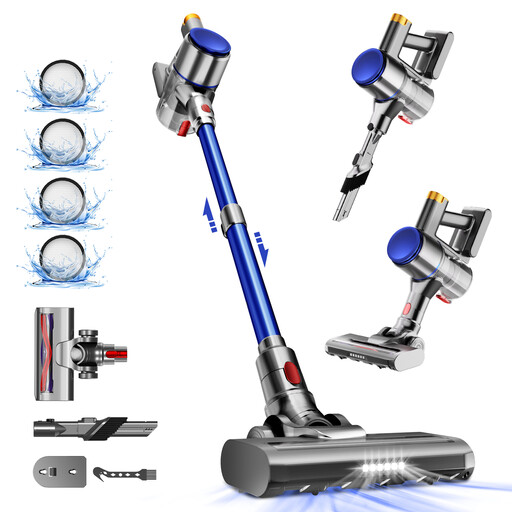
Why it's a good fit: With its high suction power and V-shaped brush, this cordless vacuum is well-suited for the daily removal of pet hair and dirt on various floor types. The large 1.6-litre dustbin reduces the frequency of emptying.
The manufacturer transparently specifies two suction levels with their corresponding runtimes (45,000 Pa for 20-30 min., 30,000 Pa for 30-50 min.). This avoids the trap of misleading battery claims and allows for realistic planning.
The 5-stage filtration system with a HEPA filter effectively captures fine particles. The package includes four replacement filters, which reduces follow-up costs.
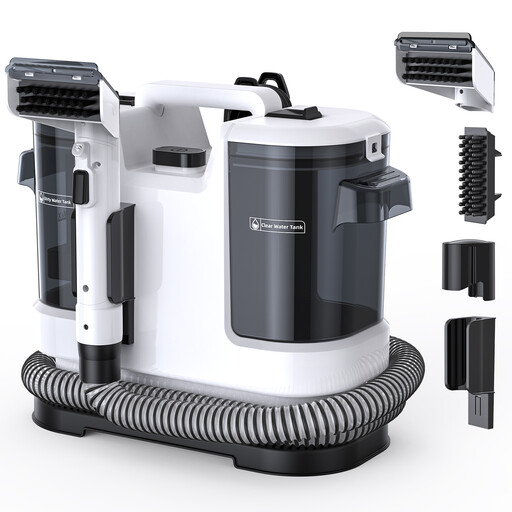
Why it's a good fit: As a specialised wet vacuum, this device is designed for targeted stain removal on carpets, sofas, and car upholstery. It's a practical solution for households where spills from drinks, food, or pets are a regular occurrence.
This device makes no compromises. It focuses on a single task—the wet cleaning of textiles—thus avoiding the trap of "all-in-one" devices that fail to excel in any single discipline.
The combination of water spray, brush rotation, and strong suction (13,500 Pa) allows for effective and deep stain removal. Separate tanks for clean and dirty water ensure hygienic operation.
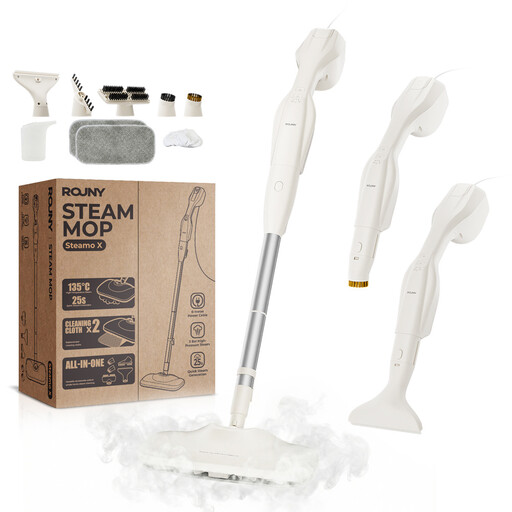
Why it's a good fit: For anyone who wants to avoid cleaning chemicals. The hot steam (up to 135°C) cleans and disinfects sealed hard floors, tiles, and grout. The 2-in-1 function makes it a flexible tool for floors, windows, and kitchen surfaces.
Instead of vague promises, the manufacturer provides concrete performance data: 25-second heat-up time, up to 135°C steam temperature, and 2.5–3 bar pressure. These figures indicate effective steam generation that goes beyond mere dampening.
The versatility of converting from a stick mop to a handheld unit is a practical benefit. With the 5 included attachments, various surfaces around the house can be cleaned without needing additional appliances.
We have compiled a complete, up-to-date list of products that fully meet these strict selection criteria and German safety regulations.
The replacement frequency depends on usage and the amount of dust in the household. As a general guideline, many manufacturers recommend cleaning washable filters every two weeks and replacing non-washable HEPA filters every 6 to 12 months. Some models, like the Daynee vacuum, provide more specific recommendations (clean every 2 weeks, replace every 2 months) to maintain suction power and filtration quality.
Yes, many modern robot vacuums are suitable for use on carpets. Models with automatic suction power adjustment increase performance as soon as they detect a carpet. For robot vacuum and mop combos, carpet detection with a mop-lifting feature is important, as seen in the Eureka E20 Plus, to prevent the carpet from getting wet. However, performance may be limited on high-pile carpets.
Caution is advised. Steam cleaners are primarily intended for sealed hard floors like tile, stone, or vinyl. On unsealed wood, waxed parquet, or poorly sealed laminate, the high moisture and heat can penetrate the joints and cause swelling damage. Always check the flooring manufacturer's instructions and test the device on an inconspicuous area before using it extensively. For sensitive floors, use special floor care products like Emsal Parquet Care or Poliboy Laminate Care.