
Lieferung heute & morgen

Qualitätsgarantie

Willkommens-Angebote freischalten: KOSTENLOSE Lieferung | Bis zu 80 % RABATT | Kostenlose 30-Tage-JoyPlus-Testphase
App herunterladen
A floor cleaner needs to do more than just lift dirt. It should suit your flooring type, the kind of soiling you’re dealing with, and how you intend to use it. Many purchases go wrong because a universal cleaner is broadly advertised as suitable for all surfaces. In reality, untreated wood, waxed floors, natural stone, and sensitive plastic surfaces may require special care instructions.
The most common buying mistakes:
First, look at the specific material approvals. A hard floor cleaner may be suitable for sealed wood, laminate, vinyl, PVC, linoleum, tiles, or stone, while oiled parquet or waxed wood may be excluded.
For everyday floor care, the following points are particularly relevant:
Testing a small, inconspicuous area reduces the risk of discolouration or unwanted residue.
A concentrated floor cleaner can be more economical for regular use than a ready-to-use spray. However, the prescribed amount is crucial. Examples from product information:
These amounts are not interchangeable. Use the dosing cap or a measuring jug, and skip the extra “just to be safe” splash. For laminate, parquet, and cork, make sure the mop head is well wrung out.
Scent is a personal preference, but it says little about material compatibility or cleaning performance. First, decide whether you need a streak-free floor cleaner, a care component, a degreaser, or a specific hygiene approach.
For larger floor areas, concentrates are usually best. Spray cleaners, on the other hand, are practical for spot cleaning on washable surfaces. Products with care or gloss components may be intended for certain water-resistant floors, but must not be used on explicitly excluded materials.
The following recommendations are categorised by application scenario and verifiable product information. The product labels and care instructions from your floor manufacturer remain the deciding factor.
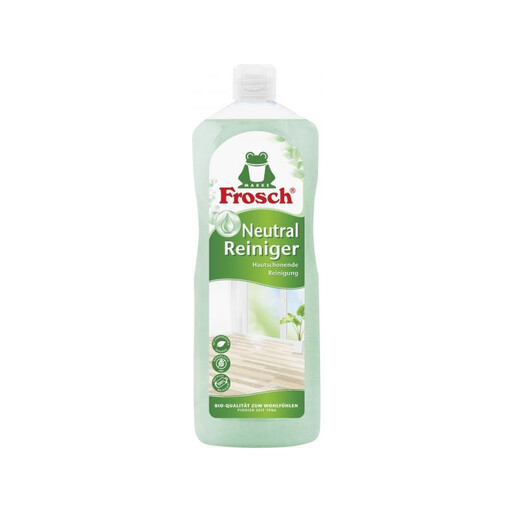
Why this product fits the profile: According to the product information, this 1-litre cleaner is pH-neutral and intended for floors, wood, as well as kitchen and bathroom surfaces. This makes selection easier for households with several washable areas.
The product information provides specific dosage and application instructions, and advises careful handling of sensitive surfaces.
1-litre bottle, pH-neutral product specification, and intended dilution for regular cleaning.
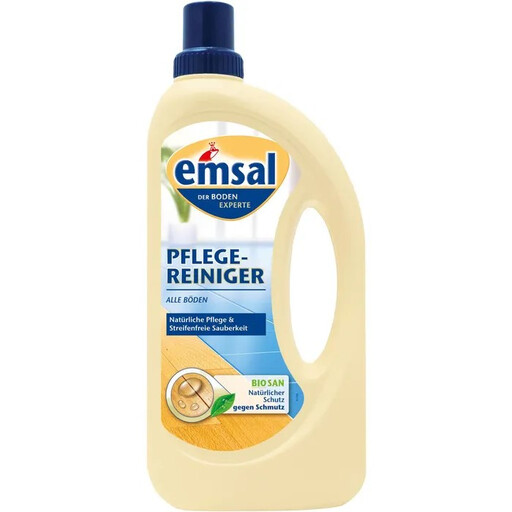
Why this product fits the profile: The product information lists sealed wood, cork, vinyl, PVC, linoleum, laminate, tiles, and natural and engineered stone as possible areas of use.
The extensive material list makes selection more transparent. For wood, laminate, and cork, sparing, damp mopping is explicitly recommended.
Concentrate with 1 litre content; according to the product information, intended for cleaning and caring for sealed hard floors.
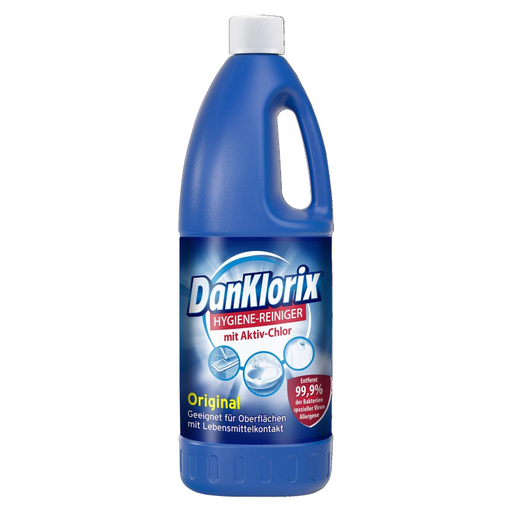
Why this product fits the profile: For households looking for a chlorine-based hygiene and household cleaner for selected washable areas, and who consistently follow the safety instructions.
The product information specifies dilution, dwell time, and clear hazard warnings. Never mix with other cleaners and store out of reach of children.
1.5-litre bottle and intended use on various household surfaces; contains sodium hypochlorite according to the product information.
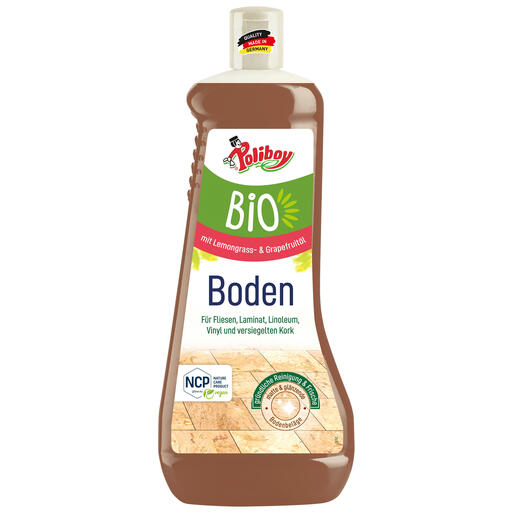
Why this product fits the profile: The product description mentions a vegan formula, natural active ingredients, and suitability for washable tiles, laminate, vinyl, and linoleum.
The material specifications limit use to washable floors, rather than broadly including untreated or oiled surfaces.
1-litre bottle, vegan product specification, and fragrance components from grapefruit and lemongrass according to the description.
We’ve put together a complete, regularly updated list of products that fully meet these strict selection criteria and the safety regulations in force in the EU.
A laminate cleaner should be approved for laminate according to the product information. Only mop with a damp cloth and avoid water pooling at joints and edges. Products for oiled or untreated wood are not automatically suitable for laminate.
The best-before date, batch number, or storage instructions on the packaging are decisive. Close the bottle after use, store it frost-free, and keep it away from children and pets. If you notice visible changes to the product, do not use it.
That depends on the price, dosage, and actual floor area. Don’t just compare the bottle price; compare the recommended amount per litre of mop water. Over-dosing increases consumption and can leave residue on the floor.