
Lieferung heute & morgen

Qualitätsgarantie

Willkommens-Angebote freischalten: KOSTENLOSE Lieferung | Bis zu 80 % RABATT | Kostenlose 30-Tage-JoyPlus-Testphase
App herunterladen
The right floor cleaner can significantly reduce the effort involved in cleaning. However, floor mops, wet and dry vacuum cleaners, vacuum mops and robot mops differ considerably in terms of operation, maintenance and suitability for different floor coverings. Focusing only on suction power, temperature specifications or app functions means overlooking important details.
With a wet and dry vacuum cleaner or vacuum mop, high suction power may initially sound convincing. In everyday use, however, brush design, edge cleaning and dirty-water collection are also important. A device may work well across large, open areas but be impractical along skirting boards or beneath low furniture.
When choosing a robot mop, you should also check whether it detects carpets and lifts its mop pads. A robot vacuum cleaner with a mopping function that does not reliably account for carpets may leave damp patches behind.
Parquet, laminate and sealed wood are sensitive to excessive water. When cleaning parquet and cleaning laminate, controllable moisture is therefore essential. A flat mop with a cover that can be wrung out effectively may be more suitable here than a device that distributes larger amounts of water across the floor.
Unsealed or untreated wooden floors should only be cleaned in accordance with the flooring manufacturer’s instructions. The product description alone does not replace checking the floor covering you have.
Brushes, filters, water tanks and mop pads require regular care. An anti-hair-wrap system is useful when dealing with pet hair, but it does not completely eliminate the need to clean the components. Automatic stations also need to be refilled, emptied and cleaned occasionally.
Pay attention to the floor types explicitly listed and whether the moisture level can be adjusted. For sensitive surfaces, a soft cover, controlled water release and quick floor drying are all relevant.
A classic flat mop with a spin mechanism allows you to use the cover at different moisture levels depending on the floor. For a hard-floor cleaner, the instructions should state whether it is intended for sealed wood, vinyl, tiles and laminate.
For cleaning floors beneath furniture, the actual clearance height matters more than a general advertising claim about manoeuvrability. Check the following:
A device with a 180-degree flat design can offer advantages beneath low furniture. With a robot, on the other hand, the height, obstacle detection and ability to cross door thresholds are crucial.
With cordless devices, the stated runtime should suit your living space. Actual usage time depends, among other things, on the cleaning mode, floor type and brush resistance. Stations with automatic emptying, mop cleaning and drying reduce the number of manual tasks, but require floor space and consumables.
With automated devices, you should also consider app connectivity, charging time, spare parts and filter costs. For smaller homes, a manual floor mop may be more economical and space-saving.
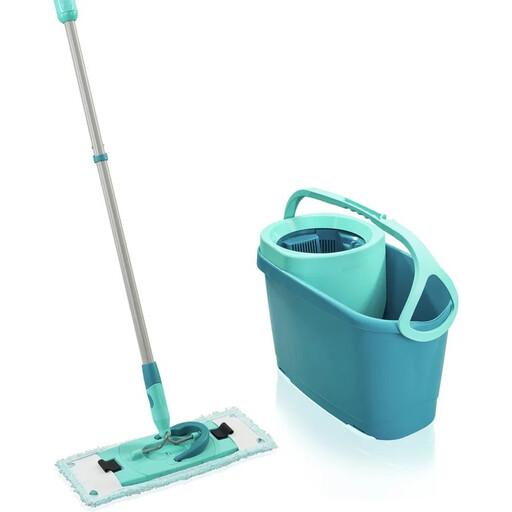
Why this product suits this profile: This set is ideal for households that want to clean without a battery, app or charging station. The cover can be spun dry while standing up, using the 6-litre bucket.
The Spin-Stop function helps provide controlled moisture. According to the product information, the soft polyester cover is suitable for parquet, laminate and solid wood.
Telescopic handle extending from 110 to 140 cm, 360-degree joint and foot pedal for releasing the floor plate.
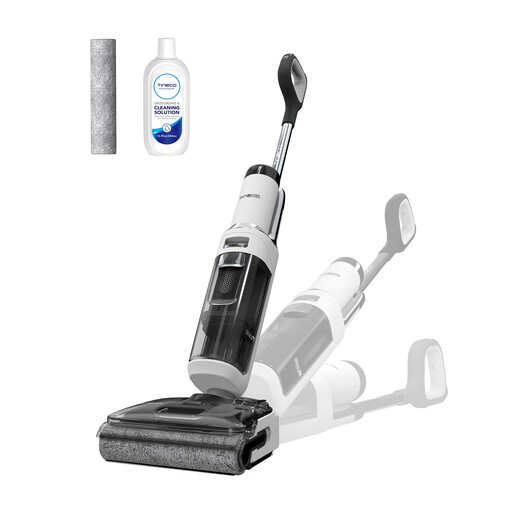
Why this product suits this profile: This cordless vacuum mop combines picking up dry dirt with mopping and, according to the product information, is suitable for hard floors, sealed wood, laminate and ceramic tiles.
The 180-degree flat design, with a stated clearance height of 13 cm, is designed for cleaning beneath lower furniture. According to the manufacturer, its suitability for rough surfaces is limited.
The stated features include up to 40 minutes of runtime, three-sided edge cleaning and self-cleaning at 70 °C with 5-minute FlashDry drying.
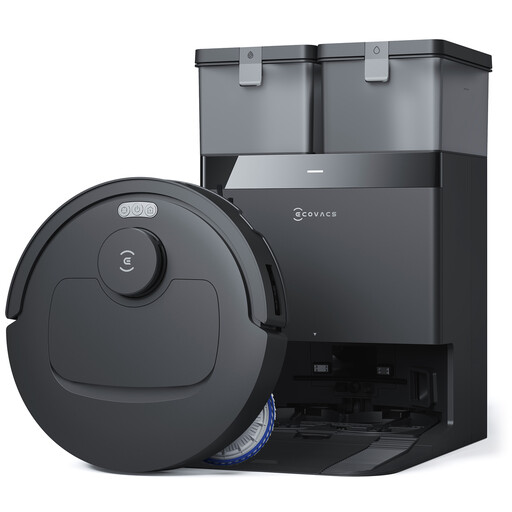
Why this product suits this profile: This robot mop is designed for households with larger floor areas, pets or limited time for daily floor care. It is controlled via the ECOVACS Home App.
According to the product information, the mop-lift function raises the mop pads on carpets. ZeroTangle 3.0 is designed to reduce hair tangling; brushes and filters still need to be maintained.
The stated features include up to 180 minutes of runtime, laser-based TrueMapping-2.0 navigation, automatic dust emptying and mop cleaning with 75 °C hot water.
Before mopping, remove loose items, cables and small obstacles. With a robot, a clear floor improves navigation and reduces the risk of hair or cables becoming caught in the brushes. The charging station needs a level, easily accessible position.
For sensitive floors:
A floor cleaner should not be used to collect flammable liquids, sharp objects or hazardous chemicals. Electrical stations must not come into contact with water; charging areas and contacts must remain dry.
We have put together a complete, regularly updated list of products that fully meet these strict selection criteria and the safety regulations applicable in the EU.
For laminate, economical, controllable moisture release is important. A flat mop with a cover that can be wrung out effectively, or a vacuum mop explicitly approved for laminate, may be suitable. Joints and edges should not be exposed to excess water.
Its service life depends on how often it is used, how well it is maintained, the availability of spare parts and how the brushes and batteries are handled. Regularly cleaning the filters, rollers and water tanks can help maintain performance. With battery-powered devices, the battery is a component that requires particular attention.
In addition to the purchase price, you may need to pay for cleaning products, replacement covers, filters, mop pads, dust bags and electricity. A manual floor mop usually has lower running costs, while a robot mop with a station offers greater convenience but may require additional consumables. Before buying, check which spare parts are available and the recommended maintenance intervals.