
Lieferung heute & morgen

Qualitätsgarantie

Willkommens-Angebote freischalten: KOSTENLOSE Lieferung | Bis zu 80 % RABATT | Kostenlose 30-Tage-JoyPlus-Testphase
App herunterladen
Choosing the right floor cleaning appliance can quickly become overwhelming. The market is flooded with a vast array of models – from cordless stick vacuums to fully automated robot vacuums with mopping functions. Manufacturers advertise impressive performance specs and innovative features. However, not every claim delivers on its promise. To make an informed decision, it's crucial to know the common pitfalls and understand which performance metrics truly matter.
This guide will help you cut through the noise. We'll highlight the critical points that often lead to buyer's remorse and explain what you should look for when making your selection.
Many purchasing decisions are based on marketing promises that don't always hold up in practice. Three aspects in particular frequently lead to disappointment:
To avoid a bad purchase, you should focus on objective and practical criteria. The following three parameters are crucial for the performance and longevity of a floor cleaning appliance.
Instead of relying solely on the Pascal value, you should consider the entire system. High suction power is only effective if it reaches the floorhead. A motorised brush roll is essential here, especially for carpets and picking up pet hair. It agitates and lifts deep-seated dirt and hair from the fibres, allowing the airflow to capture them. For devices like a wet-dry vacuum or a carpet cleaner, the water pressure and the ability to extract dirty water are also critical.
For cordless models, the battery capacity, specified in milliampere-hours (mAh), combined with the operating voltage (V), is a good indicator of endurance. Pay attention to the stated runtime in standard or turbo mode, as this most closely reflects real-world usage. For larger areas or intensive cleaning tasks, a corded device like a classic vacuum cleaner, a steam cleaner for floors, or a carpet cleaner machine can be the more reliable choice. A cord length of at least 5 metres provides sufficient flexibility.
A high-quality filtration system is crucial for trapping fine dust, pollen, and other allergens securely within the device. Look for a multi-stage filtration system, which typically consists of the following components:
A sealed system ensures that the filtered air does not escape through leaks in the device. This is especially important for allergy sufferers and is the difference between clean air and secondary pollution. Models like a mattress dust mite vacuum are based on this principle.
Based on the criteria above, we have compiled a selection of appliances suitable for various needs and households.
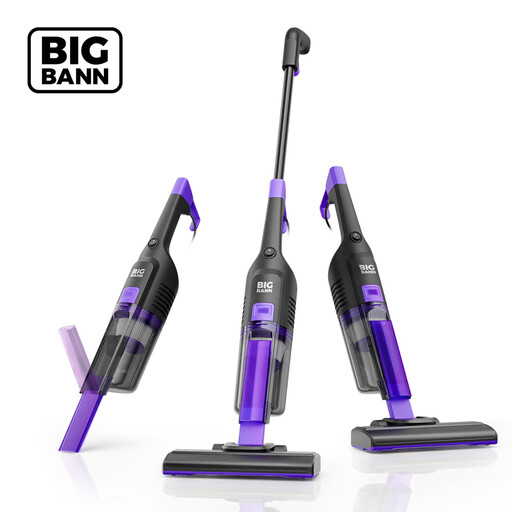
Why it's a good fit: Ideal for smaller apartments or as a secondary device. The lightweight, corded design provides consistent power without charging times. It's a straightforward and functional solution for daily cleaning of hard floors and small areas.
The corded design completely eliminates the problem of unrealistic battery runtimes. Power is consistently available as long as the device is plugged in.
3-in-1 Flexibility: Can be used as a stick, handheld, and floor vacuum. Lightweight: Easy to handle at approx. 1.2 kg. Upright Storage: Saves space in small apartments.
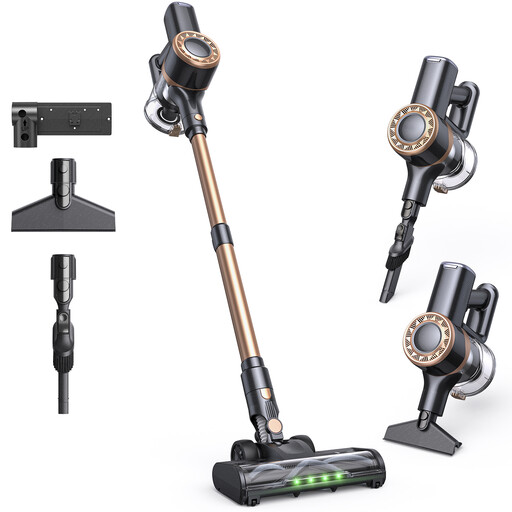
Why it's a good fit: Designed for the challenges of homes with pets. The combination of high suction power, an anti-tangle brush, and an advanced filtration system makes it an effective tool against pet hair and allergens.
The 5-stage, sealed filtration system prevents secondary pollution by securely trapping fine dust and allergens inside the device, releasing only clean air.
Anti-Tangle Brush: The V-shaped brush minimises tangling of long hair. Self-Standing Design: Can be parked upright without a wall mount. Green Light: Makes fine dust visible on hard floors.
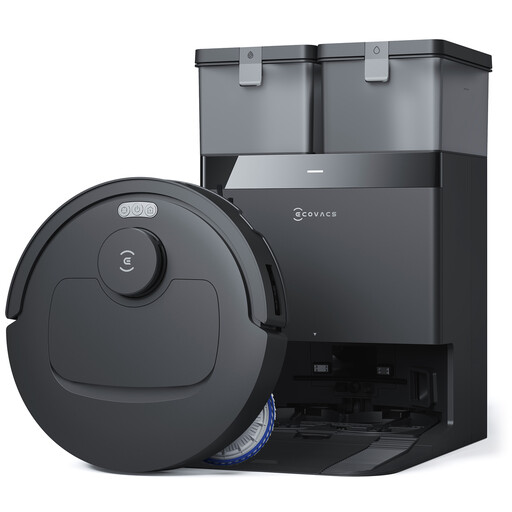
Why it's a good fit: For tech-savvy users seeking a fully automated cleaning solution. This robot vacuum with mopping function not only vacuums and mops but also handles its own maintenance, such as dust emptying and mop cleaning.
The combination of TrueMapping 2.0 Navigation and TruDetect Obstacle Avoidance ensures efficient and reliable cleaning without constantly getting stuck – a common problem with simpler robot models.
All-in-One OMNI Station: Automatic emptying, mop washing with 75°C hot water, and hot-air drying. ZeroTangle 3.0: Effectively prevents hair from tangling in the brushes.
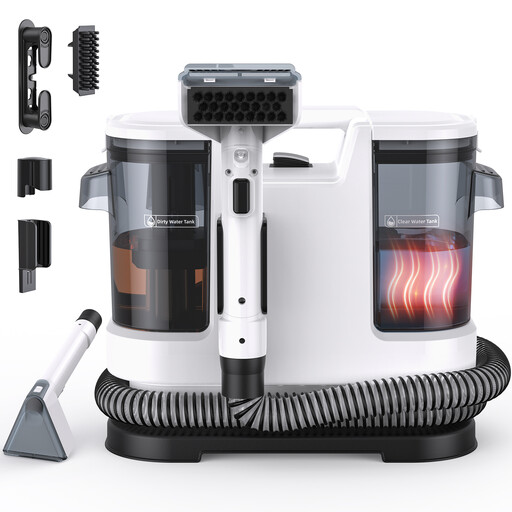
Why it's a good fit: A specialist for stubborn stains on carpets, sofas, and car interiors. As an upholstery cleaner and carpet washer, it combines hot water, a brush, and powerful suction to remove deep-seated dirt.
Unlike all-in-one devices with weak wet cleaning functions, this is a dedicated machine whose power (1400W, 15000 Pa) is specifically designed for demanding stain removal.
Hot Water Cleaning: Effectively dissolves grease and stubborn stains. Large Water Tanks: Allow for longer cleaning sessions without constant refilling. Long Cord: Provides ample reach for cleaning car interiors or large pieces of furniture.
We have compiled a complete, up-to-date list of products that fully meet these strict selection criteria and German safety regulations.
The maintenance interval depends on the frequency of use and the model. For washable HEPA filters, cleaning every 4-6 weeks is recommended. After rinsing the filter under clear water, let it air dry completely for at least 24 hours before reinserting it. Non-washable filters should be replaced every 6 to 12 months, according to the manufacturer's instructions, to ensure optimal filtration performance.
A wet-dry vacuum is primarily designed to suck up both dry dirt and liquid spills. It is a robust, all-purpose device, often used in workshops or garages. A carpet cleaner (also known as a spray extraction device or carpet washer) goes a step further: it sprays a cleaning solution under pressure into textile surfaces (carpets, upholstery) and sucks the dirty liquid back up in the same pass. It is therefore a specialist for deep cleaning textiles.
Modern robot vacuums with a mopping function are increasingly better suited for carpets. Look for models with strong suction power and automatic carpet detection. This feature increases suction power on carpets and, in combination devices, lifts the mopping module to avoid wetting the carpet. However, for households with high-pile carpets, a powerful cordless stick vacuum with a specialised carpet brush may still be the more thorough solution.