
Lieferung heute & morgen

Qualitätsgarantie

Willkommens-Angebote freischalten: KOSTENLOSE Lieferung | Bis zu 80 % RABATT | Kostenlose 30-Tage-JoyPlus-Testphase
App herunterladen
Dust, pet hair, crumbs and damp patches present different challenges for households across the UK. While a classic floor mop may suffice for regular cleaning of parquet or laminate, families and working professionals often prefer an automated or combined solution. The range of floor cleaning appliances extends from a simple mop and bucket to an electric wet-dry vacuum or a robot vacuum with a mopping function.
What matters most, however, is not the longest list of features, but how well the appliance matches your living space. Certain common buying mistakes can otherwise lead to unnecessary expense.
With a robot vacuum, a high suction power figure sounds impressive at first. For real-world use, however, brush design, navigation, filter maintenance, battery life and the type of flooring are all equally important. A device with 9,000 Pa is not automatically better suited to every home than a model with 4,000 Pa.
What’s more, robot vacuums need clear pathways. Cables, loose textiles, small objects and delicate decorations can obstruct their movement or get tangled in the brushes.
Parquet, laminate and untreated wood are sensitive to excessive moisture. A mop should therefore offer controlled water delivery. For parquet and laminate cleaning, a fine mist is generally more appropriate than a soaking wet pad. Always check the floor manufacturer’s care instructions before use.
Electric appliances also have their limits. The Tineco Floor One Stretch S6 is designed, according to the product specifications, for sealed hard floors such as vinyl, tiles and sealed wood. Using it on rough surfaces can affect performance.
With an electric wet-dry vacuum, the fresh water tank, dirty water tank, filter and brush roller all require regular care. Robot vacuums additionally need clean sensors, a tidy charging station and washed mopping cloths. For a manual mop, replacement pads and a suitable bucket are important components.
A low purchase price becomes less attractive if the necessary consumables are hard to find or not included in the box.
Various solutions are suitable for hard floors, tiles and sealed wood. Check the following:
A flat mop with a 360-degree swivel head reaches corners and areas under furniture. A wet-dry vacuum, on the other hand, combines vacuuming and mopping but requires more maintenance after each use.
The handle height should suit your own height. Telescopic poles between roughly 109 and 140 cm allow for a more individual working posture. With a mop and bucket, features such as wheels, a carry handle and a pouring spout are practical when you need to empty the dirty water regularly.
For battery-powered devices, consider the run time, weight and height of the appliance. A low-profile model can fit under furniture, provided there is enough clearance. Also think about the charging and drying station and the space it will need.
A robot vacuum with mopping function should suit your room layout. Laser navigation, app-based map management and scheduling can make daily organisation much easier. Before setting it up, check that there is enough clear space around the charging station.
Electric appliances must not be used to pick up flammable liquids, hot materials or sharp objects. Water areas, stairs without adequate protection and damaged cables should also be avoided. Always follow the instruction manual supplied with your device.
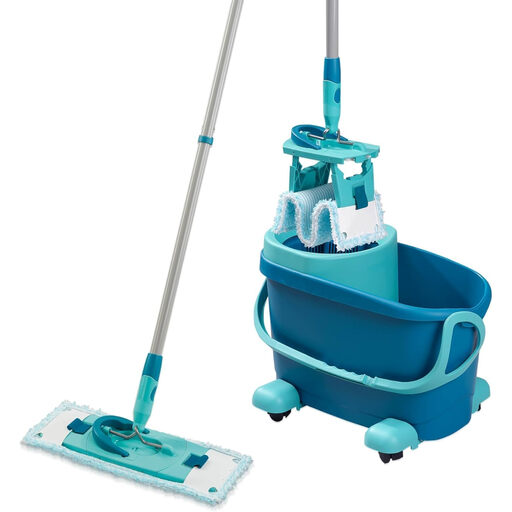
Why this product fits the profile: This set combines a flat mop, 6-litre bucket and spin mechanism. The telescopic pole adjusts from 109 to 140 cm and is suitable for fine-mist cleaning of delicate hard floors.
The integrated wringer stop function supports precise moisture control, so you don’t have to wring out the pad by hand.
6-litre bucket with wheels, 360-degree swivel joint and soft microfibre pad.
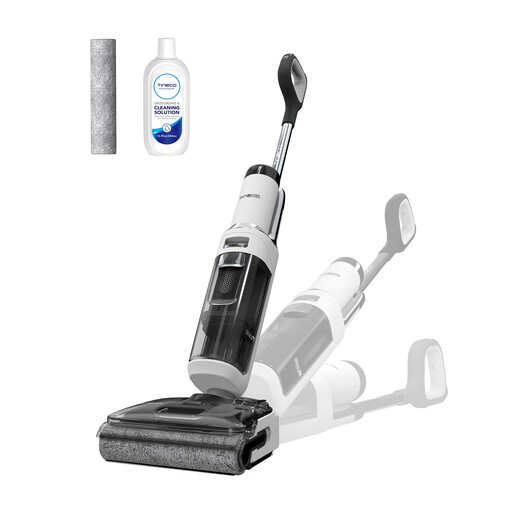
Why this product fits the profile: This electric wet-dry vacuum is designed for hard floors such as tiles, laminate and sealed wood. The 180-degree design helps with cleaning under low furniture.
The usage limits for indoor hard floors are clearly stated. This reduces the risk of using the appliance on unsuitable rough or heavily soiled surfaces.
Up to 40 minutes run time, 13 cm lying height and 5-minute FlashDry self-cleaning according to product specifications.
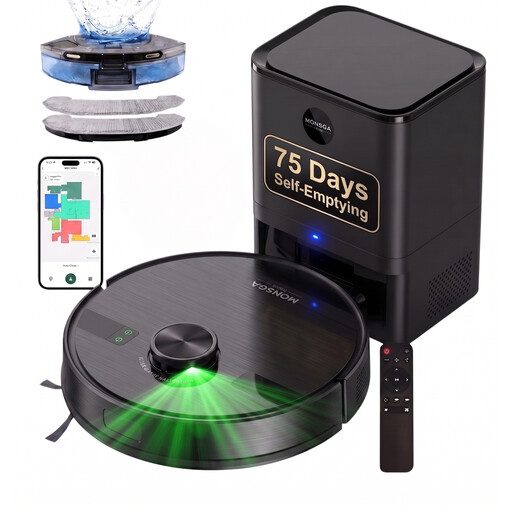
Why this product fits the profile: The combination of vacuum and mopping functions, Lidar navigation, app and voice control, plus a stated run time of up to 180 minutes, is designed for regular cleaning routines.
The safety information explicitly mentions cables, objects, water areas and clear space around the station. This preparation is part of realistic use.
9,000 Pa stated suction power and 4-litre self-emptying station.
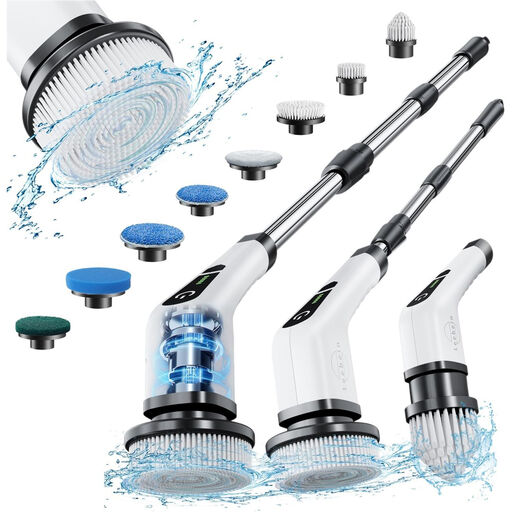
Why this product fits the profile: This electric cleaning brush is designed for grout, tiles, bathroom, kitchen and hard-to-reach areas. Eight interchangeable brush heads and an adjustable handle extend its range of uses.
The two speed settings and various attachments allow you to choose the right option for each task. However, this device is not intended as a complete replacement for a floor mop.
Telescopic handle from 30 to 137 cm, up to 90 minutes run time and IPX7 water protection according to the product description.
We have put together a full, regularly updated list of products that fully meet these strict selection criteria and the safety regulations in force in the EU.
Mop pads should be washed after every use. With electric wet-dry vacuums, the dirty water tank, brush roller and filter need to be emptied or cleaned regularly. A robot vacuum additionally requires checking of the side brushes, sensors and charging station.
That depends on your home and daily preparation. A robot vacuum can support regular cleaning cycles if the rooms are accessible and hair or foreign objects do not cause blockages. For dried-on stains and corners, manual follow-up cleaning is usually still needed.
A soft pad and a controlled, low level of moisture are important criteria. A mop with a spin function can be a good choice here. For untreated wood or delicate coatings, only the floor manufacturer’s care instructions should be followed.