
Lieferung heute & morgen

Qualitätsgarantie

Willkommens-Angebote freischalten: KOSTENLOSE Lieferung | Bis zu 80 % RABATT | Kostenlose 30-Tage-JoyPlus-Testphase
App herunterladen
Whether you have tiles, parquet, laminate, vinyl or stone, floor cleaning is not just about suction power or a bold marketing claim. What matters is whether the appliance or cleaning product suits your flooring, the type of dirt and your usual cleaning routine. Households with children or pets in particular often need a solution that can handle dust, liquids, stains and pet hair day after day.
A product may be suitable for several sealed hard floors without being recommended for every type of surface. Parquet, laminate and untreated wood are sensitive to standing water. A parquet cleaner or laminate cleaner should not automatically be used on tiles or natural stone either.
Before buying, you should therefore establish:
A stated suction power figure alone says little about how practical a device will be in everyday use. Battery life, tank capacity, noise levels, manoeuvrability and cleaning requirements are just as important. A cordless floor cleaner with a short runtime may be sufficient for a small flat, but can lead to frequent charging breaks in a larger household.
Depending on the model, a self-cleaning function rinses the brush roller and internal lines. However, it does not replace emptying, rinsing and drying the dirty-water tank. If damp residue remains inside the appliance, unpleasant odours may develop. Filters and brush rollers also require regular care.
For dry dust and pet hair, a conventional vacuum cleaner or cordless floor cleaner with a suitable brush roller is often sufficient. If you also want to pick up liquids and sticky dirt, you can choose a wet and dry vacuum cleaner or floor washer.
A steam cleaner uses hot steam and can loosen dirt on suitable, heat-resistant surfaces. However, it is not automatically suitable for parquet, laminate or delicate coatings. The information provided by the floor and appliance manufacturers should match.
With cordless appliances, runtime and charging time are particularly important. A runtime of 30 to 40 minutes may be enough for several rooms, although this depends on the cleaning mode and floor area. A separate clean- and dirty-water system prevents the appliance from spreading the same liquid back across the floor.
The following features are also practical:
A floor cleaner should be diluted according to the manufacturer’s instructions. Using too much cleaning product can leave residue behind and encourage dirt to build up again quickly. For wooden floors, only wipe with a slightly damp cloth and avoid standing water.
For individual tasks, floor-cleaning cloths, a floor mop, a long-handled scrub brush or a tile cleaner may be more suitable than an electric combination appliance. For example, a scrub brush with a 45-degree angle and squeegee lip is suitable for grouting, bathrooms, garages or patios. Pre-soaked cloths are convenient for small areas, but create ongoing packaging and consumable costs.
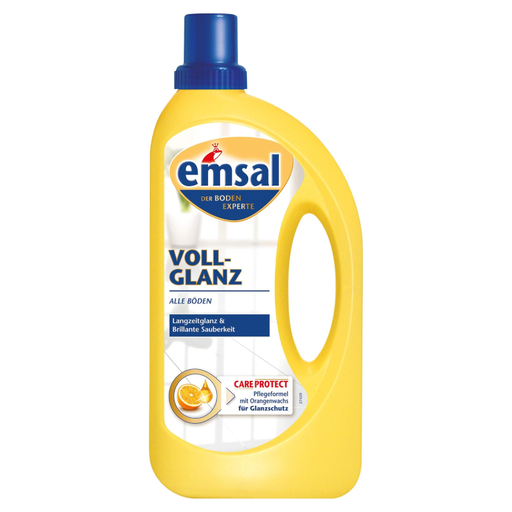
Why this product suits this profile: For households looking for a liquid floor cleaner for water-resistant surfaces and regular manual cleaning.
The instructions specify the dosage and moisture limits. According to the description, the product is not intended for laminate, untreated wood, glazed tiles or porcelain stoneware.
1-litre container, dosed using three capfuls per five litres of water, plus separate care instructions for wooden and cork floors.
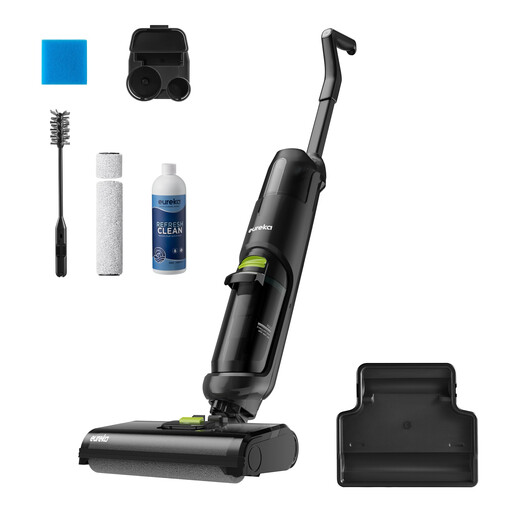
Why this product suits this profile: For sealed hard floors and households that frequently switch between dry dirt, liquids and sticky residue.
The dual-tank system keeps clean and dirty water separate. The self-cleaning function reduces direct contact with the brush roller, but does not replace rinsing and drying the components.
Vacuuming and mopping in a single pass, flexible brush-head guidance, self-propelled movement and a stated cordless runtime of up to 30 minutes.
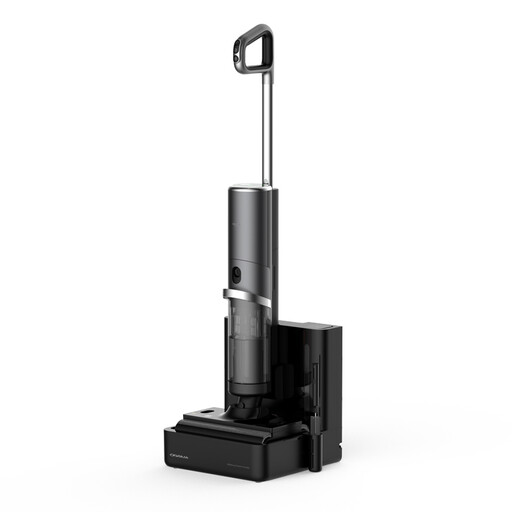
Why this product suits this profile: For larger homes and frequent floor cleaning, when longer runtime and automatic maintenance functions are important.
The stated runtime of up to 40 minutes and the base station’s automatic water filling help reduce frequent interruptions. The dirty-water tank still needs to be emptied and rinsed after every use.
Dual-drive traction system, edge cleaning, stated suction power of 16,000 Pa, hot-air drying at the base station and an additional 5-litre clean-water tank.
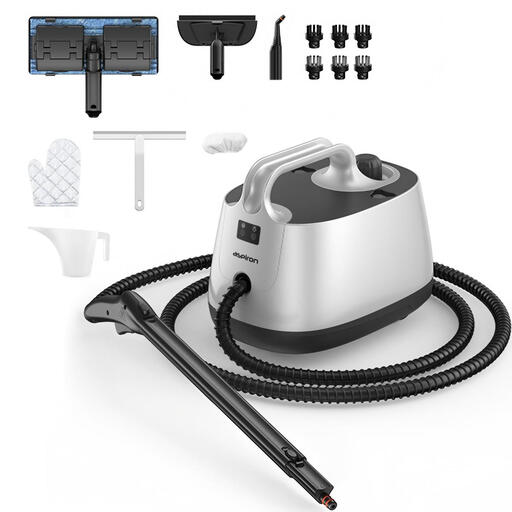
Why this product suits this profile: For users who want to clean not only floors but also grouting, windows, upholstery, curtains or vehicle interiors with steam.
The 21 accessories cover a range of different tasks. Before use, however, you must check whether the particular flooring is suitable for hot steam.
1,500 watts, stated steam pressure of 4 bar, steam temperatures of up to 145 °C, a 1.5-litre water tank and accessories for floors, grouting and textiles.
We have put together a complete, regularly updated list of products that fully meet these strict selection criteria and the safety regulations applicable in the EU.
For electrical appliances, electricity, cleaning products, filters, brush rollers and, where applicable, replacement batteries all form part of the running costs. A floor washer may save you from carrying out separate vacuuming and mopping, but it needs to be maintained after every use. Floor-cleaning cloths create a cost with each clean and generate more waste.
For a longer service life, we recommend:
The frequency depends on your household, usage and the amount of dirt. In homes with pets or young children, vacuuming daily may be sensible, while damp mopping may be needed less often depending on the type of flooring and level of soiling. Pet hair can often be removed dry first with a suitable brush roller.
Only if the flooring is sealed and the manufacturer has approved it for the specific type of wet cleaning. As little liquid as possible should be applied and standing water should be avoided. With delicate parquet, using a specially suitable parquet cleaner or wiping with a slightly damp cloth is the safer approach.
A floor mop usually costs less to buy. A wet and dry vacuum cleaner can combine several cleaning steps and save time when dealing with frequent spills or large amounts of pet hair. To assess the true cost-effectiveness, you should consider the purchase price, cleaning products, cloths, maintenance and electricity consumption together.