
Lieferung heute & morgen

Qualitätsgarantie

Willkommens-Angebote freischalten: KOSTENLOSE Lieferung | Bis zu 80 % RABATT | Kostenlose 30-Tage-JoyPlus-Testphase
App herunterladen
Dust, crumbs, spilled liquids and pet hair present households with hard floors with different challenges every day. A floor vacuum cleaner removes dry dirt, while a floor mop gets rid of fine residue and stains. A wet and dry vacuum cleaner or floor washer combines both steps. However, not every device is suitable for every floor or household.
Objective criteria are more useful when choosing than eye-catching advertising claims. Key considerations include suitability for sealed surfaces, actual battery life, maintenance and everyday handling.
Cordless and corded vacuum cleaners often highlight wattage or Pascal values. However, these figures alone do not describe the cleaning results. The floor head, brush design, airflow and filter maintenance are also important.
A high number on the packaging is therefore no substitute for looking at the practical features. For pet hair, for example, a flexible brush and a design that minimises hair tangling are important.
Parquet, laminate, vinyl, tiles and sealed wood react differently to moisture. A floor washer should only be used on surfaces that the product information states are suitable for wet cleaning. Controlled water dispensing is particularly important for delicate parquet.
A traditional microfibre mop may be better suited to lightly damp cleaning than a device with a high water flow. Before buying, also check whether the manufacturer explicitly mentions hard floors, laminate or sealed wood.
A self-cleaning floor washer generally rinses the brush roller and internal lines. This does not mean that the dirty-water tank, filters, seals and brushes no longer need to be maintained.
After use, tanks should be emptied, removable parts rinsed and filters dried completely. Otherwise, odours may develop and the airflow or water flow may be affected.
For dry dirt, a cordless vacuum cleaner or floor vacuum cleaner is sufficient. If liquids, dried-on stains or pet hair are common, a hard-floor cleaner with vacuuming and mopping functions may be a sensible choice.
Look for specific information on use with:
A parquet cleaner or laminate cleaner should distribute moisture as evenly and controllably as possible. When using cleaning products, the instructions on the packaging and in the floor-care guide are decisive. Always test new products on an inconspicuous area first.
The stated runtime often applies to a particular operating mode. At higher suction power or during intensive wet cleaning, the usage time may be shorter. Therefore, compare:
For small flats, a compact device with around 30 minutes of runtime may be sufficient. For larger areas, a larger container capacity or longer runtime is more practical.
A rotating brush head makes it easier to clean under furniture and along edges. Self-propelled movement can reduce the effort required to push a wet and dry vacuum cleaner. For traditional mopping, an adjustable-length handle, a flexible joint and moisture that can be controlled easily are important features.
Maintenance requirements should also be part of your purchasing decision. Washable microfibre covers use less consumable material, while disposable cleaning cloths are quick to use but need to be bought regularly.
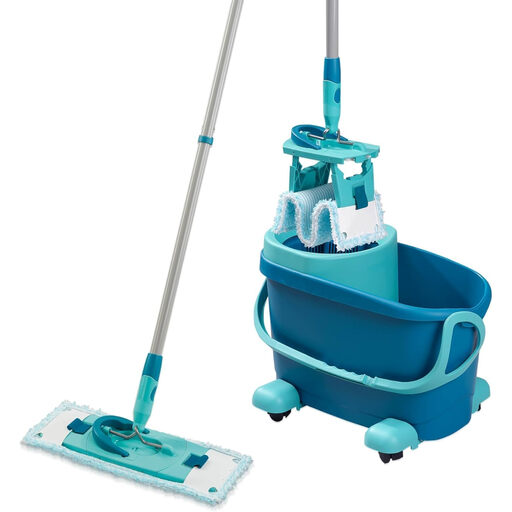
Why this product suits this profile: This set is suitable for users who want to clean parquet, laminate and sealed wood with a lightly damp mop, without using an electrical device.
The integrated wringing system allows precise control of moisture and reduces the risk of an overly wet cover.
6-litre bucket with castors, 360-degree joint and height-adjustable handle from 109 to 140 cm.
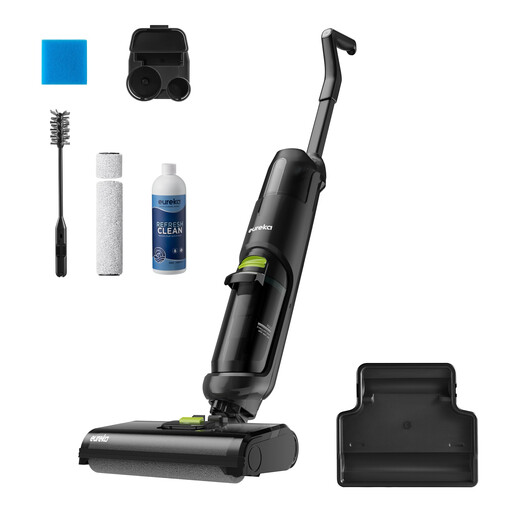
Why this product suits this profile: This wet and dry vacuum cleaner combines vacuuming and mopping in a single pass and is designed for several sealed hard-floor surfaces.
The two-tank system separates clean and dirty water. The self-cleaning function rinses the brush roller and internal lines after use.
Cordless operation for up to 30 minutes according to the product information, self-propelled movement and a flexible brush head.
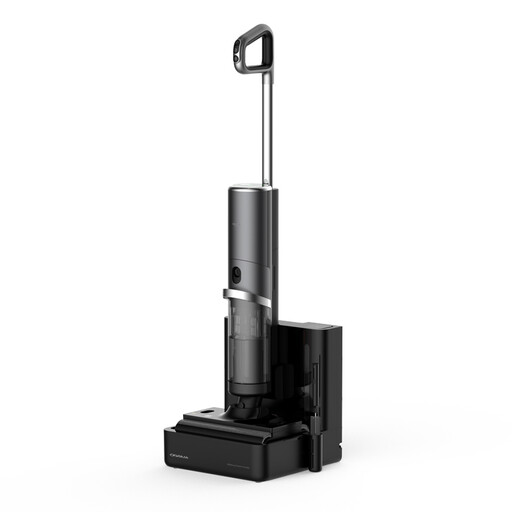
Why this product suits this profile: This device is aimed at households that wet-clean frequently and have larger areas to cover, combining vacuuming and mopping in one appliance.
The product information states that it features automatic water filling, hot-air drying and a self-cleaning function. Nevertheless, the dirty-water tank and filters must still be maintained after use.
Up to 40 minutes of runtime according to the product description, two-function cleaning and an additional 5-litre clean-water capacity.
Also note the statutory guarantee of at least two years within the EU. Additional manufacturer warranties may differ and should be checked in the relevant terms and conditions.
We have put together a complete, regularly updated list of products that fully meet these strict selection criteria and the safety regulations applicable in the EU.
This depends on the household, floor area and level of dirt. Dust and pet hair can be removed dry every day if necessary. Damp cleaning is usually worthwhile when there are visible stains or dirt that has stuck to the floor. The floor manufacturer's care instructions take priority.
Battery lifespan depends on charging cycles, operating mode, filter maintenance and storage. High maximum power usually reduces the runtime per cleaning session. Clean the filters and brushes regularly and charge the battery according to the manufacturer's instructions.
For cordless devices, the main costs are electricity and potential expenses for filters, brush rollers and batteries. A microfibre mop incurs ongoing costs for detergent and water, while disposable cloths need to be replaced more frequently. For a realistic assessment, compare consumables and maintenance intervals in the product information.