
Lieferung heute & morgen

Qualitätsgarantie

Willkommens-Angebote freischalten: KOSTENLOSE Lieferung | Bis zu 80 % RABATT | Kostenlose 30-Tage-JoyPlus-Testphase
App herunterladen
A well-chosen floor lamp for your living room is more than just a light source. It's a key design piece that creates atmosphere, defines reading nooks, and highlights a room's character. However, the market is flooded with models whose true quality and functionality often only become apparent after purchase. Before you make a decision, it's important to understand the common pitfalls that can severely limit a lamp's value.
Many buyers focus primarily on design, overlooking critical technical and material flaws. Three problems are particularly common:
To avoid buyer's remorse, you should carefully examine three technical aspects. These are crucial in determining the longevity, safety, and daily utility of your new floor lamp.
The foundation of a durable and safe floor lamp is its construction. Look for a weighted base that gives the lamp a stable footing, even at its full height. Materials like powder-coated steel, aluminium, or solid wood are generally a more robust choice than thin-walled plastic or lightweight metal tubes. The build quality of the joints and connectors is also an indicator of longevity, especially for a height-adjustable floor lamp.
The type and quality of the light source are critical. An integrated LED floor lamp is often the standard today, offering advantages in energy efficiency and lifespan. Important features include:
A modern floor lamp should adapt to your needs. A swivelling or tilting lamp head is essential if you also want to use the lamp as a standing reading lamp. This allows you to direct the light exactly where it's needed without having to move the entire lamp. Models that offer both direct and indirect light (e.g., through a head that can be tilted up and down) provide maximum versatility for any room situation.
Based on the quality criteria mentioned, we have identified several models that are well-suited for specific user profiles.
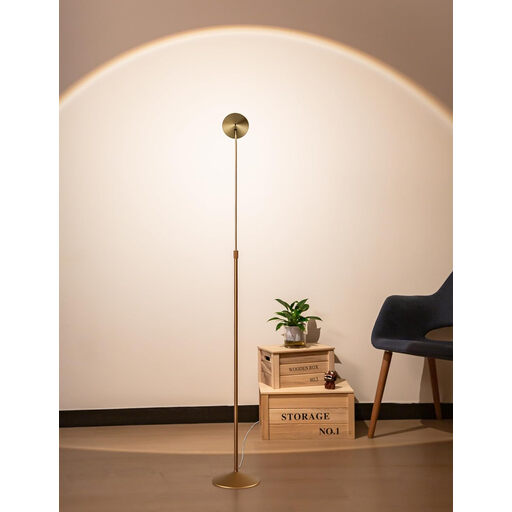
Why it's a great fit: This model is designed for users who want to combine a minimalist design with maximum functionality. It is perfect for modern living or work spaces where a single lamp needs to provide both indirect room lighting and focused task lighting.
The electroplated steel and aluminium construction with a weighted base prevents instability. Its high flexibility, thanks to the 150° tilting head and height adjustment, solves the problem of rigid lamps. The integrated, flicker-free LED with 3-step touch dimming ensures high light quality.
The combination of telescopic height adjustment and an extremely flexible lamp head allows for precise light direction for various activities such as reading, crafting, or use as an indirect uplighter.
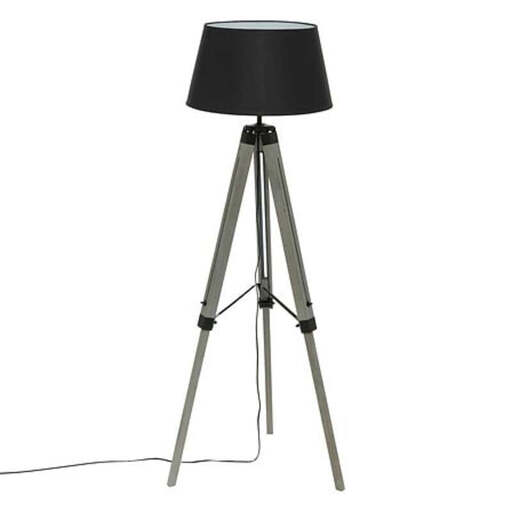
Why it's a great fit: Ideal for users who appreciate a timeless aesthetic and view their floor lamp as a decorative piece of furniture. The tripod design blends harmoniously into classic, Scandinavian, or mid-century interiors, creating a warm, inviting atmosphere.
The tripod design offers inherently high stability, counteracting the problem of wobbly lamps. Because it uses a standard E27 socket, the user has full control over the light quality by installing a high-quality bulb of their choice.
The classic tripod design is a stylistic statement that guarantees stability. The freedom to choose your own E27 bulb (not included) allows for individual customisation of brightness and light colour to suit personal preferences.
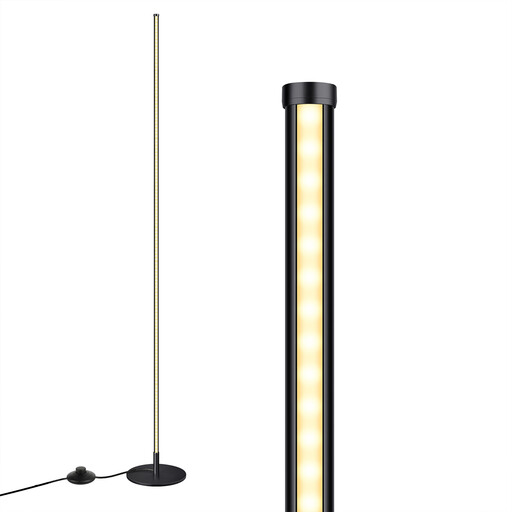
Why it's a great fit: For anyone seeking a modern, functional lighting solution without a large investment. It offers essential modern features like stepless dimming and a minimalist design that fits discreetly into many interior styles.
The metal body and solid base provide reliable stability. The integrated LED with 3000K warm white light and a stepless dimming function ensures good, adaptable light quality from the outset, which is not the case with many budget models.
The stepless dimming via a convenient footswitch, combined with a memory function that recalls the last-used brightness setting, offers a high level of user convenience that is not a given in this price range.
We've compiled a complete, up-to-date list of products that fully meet these strict selection criteria and safety requirements.
The ideal height depends on its intended use. For general, indirect room lighting (like an uplighter), the light source should be above eye level, typically between 150 and 180 cm. If the lamp serves as a reading light next to an armchair or sofa, the bottom edge of the lampshade should be positioned at eye level when seated (approx. 100 to 120 cm). Height-adjustable models offer the greatest flexibility here.
No, LED technology is extremely energy-efficient. An LED floor lamp that produces a brightness of about 1100 lumens (comparable to a traditional 75-watt incandescent bulb) typically consumes only about 10 to 12 watts. This leads to significant savings on electricity costs over the lamp's lifespan.
Direct light is focused and aimed at a specific area. It is ideal for activities that require concentration, such as reading or crafts. A classic standing reading lamp with a downward-facing shade is a typical example. Indirect light is cast onto a wall or ceiling and reflected diffusely into the room. This creates soft, glare-free ambient lighting and a pleasant atmosphere. Many modern floor lamps are designed to provide both types of light.