
Lieferung heute & morgen

Qualitätsgarantie

Willkommens-Angebote freischalten: KOSTENLOSE Lieferung | Bis zu 80 % RABATT | Kostenlose 30-Tage-JoyPlus-Testphase
App herunterladen
A well-chosen floor lamp can completely transform the atmosphere of a living room. It's more than just a light source; it's a design element that creates cosiness, illuminates reading nooks, or sets architectural accents. However, the market is flooded with models whose weaknesses often only become apparent after purchase. Before you make a decision, it's crucial to know the most common pitfalls to avoid a poor investment.
This guide focuses on the objective criteria that define a durable and functional floor lamp, helping you make the right choice for your needs.
Many buyers focus primarily on design, overlooking critical functional flaws that severely limit everyday usability.
To avoid these mistakes, you should carefully examine three technical aspects. These determine the longevity, safety, and functionality of your new floor lamp.
Stability is paramount. An arc lamp for the living room, whose arm extends far into the room, requires an especially heavy and solid base to provide a counterbalance. Materials like solid steel, marble, or a cement-filled base are often a good choice here. For straight floor lamps, a wide, flat base with a low centre of gravity ensures stability. Pay attention to the total weight of the lamp in the product specifications—a higher weight is often an indicator of a more robust build.
Modern lighting offers much more than just brightness. Two terms are key here:
The floor lamp's design should not only be aesthetically pleasing but also functional. A slim, tall lamp in black can add a modern, minimalist accent. A torchiere lamp creates pleasant ambient light by indirectly illuminating the ceiling. An arc lamp is ideal for positioning a light source over a coffee table without needing a ceiling outlet. Think carefully about where the lamp will stand and what its primary function will be.
Here are some recommendations tailored to different living styles and needs.
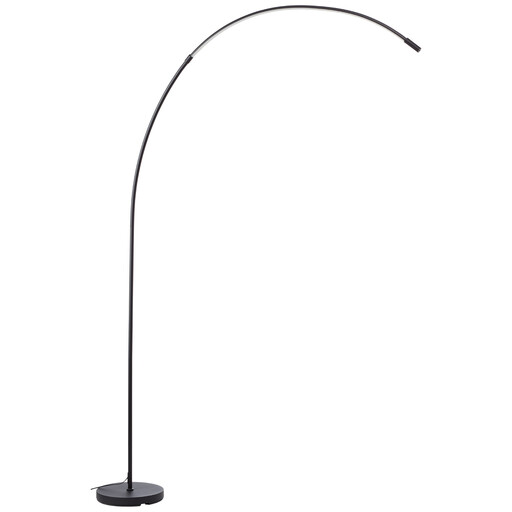
Why it's a great fit: Ideal for users who appreciate a clean, modern aesthetic and high functionality without superfluous details. The slim, black aluminium design blends seamlessly into contemporary living concepts.
The high-quality aluminium construction ensures stability. The integrated CCT function and stepless dimmer offer maximum lighting flexibility, avoiding the problem of rigid illumination.
The colour temperature is adjustable from 3000 K (Warm White) to 6500 K (Cool White). It is conveniently operated via a touch switch directly on the lamp head.
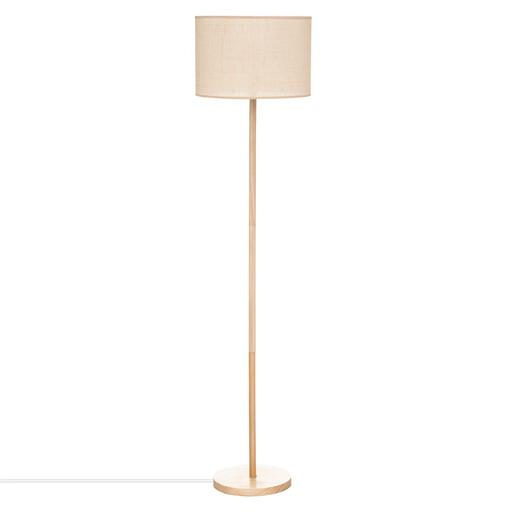
Why it's a great fit: Perfect for anyone looking to create a warm, inviting, and natural atmosphere in the style of Japandi or Scandi design. The lamp focuses on organic materials instead of cold technology.
The pine wood construction is designed for stability. The rice straw shade creates a very soft, diffused light, inherently avoiding harsh, inflexible lighting situations.
The combination of pine wood and rice straw creates a particularly warm and cosy lighting mood. The bulb is replaceable, which increases the lamp's longevity.
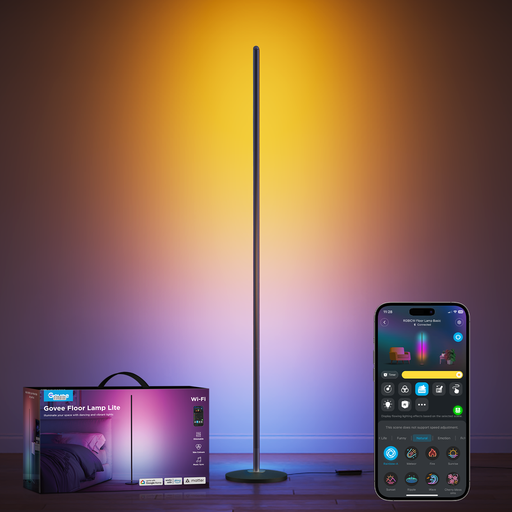
Why it's a great fit: For users who want to fully integrate their lighting into their smart home system and control it via app or voice. Ideal for gaming, movie nights, or creating dynamic light scenes.
Offers maximum flexibility through RGBIC technology, app control, and dimmability. Govee's LED technology is designed for longevity and a wide range of colours, preventing the risk of early failure.
Compatible with Alexa and Google Assistant for voice control. Offers 16 million colours, 58 preset scene modes, and a music sync mode for an immersive experience.
We have curated a comprehensive selection of lamps that meet objective criteria for quality and safety. Discover more models that suit your style.
How many lumens does a living room floor lamp need? The lumen requirement depends heavily on the intended use. For soft, ambient background lighting, 400 to 800 lumens are often sufficient. However, if the lamp is to serve as the primary light source in a reading nook, values between 1000 and 1500 lumens are recommended. A dimmable floor lamp offers the greatest flexibility here, as it can cover both scenarios.
What is the difference between direct and indirect lighting? Direct lighting aims the light beam specifically at a surface, such as a book or a table. This is typical for a reading lamp. Indirect lighting, on the other hand, illuminates a larger surface like the ceiling or a wall. The light is then diffusely reflected into the room, creating a soft, low-shadow, and glare-free ambient brightness. Many modern floor lamps, especially torchiere lamps, use this principle.
What are the running costs of an LED floor lamp? The running costs are very low. A modern LED floor lamp with a power consumption of, for example, 14 watts, uses about 20 kilowatt-hours (kWh) per year if used for four hours daily. Assuming an electricity price of 40 cents per kWh, this results in annual electricity costs of around €8.