
Lieferung heute & morgen

Qualitätsgarantie

Willkommens-Angebote freischalten: KOSTENLOSE Lieferung | Bis zu 80 % RABATT | Kostenlose 30-Tage-JoyPlus-Testphase
App herunterladen
Whether you have laminate, parquet, tiles or vinyl, floor-cleaning appliances vary considerably in how they work, how much water they use, how much maintenance they need and how automated they are. So for families, pet owners and busy professionals, the brand name alone isn’t what matters. What’s more important is what your household actually needs.
A traditional mop may be enough for a small flat. A wet and dry vacuum cleaner combines vacuuming with damp mopping, while a robot vacuum with a mopping function can take care of regular cleaning largely by itself. The right choice depends on the size of the area, how often you clean and the types of flooring in your home.
High suction power figures for a wet and dry vacuum cleaner or mopping robot may sound impressive, but they don’t tell you everything about how practical it will be day to day. With a robot vacuum, you should also consider navigation, brush design, obstacle detection, mopping pressure and the height of door thresholds.
For manual systems, the shape of the mop head, how it can be wrung out and whether the cover is machine washable are more important. A microfibre mop with a poorly fitting replacement cover may be less convenient in everyday use than a simpler system with replacement covers readily available.
As well as the purchase price, check:
A mop and bucket usually have low running costs. With a robot vacuum, however, consumables and the space needed for its docking station can add up.
Not all hard floors can handle the same amount of water. Laminate and some parquet finishes should only be cleaned with a barely damp mop. Moisture can be a problem if it gets into open joints or damaged sealant.
Always follow the flooring manufacturer’s care instructions. Even an appliance with automatic water dispensing doesn’t remove the need to check that your flooring is suitable for the cleaning method you intend to use.
For smooth hard floors, a flat floor mop with a washable cover is often all you need. The Vileda Ultramax, for example, has a swivel head and a microfibre cover. According to the product information, it’s suitable for hard floors, including wood and laminate. Always follow the flooring manufacturer’s guidance on how much water to use.
A wet and dry vacuum cleaner is a better choice if you want to pick up dry dirt and spills in one go. According to the manufacturer, models such as the Tineco Floor One Stretch S6 are suitable for sealed hard floors, vinyl, tiles and laminate. They may be less suitable for rough surfaces.
For a manual system, look for a bucket that keeps clean and dirty water separate. The SPIN BUCKET+2MOP 6.5x2L has two compartments, each with a 6.5-litre capacity, as well as two wheels and a carry handle. According to the product information, the two XL microfibre covers can be machine washed at 40 °C.
Separate clean- and dirty-water tanks are useful in electric appliances. Also check whether the roller is dried after use and how easy it is to remove hair, fibres and other residue.
Before buying a mopping robot, measure the space needed for its docking station, the clearance under your furniture and the height of any door thresholds it will need to cross. The ECOVACS DEEBOT T30C OMNI Gen2 is listed as offering up to 180 minutes of runtime, obstacle clearance of 1.7 cm and a docking station with a 3-litre dust container.
A long battery life is only useful if the appliance can fit under your furniture and map your rooms reliably. If you have more than one floor, check whether you’ll need to carry the robot between floors and how its maps are managed.
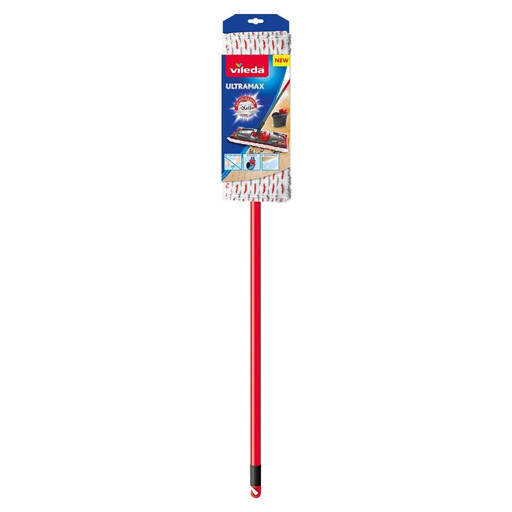
Why it suits this household: This manual system needs neither a battery nor a charging dock, and is suitable for regular cleaning of hard floors.
The washable microfibre cover and swivel head reduce the need for disposable materials and make it easier to clean around edges.
Microfibre cover, swivel mop head and, according to the product information, suitability for a range of hard floors.
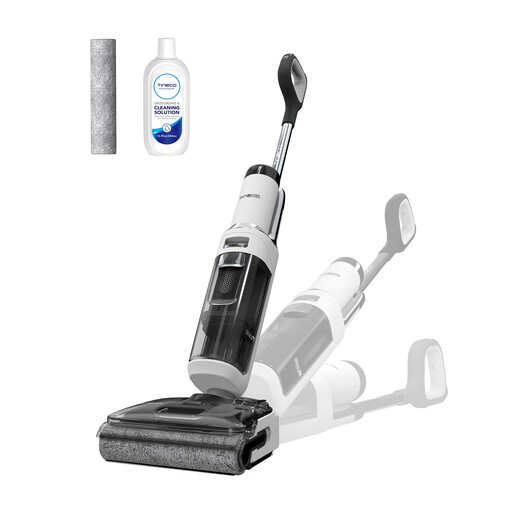
Why it suits this household: This cordless wet and dry vacuum cleaner is designed for hard floors and combines dirt pick-up with damp mopping.
Its stated runtime of up to 40 minutes and suitability for sealed hard floors make it clear where and for how long it can be used.
180° flat design, 13 cm reclined height, edge cleaning on three sides and a stated runtime of up to 40 minutes.
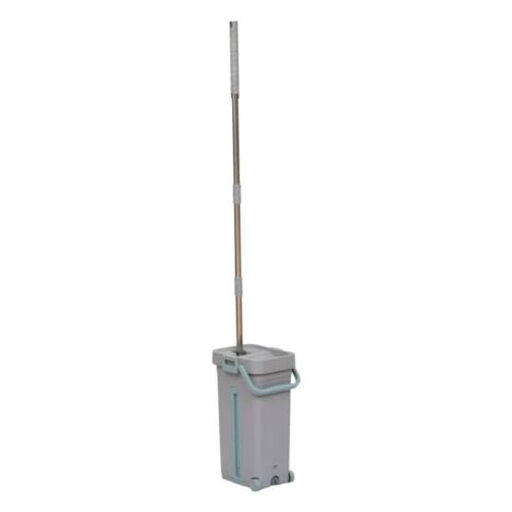
Why it suits this household: This manual cleaning system has separate water compartments and is suitable for larger homes without relying on a battery.
The separate 6.5-litre compartments keep clean and dirty water apart, while two drainage outlets make emptying easier.
13-litre total capacity, two XL microfibre covers, height-adjustable handle and 360° mop head.

Why it suits this household: This mopping robot can follow cleaning schedules set in the app and, according to the product information, automatically wash its mop pads with 75 °C water.
Its stated carpet detection and automatic mop-pad lifting help reduce the risk of getting carpets wet while mopping.
Laser navigation, up to 180 minutes of runtime, four suction levels and a docking station with automatic dust emptying.
We’ve put together a complete, regularly updated list of products that meet these strict selection criteria and comply fully with the safety regulations in force in the EU.
For laminate, choose a mopping system that lets you control how much moisture it uses. A flat microfibre mop or a wet and dry vacuum cleaner with a suitable setting may be a good option. The key is to follow the laminate manufacturer’s care instructions and use a well-wrung cover or an appropriate water setting.
Lifespan depends on the materials, how often you use it and how well you maintain it. Rinse microfibre covers after use, let them dry completely and wash them according to the manufacturer’s instructions. For wet and dry vacuum cleaners, regularly cleaning the brushes, filters, tanks and seals can help extend their lifespan. Check that replacement parts are available.
Running costs include electricity, water, cleaning solution, filters, brushes and, where applicable, dust bags. A docking station with automatic mop care also needs additional consumables. So compare not just the purchase price, but also the cost and availability of replacement parts.