
Lieferung heute & morgen

Qualitätsgarantie

Willkommens-Angebote freischalten: KOSTENLOSE Lieferung | Bis zu 80 % RABATT | Kostenlose 30-Tage-JoyPlus-Testphase
App herunterladen
Floral motifs are among the most versatile design elements for card making, scrapbooking and decorating photo albums. The right flower cutting dies for card making and scrapbooking make it easy to cut flowers, leaves and floral frames from paper or card. To avoid disappointment, however, crafters should check a few technical details before buying.
Many listings describe a die as “compatible” without clearly explaining the type of machine, plate size or accessories required. Metal dies are generally fed through the machine between cutting plates and a suitable platform. You should therefore check compatibility with your own die-cutting machine against the manufacturer’s specifications.
The size of the die also matters. A large floral motif may be impractical on a small card front, while very small floral dies can require extra effort when removing the cut shape or sticking it down.
Terms such as “embossing”, “embossing folder” and “die-cutting template” are sometimes combined in product listings. A cutting die creates a shape that is cut out. An embossing tool, on the other hand, changes the surface without cutting all the way through the paper. Depending on their design and the machine accessories used, some metal dies can support both functions, while others are intended for cutting only.
Before buying, you should be clear whether you want cutting dies for paper, embossing tools for cards or a combination of both.
A product image may show several flowers, leaves or decorative elements, without making it clear whether every pictured item is included. Details about the material, number of motifs and dimensions may also be missing. With metal dies, a description such as “Metal Cutting Dies” indicates the material, but it does not replace checking the dimensions and package contents.
For regular projects, it is worth choosing a set whose individual dies suit your card sizes and paper weights.
For metal flower dies, the material should be stated explicitly. Some listings specify carbon steel, while others simply use the term “Metal Cutting Dies”. The level of detail is also important: designs with many narrow petals or delicate leaf veins can be more challenging to remove from the die than compact shapes.
Product images can help you assess the cutting structure. Clearly defined outlines are often easier for beginners to work with. For highly detailed designs, you should also consider the paper quality and, where necessary, an embossing mat.
Check whether the die is intended for a small greetings card, a square folded card or a large scrapbook layout. For photo albums, several different sizes are particularly useful, as they allow you to combine a background, a main motif and smaller accents.
With dies for photo albums and scrapbooking dies, you should also make sure there is enough space around the motif. This makes the cut-out element easier to stick down or raise using foam pads.
Not every die-cutting machine handles the same paper thickness. Thin craft paper requires different settings from photo card, kraft paper or layered decorations. You should therefore check:
These points reduce the risk of buying a cutting template that looks suitable but is impractical for your project.
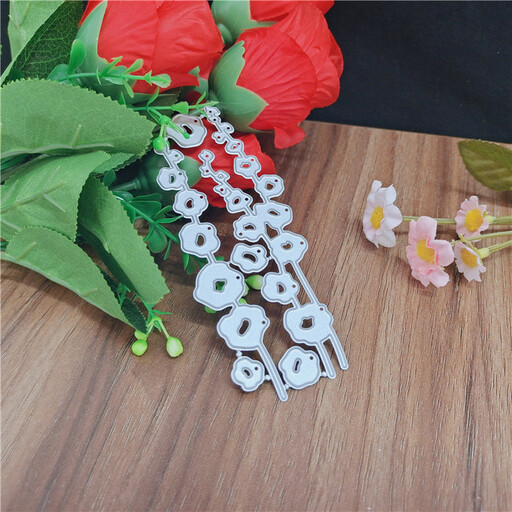
Why this product suits the profile: The floral design is intended for card making, paper die cuts and scrapbooking. It is suitable for crafters who are starting with basic floral shapes and want to try different paper decorations.
The name explicitly mentions metal dies for cards and a scrapbook machine. You should still check the dimensions and machine compatibility separately before placing your order.
Metal construction according to the product name; intended for paper, cards and scrapbooking projects.
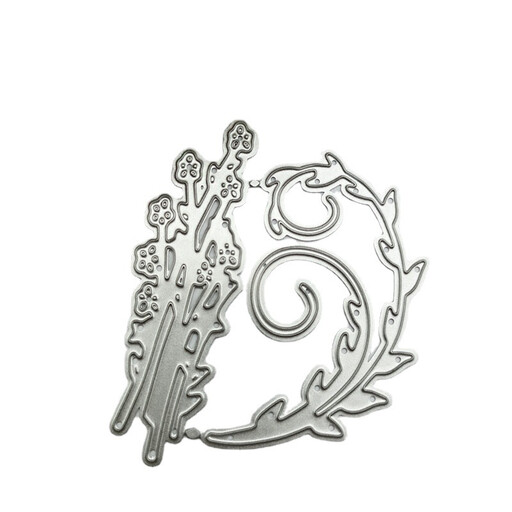
Why this product suits the profile: The combination of leaves, flowers and grasses supports layered layouts and carefully coordinated designs for cards or album pages.
The motif group is described specifically in the product name. This makes it easier to decide whether you need individual floral elements rather than one large full-surface design.
Metal construction; flower, leaf and grass motifs for paper decorations and embossed cards according to the product description.
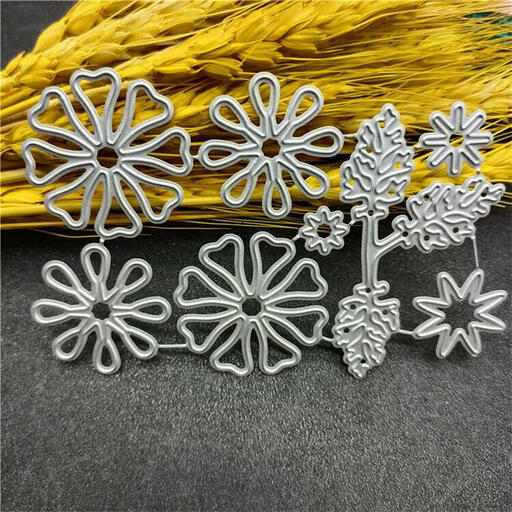
Why this product suits the profile: The listing mentions symmetrical flower and snowflake patterns, as well as use for cards, scrapbooking and photo albums. This makes it suitable for a range of seasonal and decorative projects.
The product name narrows down the types of motifs included. This makes it easier to choose if you are specifically looking for symmetrical patterns and a variety of paper projects.
Symmetrical and snowflake motifs according to the product name; intended for cards, scrapbooking and photo albums.
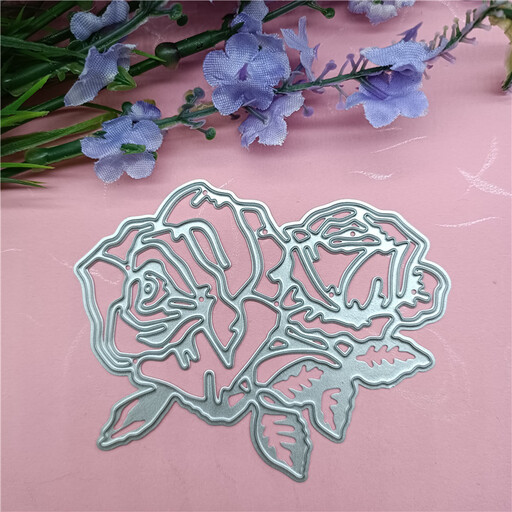
Why this product suits the profile: The die is designed around rose motifs and, according to the product name, is suitable for cards, decorative paper and scrapbooking. It is a sensible choice when you want a clearly defined floral theme.
The motif is clearly identified as a rose. This avoids choosing a general flower set when you need a specific floral theme.
Rose motif according to the product name; described as a metal cutting die and embossing stencil for paper projects.
The service life of craft dies depends on several factors: the paper thickness used, the machine’s pressure setting, frequency of use and storage conditions. Metal dies should be stored in a dry place and protected from dust. Paper fibres can collect in fine cut-outs, making the die more difficult to release later.
After die cutting, you can carefully remove paper remnants with a soft brush. Hard or sharp objects may damage the surface. Only use the die within the material range specified by the machine manufacturer. If you encounter unusual resistance, stop and check how the plates have been assembled.
We have put together a complete, regularly updated list of products that fully meet these strict selection criteria and the safety regulations applicable in the EU.
That depends on the particular die and machine. Before buying, check the details for plate format, machine model and paper thickness. You should not assume universal compatibility.
Not every metal die is automatically suitable for embossing. Some models are sold as cutting and embossing templates. Additional mats or plates may be required for embossing. The specific product description and the machine instructions are the key sources of information.
Thin craft paper and medium-weight card are suitable for your first projects. Very thick, multi-layered or coated paper can be problematic, depending on the machine. With delicate craft dies for paper, even, moderate material pressure is particularly important.