For wide shots and the occasional moving shot, a compact camera with a fixed lens is the easier place to start. For repeatable close-ups of flowers, a mirrorless camera with a carefully chosen lens gives you more flexibility with framing. The key is to test it from the actual distance you’ll be working at the table: 4K alone guarantees neither a suitable close-up nor a fixed overhead view. The mount, lighting and sound also need to work in a shared room.
Who are the different cameras suited to?
Close-up filming at the flower table
If you want to show flowers, stems and individual hand movements from a fixed position, plan your camera distance and lens choice together. Check how large the details appear in the frame from your actual working distance.
Filming with limited space to set up
If you need to put the camera away quickly after filming, or switch between a wide shot and moving shots, choose a setup that fits the space you have available.
Filming in a shared room
If your housemates might be in the room, plan your framing and sound so you don’t accidentally record or publish conversations or identifiable people.
What should you consider when choosing?
Compact gimbal camera with a fixed lens
A good fit if: you have little space to set up and want to take moving shots as well as fixed ones.
Trade-off: You can’t change the fixed lens to get a different angle of view; gimbal stabilisation is no substitute for a mount that gives you a fixed overhead view.
Mirrorless camera with interchangeable lens
A good fit if: you want to adjust the framing for close-ups of flowers or a fixed position at the table by changing the lens.
Trade-off: The lens and mount make the setup bulkier, and you’ll need to check the close-up capabilities of the specific kit lens.
First, check the framing and focus from the distance you have available, then consider the lighting, camera position and sound. Also check which accessories are included with the specific kit version.
| Buying priority |
What to look for |
Who this matters to |
| Close-ups and framing |
Measure the available distance and check the subject size and focus with the specific camera and lens combination. |
If I want to show individual flowers and hand movements from a fixed position, the subject needs to appear at the right size from my working distance. Around 28% of consumers prioritise close-ups and framing. |
| Image quality in room lighting |
Test your planned framing at the actual time and under the lighting you’ll be filming in. |
If I’m filming with the room lighting I have, I want to be able to assess the arrangement and my hands at the planned filming time. Around 22% of consumers prioritise usable image quality in room lighting. |
| Space and camera position |
Allow room for the arrangement, your hands, the camera and the mount; check that you can read the display from your chosen position. |
With limited space in a shared room, I need a setup I can put away again after filming. Around 22% of consumers prioritise space and camera position. |
| Privacy and sound |
Decide whether you need sound, and be mindful of conversations and identifiable people before recording and publishing. |
If my housemates might be in the room, I don’t want to record conversations without permission or publish identifiable people without clarifying the situation. Around 17% of consumers prioritise consideration for housemates. |
| Easy setup |
Check what’s included with the specific version and whether you’ll need a lens, storage, power supply or mount. |
If I want a straightforward setup, the camera I choose and what comes in the box need to suit my filming space. Around 11% of consumers prioritise an easy setup. |
Common camera-buying misconceptions
-
Assuming 4K means suitable close-ups
Video resolution doesn’t tell you how large a detail of a flower will appear in the frame from your available working distance.
Test the subject size and sharpness with the specific camera and lens combination before making your choice.
Depending on the results, you may need a different compatible lens or a different camera position.
-
Assuming gimbal stabilisation gives you a ready-made overhead view
DJI describes the Osmo Pocket 3’s stabilisation as a feature of the camera; this doesn’t give you a fixed position above the arrangement.
Plan for a suitable mount and check that it works with the space you have and the angle you want.
-
Comparing only the camera body when buying a kit
Kit versions can differ in what’s included. Nikon notes that the Z 30 Double Zoom Kit doesn’t include a charger.
Compare what’s included with the specific version and check what else you’ll need for your setup.
For the Nikon kit mentioned, you’ll need to plan for a power supply separately. Also check which storage medium is included with your version.
Key camera brands at a glance
DJI
The Osmo Pocket range includes compact gimbal cameras with fixed lenses; the Pocket 3 is one specific model in the range.
- For the Pocket 3, DJI specifies a fixed lens with a 20 mm full-frame equivalent focal length, a focus range starting at 0.2 m and a rotating screen.
- You can’t change the fixed angle of view by swapping lenses; a suitable mount is needed for a fixed overhead view.
Canon
The EOS R50 is an RF/RF-S system camera for buyers who want to choose the angle of view with a suitable lens.
- Canon specifies a vari-angle screen and 4K/30p for the EOS R50.
- According to Canon’s datasheet, the body doesn’t have sensor-shift stabilisation; close-up performance also depends on the lens you choose.
Sony
The ZV-E10 II is an APS-C interchangeable-lens camera designed with video recording in mind.
- Sony specifies recording in 4K at up to 60p for this model.
- The frame rate alone doesn’t show that the supplied kit zoom can capture flower details at the right size from your planned working distance.
Nikon
The Z 30 is a system camera with interchangeable lenses; one kit includes a 16–50 mm and a 50–250 mm zoom lens.
- Nikon specifies 4K UHD up to 30p for the Z 30; the twin zoom kit offers two focal length ranges.
- Nikon notes that this kit version doesn’t include a charger. Also check that the lenses suit your filming distance.
Panasonic
The Lumix G100D kit combines a Micro Four Thirds system camera with a 12–32 mm lens.
- Panasonic specifies 4K/30p and USB-C charging for this kit.
- Check the framing and close-up performance of the kit lens from the distance your room allows.
Joybuy cameras for filming flower arrangements
This Joybuy camera selection is intended for filming flower arrangements. For each model, check that the framing works from the camera position available to you.
 No image available
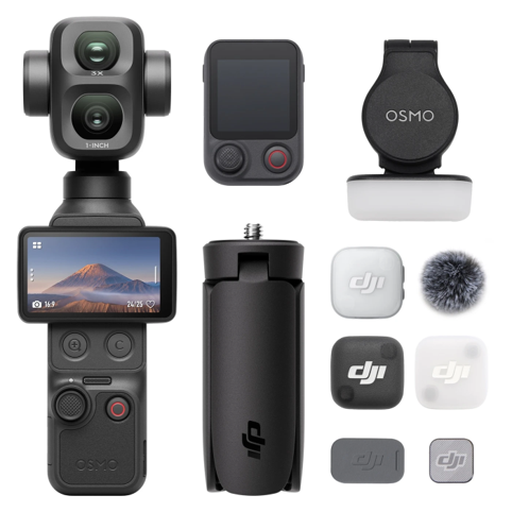
DJI Osmo Pocket 4P Vlog Combo, Black
Described as a vlog camera for video recording; check that the whole arrangement fits in the frame from your planned distance.
View at Joybuy
 No image available
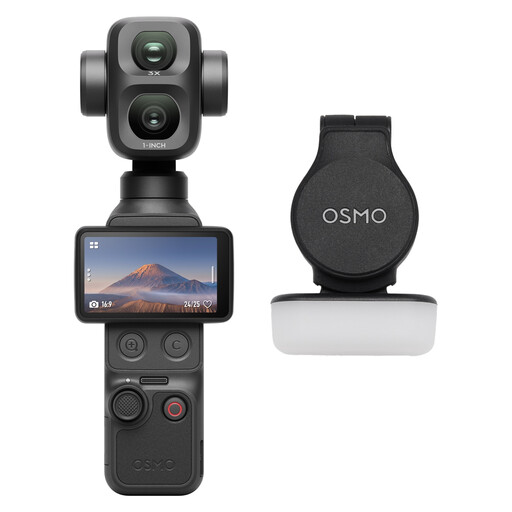
DJI Osmo Pocket 4P Standard Combo, Black
Listed for video recording; test your preferred framing in your planned filming space before choosing this model.
View at Joybuy
 No image available
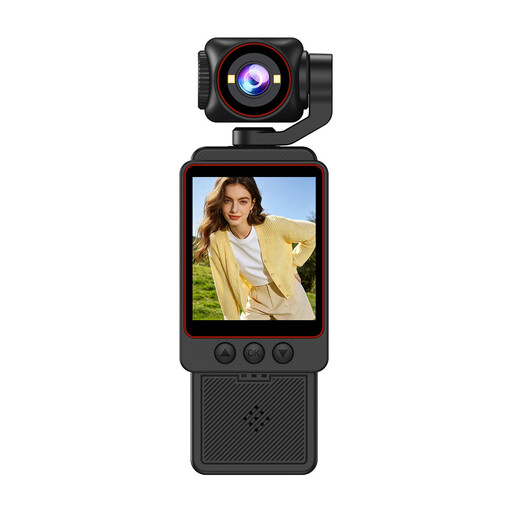
2K Pocket Vlogging Camera with 360° Rotating Lens, Black
The product title specifies 2K video and a lens that rotates through 360°. Check whether you can get the framing you want in your filming space.
View at Joybuy
 No image available
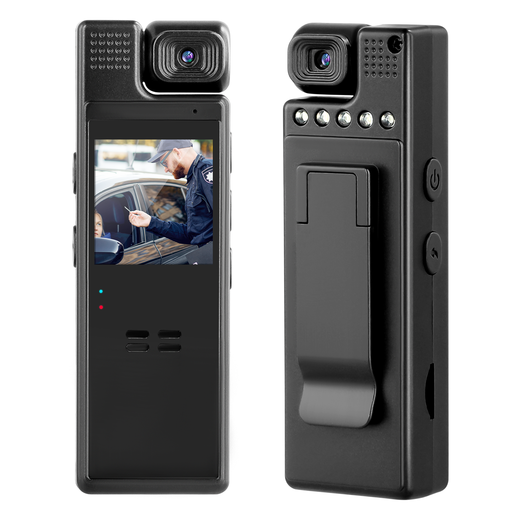
Compact Camera with Audio, 1080P, 180° Rotating Lens and Clip
The product title specifies 1080P video, audio, a manually rotating 180° lens and a clip. Check that the clip can be securely attached at your planned camera position.
View at Joybuy
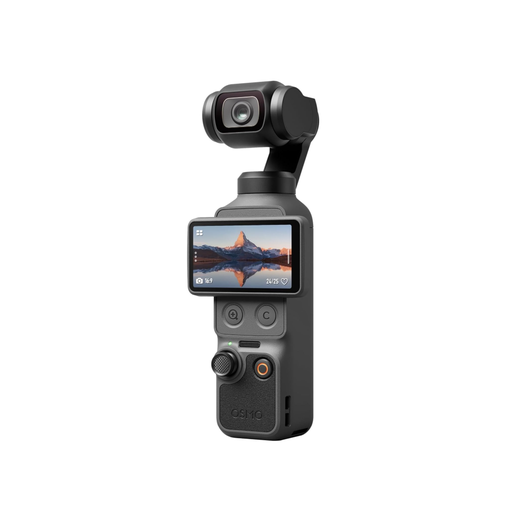 No image available
DJI Osmo Pocket 4 Standard Combo
The product title specifies a 1″ CMOS sensor, 3-axis stabilisation and a rotating 2″ screen. 4K/240 fps is listed for slow-motion mode; check the framing from your filming position.
Other details listed in the product title: 2× lossless zoom and 107 GB of built-in storage.
View at Joybuy
Frequently asked questions
Do I need a mirrorless camera for close-ups of individual flowers?
No. What matters is how large the detail appears in the frame from the working distance you have available. DJI specifies a focus range starting at 0.2 m for the Osmo Pocket 3, but being able to focus on a subject doesn’t automatically mean it will fill the frame. With a mirrorless camera, you can choose a different lens, but you should check its suitability carefully too.
How do I plan a fixed overhead shot?
First, decide where the arrangement and work surface will go, then check the framing and how easy the camera is to operate from the intended height. A movable screen can make it easier to check the image, but gimbal stabilisation alone is no substitute for a suitable mount.
What should I check before longer filming sessions and when putting the camera away?
Check the power supply, storage medium, what’s included with the specific kit version and the space needed for the mount. DJI specifies microSD storage for the Pocket 3; Nikon notes that the Z 30 Double Zoom Kit doesn’t include a charger.
Can I simply record conversations with my housemate?
Under Section 201(1) of the German Criminal Code (StGB), recording another person’s private conversation on an audio device without authorisation is a criminal offence. The German Federal Ministry of Justice and the Federal Office of Justice include this provision in the text of the law. Plan your recording times and sound so that you don’t record other people’s conversations without authorisation; whether you are authorised in a particular case depends on the circumstances.
Can I publish a video if my housemate appears in it?
Section 22 of the German Act on Copyright in Works of Art (KunstUrhG) generally requires the consent of the person shown before their image is distributed or displayed publicly. The German Federal Ministry of Justice and the Federal Office of Justice include this provision in the text of the law. Whether an exception applies in a particular case depends on the video and how it is used.


