
Lieferung heute & morgen

Qualitätsgarantie

Willkommens-Angebote freischalten: KOSTENLOSE Lieferung | Bis zu 80 % RABATT | Kostenlose 30-Tage-JoyPlus-Testphase
App herunterladen
Foam building blocks for children combine creative construction with active play in the bedroom, living room or nursery. However, products vary considerably: some sets are designed for little hands, while others contain small parts and are intended for children aged 6 and over. Before you buy, it’s worth checking the material, age recommendation, what’s included and how to care for the set.
The name “XXL building blocks for children” doesn’t tell you much about the actual size. What matters is the dimensions of each piece and how much floor space you have available. Once assembled, a soft play set may take up considerably more room than the product photo suggests.
A soft surface doesn’t automatically mean a toy is suitable for every age. Look for specific details about age recommendations, small parts, zips, connections and stability. For active play, non-slip bases and secure hook-and-loop fastenings are useful points to consider.
Covers on toys for crawling and climbing can quickly get dirty. Check whether they can be removed, how they should be cleaned and whether the foam itself can come into contact with water. Ideally, “washable” should refer to the cover rather than the entire product.
For babies and toddlers, large, soft climbing blocks are generally a better option than sets with small connecting pieces. Products with small parts should only be used by children in the stated age group. For blocks intended for children aged 3 and over, a warning about choking is especially important if any individual pieces are small enough to fit in a child’s mouth. Sets labelled building blocks for ages 6 and over aren’t intended for younger children, even if they look appealing.
For soft play products, look for a foam core that holds its shape, a hard-wearing cover and concealed fastenings. Removable covers make regular cleaning easier. With washable blocks, you should also check the recommended washing temperature.
The product descriptions for the BanaSuper sets featured here specify high-density or high-resilience foam, fabric covers and machine-washable covers. According to BanaSuper’s product descriptions, the sets also have concealed zips. This information is based on the manufacturers’ details and doesn’t replace checking the item you receive yourself.
The EN 71 marking covers European requirements for toy safety. The BanaSuper sets’ product details refer to EN71-1, EN71-2 and EN71-3, as well as Toy Safety Directive 2009/48/EC. EN71-1 relates, among other things, to mechanical and physical properties; EN71-2 covers flammability; and EN71-3 covers the migration of certain chemical elements.
You should be able to verify this information in the product listing, on the packaging or in the documents provided. A product description alone is no substitute for checking the relevant markings. For climbing and balancing games, the set should also be placed on a level surface. A non-slip base can help prevent it from moving, but it doesn’t remove the need for supervision.
The products below are suited to different needs. Before ordering, check the age recommendation, what’s included and the product details for each set.
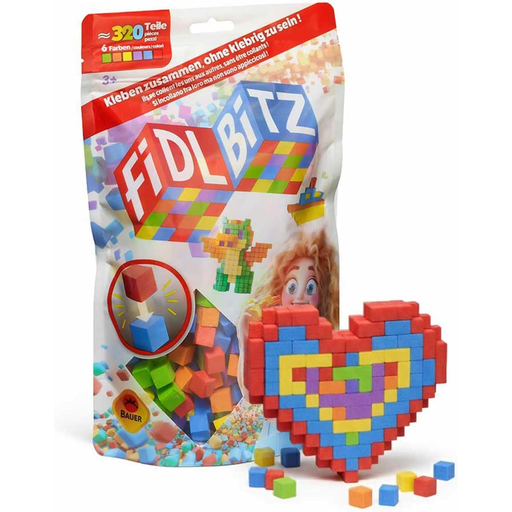
Why this product suits this need: According to the product description, the set contains around 320 cubes and is intended for children aged 3 and over. It’s great for creative play in a small space, but isn’t designed to be used as climbing equipment.
The product description gives the approximate number of pieces, the age recommendation and a warning about small parts. This makes it easier to decide whether the set is right for your needs.
Around 320 pieces, no batteries required, and suitable for making 2D and 3D figures.
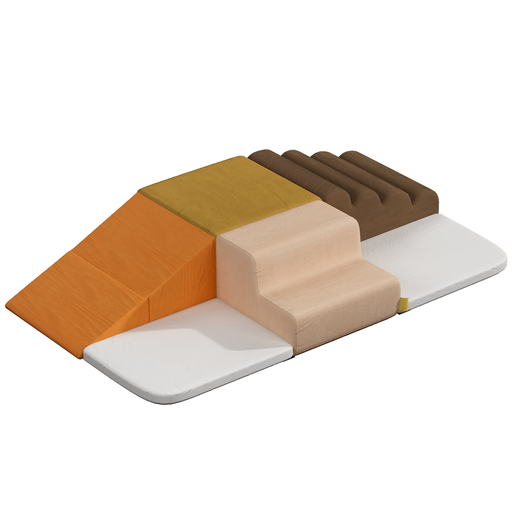
Why this product suits this need: According to the product description, this six-piece set is designed for climbing, crawling, sliding and building. It can be arranged in different ways in a suitably spacious indoor area.
The product details specify six pieces, non-slip bases, hook-and-loop fastenings and removable covers. The set is delivered vacuum-packed and, according to the description, needs 24 to 48 hours to expand.
Six large pieces, machine-washable covers and, according to the product description, details of EN71-1, EN71-2 and EN71-3.

Why this product suits this need: According to the product description, this indoor play set combines climbing blocks with a ball pit base. It’s a good option for families, childminders or nursery settings looking to offer several types of play in one set.
The product details clearly state that balls aren’t included, so you can budget for the extra cost in advance. The description also specifies washable covers and concealed zips.
Combines a ball pit base with soft building blocks; according to the product description, the covers and ball pit lining are removable and machine-washable.
We’ve put together a complete, regularly updated list of products that meet these strict selection criteria and fully comply with the safety regulations in force in the EU.
Place foam building blocks on a dry, level surface and keep them away from radiators and sharp edges. Before each use, check the seams, covers, hook-and-loop areas and foam for tears or signs of distortion. Don’t continue using damaged pieces.
Depending on the product, vacuum-packed blocks may take up to 24 or 48 hours to regain their full shape. Their lifespan depends less on advertised features than on how heavily they’re used, how they’re stored and how they’re cared for. Clean the covers according to the manufacturer’s instructions and make sure they’re completely dry.
It depends on the product. Large, firm pieces without small parts that could be swallowed may be designed for younger children. However, the age recommendation, safety instructions and appropriate supervision are what matter. Sets with small pieces aren’t suitable for babies.
This depends on what’s included and the dimensions of the individual pieces. Allow extra room to move around as well as space for the set, and move furniture with hard edges away from the play area. The product page should give the dimensions.
Usually, you remove the fabric covers and wash them according to the care label. Don’t soak the foam core unless the manufacturer specifically says it’s safe to do so. Make sure the covers are completely dry before putting them back on.