
Lieferung heute & morgen

Qualitätsgarantie

Willkommens-Angebote freischalten: KOSTENLOSE Lieferung | Bis zu 80 % RABATT | Kostenlose 30-Tage-JoyPlus-Testphase
App herunterladen
Foam building blocks for children can be used in the living room, nursery or playroom as building pieces, crawling aids and mini activity courses. Before you buy, though, it’s worth taking a closer look at the materials, construction and age guidance. Large product images and terms such as “XXL”, “Montessori” or “soft play” alone tell you little about how well a product will stand up to everyday use.
XXL foam building blocks need plenty of clear floor space. In smaller homes, several pieces can quickly block pathways. Before buying, check:
When it comes to washable play blocks, check whether the cover can be removed completely and what washing temperature it can withstand. A wipe-clean cover is not the same as a removable, machine-washable one. Zips, hook-and-loop fastenings and seams should also remain in good working order after washing.
A claim such as “EN71 certified” should ideally specify which parts of the standard apply. EN71-1 covers mechanical and physical properties, EN71-2 flammability and EN71-3 the migration of certain elements. These standards still don’t replace adult supervision or checks for damage.
Soft building blocks for children are often made from EPE, EVA or polyurethane foam. The material name isn’t the only thing that matters: check the information on shape retention, density and padding, too. A core that’s too soft may give way more quickly when used for climbing; a very firm core may be less comfortable for crawling.
Also look for:
Climbing blocks for babies are suitable only if their shape, height and stability match your child’s stage of development. Low pieces for crawling and grasping are best for babies. Pre-school children are more likely to enjoy ramps, steps, tunnels and balance shapes.
Small individual pieces can be a hazard for children under three. Pay particular attention to age guidance and warnings when buying separate creative building blocks. This also applies to nurseries and educational settings where children of different ages share the same room.
Foam modules packed under vacuum often need time to expand once unpacked. The BanaSuper sets described here are stated to need 24 to 48 hours. Don’t put weight on the pieces during this time.
If the set will be used regularly, a simple care routine is helpful:
The recommendations below group products according to different needs. Information on standards, materials and features is based on the details provided for each product.
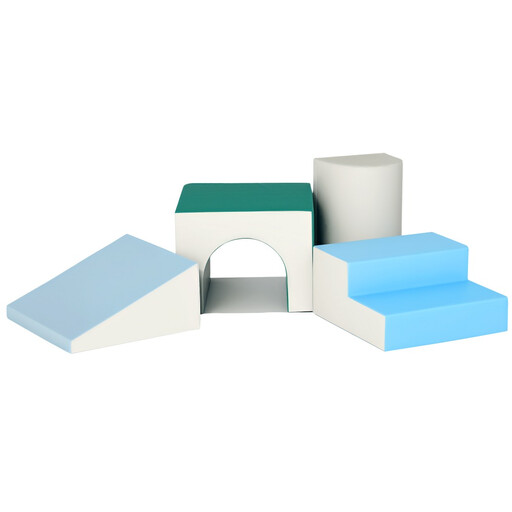
Why this product fits the bill: This four-piece set could suit households looking for a compact introduction to active play. Check the exact dimensions and recommended age on the product page before buying.
The manageable number of pieces makes it easier to plan your floor space and keeps unnecessary loose parts out of the play area.
Four-piece design with a multicoloured finish for a variety of layouts.
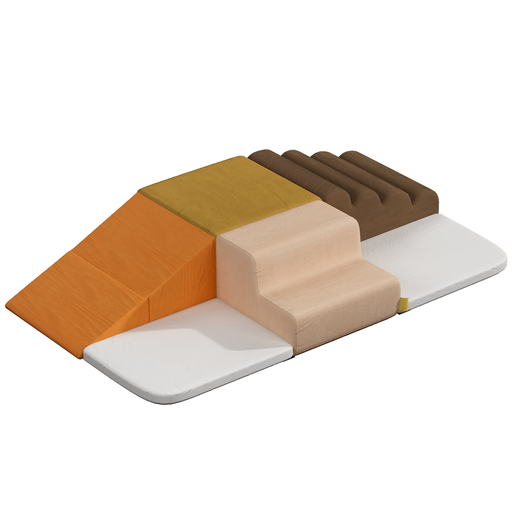
Why this product fits the bill: This set is designed for families, nurseries or playrooms planning a larger soft play set for building, crawling and climbing.
According to the product information, the set has concealed zips, hook-and-loop fastenings, non-slip undersides and machine-washable covers.
Six pieces, high-density foam and stated compliance with EN71-1, EN71-2 and EN71-3.

Why this product fits the bill: This set combines climbing pieces with a ball-pit base. It’s suited to households or settings with plenty of space and frequent use.
The product information clearly states that play balls are not included, so you can factor in the extra purchase before you buy.
Combines several foam pieces with a ball-pit base; according to the product information, the covers and ball-pit insert are removable and machine washable.
We’ve put together a complete, regularly updated list of products that meet these strict selection criteria and fully comply with the safety regulations in force in the EU.
It depends on the height, shape and material of the blocks, as well as the manufacturer’s guidance. In general, low, stable pieces with no small parts are suitable for babies. They should always be used under close supervision. Once your child can climb independently, make sure the surface is non-slip enough and there’s plenty of clear space.
There’s no single answer. It depends on the quality of the foam, how heavily the blocks are used, how they’re stored and how they’re cleaned. Check the seams, covers, hook-and-loop areas and foam core regularly. Stop using a piece if it becomes permanently misshapen, develops tears or has loose parts.
Removable covers can be washed according to the care label. Don’t soak the foam core unless the manufacturer says it can be cleaned that way. For nurseries and childcare settings, washable covers, dry storage and recorded visual checks are particularly useful. They make it easier to fit crawling and climbing toys into the daily routine.