
Lieferung heute & morgen

Qualitätsgarantie

Willkommens-Angebote freischalten: KOSTENLOSE Lieferung | Bis zu 80 % RABATT | Kostenlose 30-Tage-JoyPlus-Testphase
App herunterladen
A good foldable camping chair is the foundation for a relaxing time outdoors, whether you're camping, at a festival, or fishing. However, the market is saturated with models of widely varying quality. An unsuitable purchase not only leads to discomfort but can also be a waste of money. Many users make similar mistakes that are easy to avoid.
This guide focuses on the objective criteria that define a durable and functional folding chair. We highlight the most common pitfalls and show you what to look for when making your selection to ensure you make an informed decision.
The 3 most common mistakes when buying a camping chair:
To avoid the problems mentioned above, you should carefully examine three technical aspects before buying. These largely determine the stability, comfort, and longevity of your outdoor chair.
The frame is the chair's skeleton and is crucial for its stability and lifespan.
lightweight camping chair for backpacking or trekking is almost always based on an aluminium frame. These models are often in the higher price range.beach chair or fishing chair.These factors define the safety and sitting comfort, especially during prolonged use.
high-capacity camping chair (e.g., 120 kg or more) suggests a more solid construction. For safety reasons, this limit should not be exceeded.high-back camping chair supports the entire back and often the head, which makes a significant difference when sitting for hours. Pay attention to the dimensions of the seat and the height of the backrest.Portability is the decisive criterion for many applications.
festival chair that is carried across the grounds, or a chair for hiking, the weight should be significantly lower. Ultralight models can weigh less than 1 kg.Based on the criteria above, we have identified some models that are well-suited for specific user groups and their requirements.
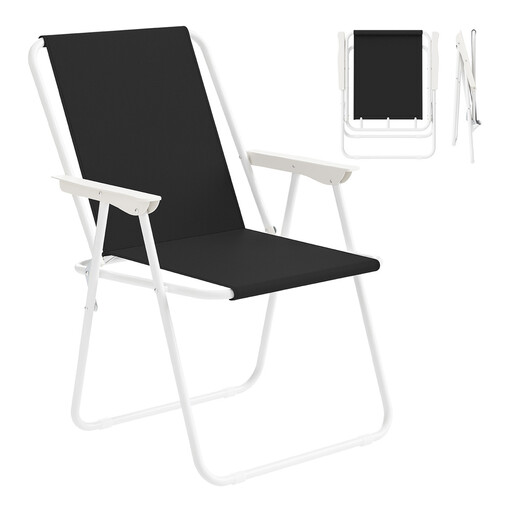
Why this model fits: Ideal for those who want a straightforward and portable chair for occasional outings, picnics, or festivals without investing a large budget.
The frame made of 18 mm thick iron tubes and the cover made of 600D Oxford fabric provide a solid foundation, avoiding the typical weak points of the cheapest models. The construction is designed for a load capacity of 100 kg.
With a weight of approx. 2.1 kg and a flat folded size, it is easy to transport. It requires no assembly and is ready to use out of the box.

Why this model fits: Designed for users who value high stability and comfort during long periods of sitting, such as when fishing or during relaxed car camping.
The robust steel alloy and a specified static load capacity of 180 kg counteract the problem of unstable constructions. The solid armrests provide stable support when standing up, which is often lacking in soft fabric armrests.
The 70 cm high backrest supports the shoulders and head. A cup holder and a side pocket offer practical storage space for accessories.
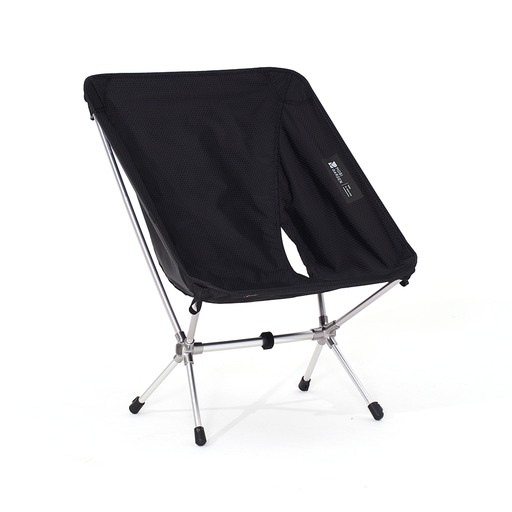
Why this model fits: Designed for users where every gram counts. Perfect for trekking, bike tours, or minimalist camping, where packed size and weight are the most important criteria.
This model solves the problem of misleading weight specifications with a verified net weight of only approx. 765 g and an extremely small packed size of 36 cm in length. The aluminium alloy frame offers high stability despite its low weight.
Extremely lightweight and compact. The triangulated frame structure provides a surprisingly high load capacity of approx. 140 kg. The chair is quick to set up and take down.
We have compiled a complete, up-to-date list of products that fully meet these strict selection criteria and safety regulations.
1. How do I properly care for a foldable camping chair to extend its lifespan? Clean the chair of dirt, sand, or dust after each use. Use a damp cloth for this; avoid harsh chemical cleaners. Let the chair air dry completely before storing it in its transport bag. Store it in a dry place to prevent rust on the frame and mould on the fabric.
2. What does "static load capacity" mean and why is it important? The static load capacity indicates the maximum weight the chair can support on a level surface when not in motion. It is a crucial safety indicator. Exceeding this limit can lead to material fatigue, deformation of the frame, or a sudden break, which poses a risk of injury.
3. Can I use any camping chair on the beach? In principle, yes, but chairs with narrow feet tend to sink deep into soft sand and lose stability. For use as a beach chair, models with wide, disc-shaped feet or special sand pads are better suited, as they distribute the weight over a larger area and thus prevent sinking.