
Lieferung heute & morgen

Qualitätsgarantie

Willkommens-Angebote freischalten: KOSTENLOSE Lieferung | Bis zu 80 % RABATT | Kostenlose 30-Tage-JoyPlus-Testphase
App herunterladen
A foldable camping wagon makes transporting tents, cool boxes, drinks and picnic gear so much easier. You can also use a collapsible camping trolley for trips to the beach, festivals, gardening jobs or the weekly shop. However, big marketing claims don't always lead to the right product for you.
Three typical buying pitfalls to check before you order:
For a family with camping gear, a generous interior is handy. A wagon with 127 l capacity can hold several bags, blankets or food items, for example. If you need to transport heavy equipment, you must also check the maximum load.
Models with a stated load capacity of 150 kg or 200 kg are suitable for heavier loads, according to product information. That doesn't mean every load can be moved safely regardless of the surface. On sloping ground, sand or uneven terrain, you should reduce the load and distribute it evenly.
Also pay attention to whether a claim like "stackable capacity" actually describes the usable interior space or just the extra room above the tub. For practical use, internal dimensions and folded dimensions are more meaningful than a standalone litre figure.
A wagon with large wheels or an off-road wagon is often more suitable for forest paths, meadows and campsites than a model with small castors. Wide tyres can reduce sinking on soft ground. For longer distances, smooth-running bearings and an adjustable handle are also important.
360-degree swivel wheels make it easier to manoeuvre in tight spaces, such as at a market stall or on a fairground. For uneven paths, however, you should check whether the construction is designed for that use. The term "off-road" alone is not a standardised quality mark.
A collapsible transport trolley should fold down without excessive effort and lock securely when opened. Models that need no assembly are particularly practical, especially if you want to use the wagon straight away at the campsite.
When it comes to materials, you'll find 600D Oxford fabric, steel or carbon steel frames, and PVC or rubber wheels. The fabric should be dry after use before you fold the wagon. Check metal parts for moisture before storing them for a long time. Also inspect the wheel fixings, joints and brakes regularly.
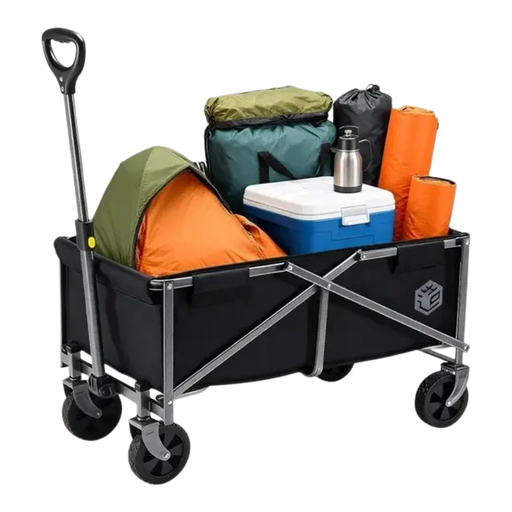
Why this product fits the profile: This compact camping trolley offers 75 l of internal volume and a stated load capacity of up to 100 kg. The integrated design is ready to use with no assembly required, making it ideal for smaller camping trips, shopping or picnics.
The specifications clearly separate internal volume and maximum load. This makes it easier to assess real-world use, rather than buying based on a large litre figure alone.
75 l volume, 100 kg stated load capacity, 360-degree swivel wheels and foldable design.

Why this product fits the profile: With 127 l of internal volume, a stated load capacity of 200 kg, two front brakes and a folding mechanism for storage, this wagon is aimed at families and regular campers.
The product data lists load capacity, volume and brake type separately. The brakes are designed for securing the wagon when stationary, not as a running brake.
127 l storage space, 200 kg stated load capacity, dual brake and foldable construction.
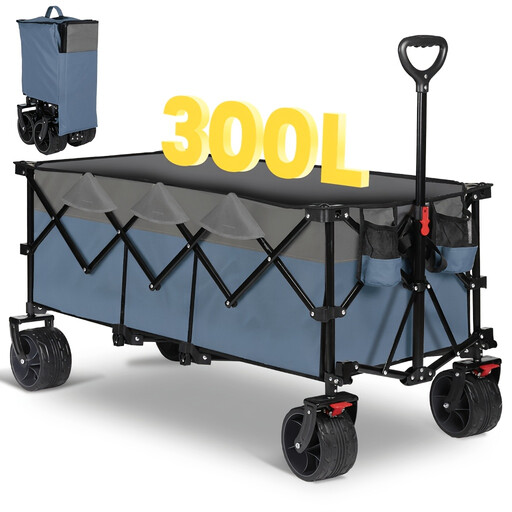
Why this product fits the profile: According to the product information, this outdoor transport wagon offers 300 l of storage, a load capacity of 200 kg, wide 7-inch tyres and brakes. That makes it interesting for gardeners, market stalls and extensive camping gear.
Wide tyres, brakes and a stated payload are all clearly specified. Nevertheless, you should be cautious about the load on uneven ground.
300 l volume, 200 kg stated load capacity, 7-inch tyres, folding mechanism and two cup holders.
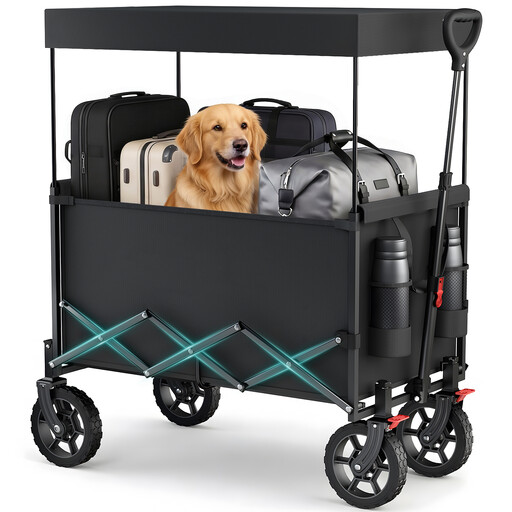
Why this product fits the profile: This model combines 150 l of storage with off-road tyres, brakes, a telescopic handle and a removable canopy. It's designed for the beach, picnics and changing weather conditions.
The product description clearly states the maximum load of 150 kg and the intended brakes. The canopy is removable and does not replace weather protection for sensitive equipment.
150 l volume, 150 kg stated load capacity, removable canopy, off-road tyres and adjustable telescopic handle.
We've put together a full, regularly updated list of products that fully meet these strict selection criteria and the safety regulations in force in the EU.
Unfold the wagon completely and check that all the intended locks have clicked into place. Only then should you load it. Heavy items should go as low and central as possible. Before loading on a slope, engage the parking brakes.
The lifespan depends on the load, terrain, moisture and care. A wagon should never be operated permanently above its stated load capacity. After use on sand or mud, it's a good idea to clean the wheels. The fabric should dry completely before you fold and store the wagon.
Apart from the purchase price, there are usually no regular running costs. However, you may need to replace wheels, bearings or fixing parts. So check before you buy whether spare parts and warranty information are provided. For everyday use, the folded size also matters: if the wagon fits in your boot or the storage space you have, you'll find it practical to use more often.