
Lieferung heute & morgen

Qualitätsgarantie

Willkommens-Angebote freischalten: KOSTENLOSE Lieferung | Bis zu 80 % RABATT | Kostenlose 30-Tage-JoyPlus-Testphase
App herunterladen
For many dog owners, a foldable dog crate is a convenient solution: it's lightweight, space-saving, and versatile—perfect for holiday travel, vet visits, or as a familiar sanctuary at home. However, the market offers an overwhelming selection, and not every model delivers on its promise.
As your Joybuy Product Recommendation Officer, I often see where the real problems lie. Many buyers focus on advertising claims instead of paying attention to critical design features. This often leads to frustration and, in the worst-case scenario, an unsafe environment for the dog. This guide will walk you through the most common pitfalls and highlight what truly matters when making your choice.
Before you make a purchase, you should be aware of the typical flaws found in budget-friendly or poorly designed models, which often only become apparent after a few weeks or months.
To avoid these problems, focus on three core technical parameters. These determine the durability, safety, and practicality of your foldable dog crate.
The stability of a foldable crate depends entirely on its internal frame. Look for a powder-coated steel tube frame. This material offers an excellent balance of stability and weight. The folding mechanism should be easy to operate but lock securely when assembled. Check that the joints feel sturdy and have no sharp edges that could injure your dog.
A durable cover is crucial for longevity. A proven industry standard is 600D Oxford fabric. This material is robust, abrasion-resistant, and often features a PVC coating that makes it water-repellent and easy to clean. For adequate air circulation, especially when used as a dog crate for the car, at least three sides of the crate should be equipped with large, tear-resistant mesh windows.
A dog travel crate should be neither too large nor too small. Your dog should be able to stand up comfortably, turn around, and lie down fully stretched out. Measure your dog's back length and shoulder height, then add 10–15 cm to each to determine the appropriate internal dimensions. For example, a 60x42x42 cm dog transport crate is well-suited as a crate for small dogs to medium-sized breeds like Corgis or French Bulldogs (approx. 7–11 kg). A removable and washable floor liner, ideally made of soft fleece, increases comfort and makes cleaning significantly easier.
Based on the criteria above, we have identified several products from our range that represent a considered choice for different user profiles and needs.
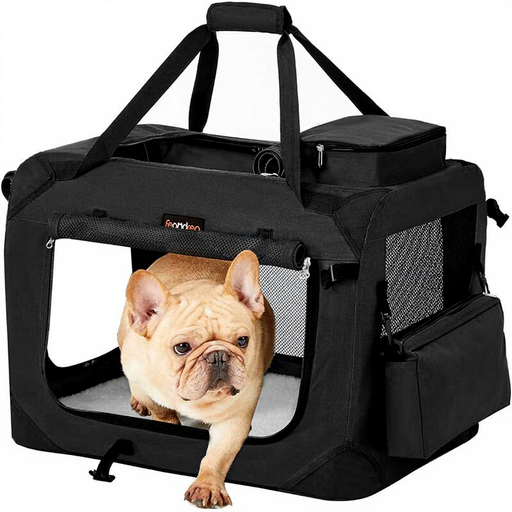
Why This Fits Their Persona: Ideal for dog owners who travel frequently by car and need a solution that is both robust and space-saving. The crate folds down to a height of just 8 cm, fitting easily into a car boot or a corner of a hotel room.
The sturdy metal frame prevents collapse. The PVC-coated Oxford fabric is water-repellent and easy to wipe down, which avoids hygiene issues.
Sturdy steel tube frame; folds very flat (8 cm); includes a washable fleece mat.
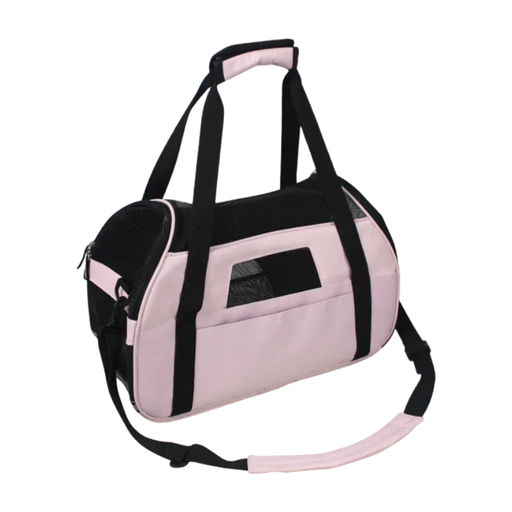
Why This Fits Their Persona: Perfect for transporting smaller dogs (up to 7 kg) in the city. The bag is lightweight, has a shoulder strap, and features practical pockets for a leash, treats, or vaccination records—ideal for trips to the vet or on public transport.
The 600D Oxford fabric is resistant to wear and tear. The generous mesh windows on all sides ensure good ventilation, and an internal hook for attaching to a collar prevents the dog from jumping out.
High portability due to its light weight and shoulder strap; practical external pockets; excellent all-around ventilation.
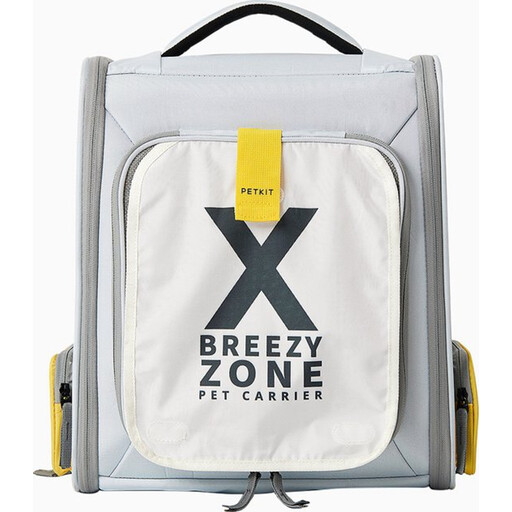
Why This Fits Their Persona: For owners of very small dogs (up to 6 kg) looking for an innovative and comfortable transport solution for hikes or city outings. The backpack expands into a small tent to give the pet more room to move during breaks.
It addresses pet anxiety with a special blackout curtain that reduces external stimuli. The highly breathable mesh fabric prevents heat build-up and ensures constant comfort.
Innovative 2-in-1 design (backpack and tent); blackout curtain to reduce stress; excellent ventilation.
We have compiled a complete, up-to-date list of products that fully meet these strict selection criteria and all relevant safety regulations.
Start the familiarisation process in a quiet environment at home. Set up the crate and leave the door open. Place a familiar blanket, toy, or treats inside to create positive associations. Feed your dog in the crate and praise them when they enter on their own. Initially, close the door for just a few seconds and slowly increase the duration. Never force your dog into the crate.
In a car, a foldable fabric crate primarily serves to keep the dog securely in one place and prevent driver distraction. It does not offer the same impact protection as a fixed metal or plastic crate. For maximum safety, the dog crate for the car should be placed on the back seat and secured with the seatbelt using the provided loops. Never leave your dog alone in the crate in a car during warm weather.
Most models can be wiped down with a damp cloth and a mild soap solution. Check if the floor liner or the entire cover is removable and machine-washable—this is a significant advantage. After cleaning, allow the crate to air-dry completely to prevent mould growth. Always follow the manufacturer's specific care instructions.