
Lieferung heute & morgen

Qualitätsgarantie

Willkommens-Angebote freischalten: KOSTENLOSE Lieferung | Bis zu 80 % RABATT | Kostenlose 30-Tage-JoyPlus-Testphase
App herunterladen
A foldable dog crate promises flexibility for travel, car rides, and vet visits. It's lightweight, space-saving, and always ready when you need it. However, the market is flooded with models that can be a real letdown in practice. Before you make a decision, it's crucial to understand the typical weak points that can turn an initially convenient solution into an unsafe and frustrating waste of money.
Many dog owners report similar problems that often only appear after a few uses. These three design flaws are particularly common:
To avoid these pitfalls, you should base your choice on objective criteria. Focus on three core parameters that determine safety, durability, and ease of use.
The frame is the foundation of any foldable crate. A sturdy steel frame is the most reliable choice here. Ensure the tubes have a sufficient diameter and the connectors are robustly made. A solid frame ensures the crate maintains its shape, even during car journeys, and offers your dog a protected space. Models designed as a foldable dog cage often rely on an even more robust grid structure, guaranteeing maximum stability.
For a soft-sided dog crate, the quality of the fabric is paramount. Durable Oxford fabric (often polyester) has proven effective as it is scratch-resistant, water-repellent, and easy to clean. The mesh material is at least as important. It should be tear-resistant and feature on at least three sides of the crate to ensure good air circulation and an outside view. This reduces a dog's travel anxiety and prevents overheating. A lightweight dog crate doesn't have to be unstable; modern materials allow for a combination of low weight and high strength.
The crate must be large enough for your dog to stand, turn around, and lie down comfortably. Measure your dog's shoulder height and length (from nose to the base of the tail) and add 10–15 cm to each to determine the appropriate internal dimensions. For use as a car dog crate, compatibility with your vehicle is crucial. Measure your boot or back seat and check if the crate has loops or other features for securing it with a seatbelt or tension straps. This prevents the dog travel crate from sliding during braking. This is an indispensable safety feature, especially for a dog crate for large dogs.
Instead of making a one-size-fits-all recommendation, we have identified models tailored to the specific needs of dog owners.
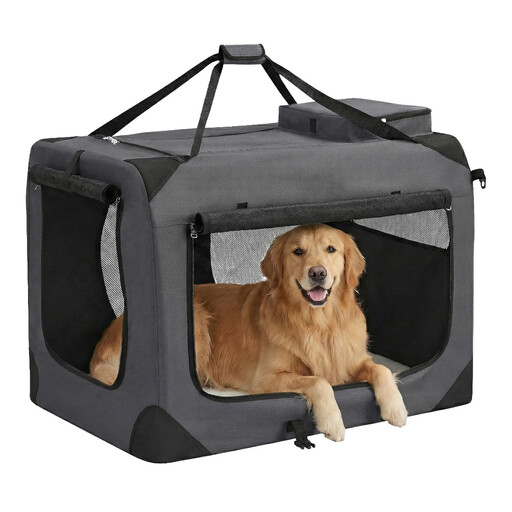
Why it's a great fit: Ideal for owners of large breeds who need a spacious yet portable dog den for long car journeys, holidays, or hotel stays. Offers plenty of room to stretch out.
The robust steel frame provides the necessary stability that many budget crates lack. The durable Oxford fabric and large mesh panels prevent tears and ensure optimal ventilation.
Generous dimensions (102 × 69 × 69 cm) provide comfort even for dogs up to approx. 40 kg. Folds down compactly into the included carry bag when not in use.
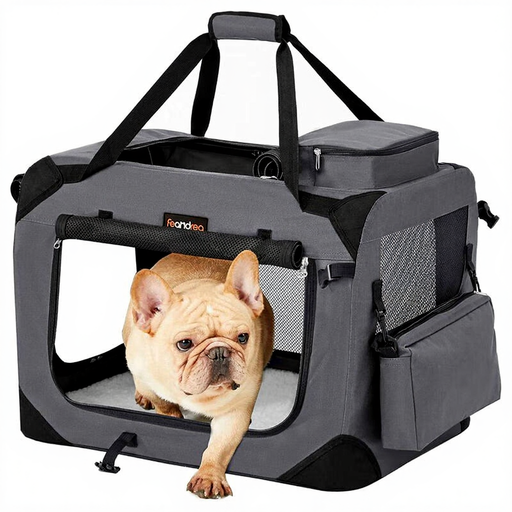
Why it's a great fit: Perfect for owners of small to medium-sized dogs (e.g., French Bulldog, Corgi) who need a space-saving solution for vet visits or short trips.
Despite its light weight, the metal frame provides the necessary stability. The straightforward folding mechanism allows it to collapse to just 8 cm in height, avoiding frustrating handling.
Extremely compact for storage (60 x 42 x 8 cm). Includes a soft, easy-to-clean fleece mat for added comfort.
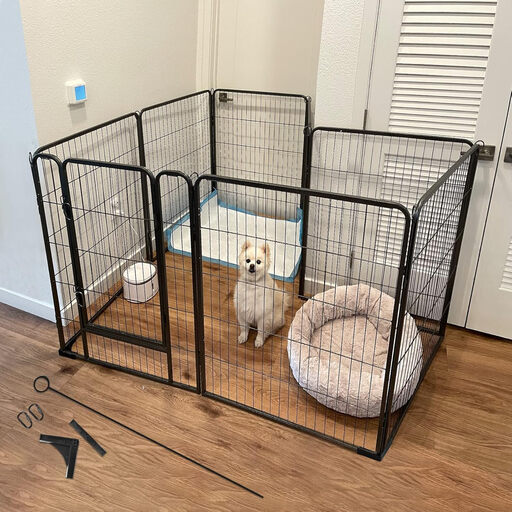
Why it's a great fit: An alternative for dog owners who need a secure, mobile, and customisable area for home, the garden, or camping, rather than a traditional travel crate.
Instead of a fabric crate, this uses a modular system of robust metal panels. This offers maximum stability and durability and cannot be torn or chewed through.
The modular design allows for flexible shapes (e.g., rectangle, octagon). The rust-resistant metal is suitable for indoor and outdoor use and can be assembled without tools.
A crate with a customisable interior can be particularly useful for puppies or for separating multiple dogs. We have compiled a selection of products that meet these requirements.
Make the foldable crate a positive space. Place a familiar blanket and toys inside. Leave the door open at first and reward your dog with treats when they explore the crate on their own. Start with short periods of closing the door and slowly increase the duration. Associate the crate with pleasant experiences, not just trips to the vet.
Most fabric crates are easy to clean. For light soiling, wiping with a damp cloth and mild soapy water is often sufficient. Many models have a removable and washable floor mat. Avoid machine washing the entire crate, as this can damage the frame and fabric. Let the crate air dry completely after cleaning before folding it up.
For maximum impact protection, automotive clubs and safety experts often recommend permanently installed metal or aluminium crates. However, a high-quality, sturdy foldable dog crate significantly increases safety compared to an unsecured dog. It prevents the dog from being thrown through the vehicle during braking or distracting the driver. It is crucial that the crate itself is firmly secured in the vehicle, for example, by passing the seatbelt through the designated loops.