
Lieferung heute & morgen

Qualitätsgarantie
App herunterladen
Kategorien
A collapsible dog crate offers a functional solution for pet owners seeking a secure transport option that stores compactly when not in use. Unlike rigid plastic or metal crates, these models combine flexibility with a lightweight design. Choosing the right model depends on specific parameters such as the animal's size, the material, and the intended use. This article analyses the key technical features and presents a selection of recommended models.
The decision to purchase a collapsible dog crate should be based on an objective evaluation of its material, construction, and functionality. The following criteria are essential for making an informed choice.
The durability of a soft-sided dog crate is largely determined by the materials used. High-quality models often use Oxford fabric (e.g., 300D or 600D polyester), known for its abrasion resistance and water-repellent properties. A PVC coating can further enhance its resilience. The frame, typically made from steel tubing, provides the necessary stability. Pay close attention to the quality of the connectors and the folding mechanism.
The crate must provide enough space for your pet to stand up straight, turn around, and lie down comfortably. Measure your dog's height while standing (floor to head) and its length (tip of the nose to the base of the tail). Add 5-10 cm to both measurements to determine the minimum internal dimensions for the crate. An oversized crate offers less support during sudden braking in a car.
Large mesh panels on multiple sides are essential for adequate air circulation and stress reduction. The mesh material should be tear-resistant to withstand claws and teeth. Good outward visibility can help calm the animal during travel.
For use as a dog crate for cars, specific safety aspects must be considered. Sturdy zippers, ideally with a locking feature, prevent accidental opening from the inside. Some models feature loops for securing the crate with the vehicle's seatbelt. An integrated safety tether can prevent the pet from jumping out when the door is opened.
Features like carrying handles, a detachable shoulder strap, or wheels (on a pet trolley) enhance user convenience. Extra pockets provide storage space for a leash, water bottle, or documents. A removable and washable floor mat simplifies cleaning.
Based on the technical criteria above, we have compiled a selection of products that cater to different needs.
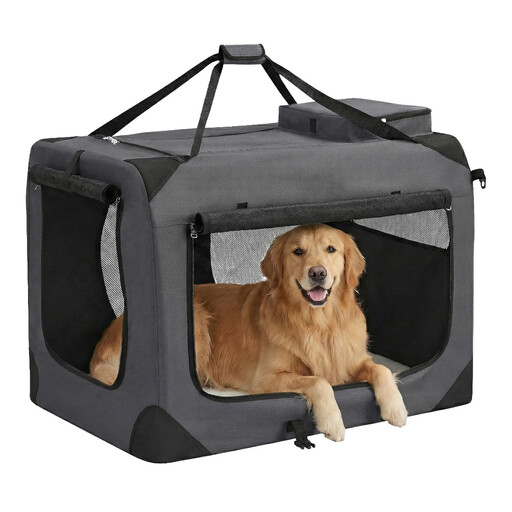
Product Feature Analysis: This model is designed for owners of large dogs who need a spacious yet compactly storable dog travel crate. The construction of Oxford fabric and a steel frame provides a stable structure. The generous mesh windows ensure 360-degree ventilation.
Advantages:
Best Suited For: Owners of large dog breeds looking for a flexible transport solution for car trips, travel, or as a temporary resting place at home.
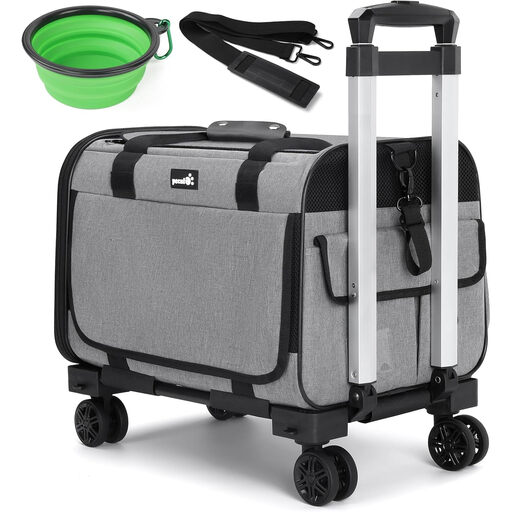
Product Feature Analysis: This pet trolley combines the function of a dog carrier bag with the mobility of a suitcase. The design, featuring an aluminum telescoping handle and four wheels, is engineered for the comfortable transport of smaller pets over long distances, such as in airports or train stations.
Advantages:
Best Suited For: Owners of cats, puppies, and small dogs up to 10 kg who travel frequently and require a flexible, wheeled transport solution. Also an excellent choice as a cat carrier.
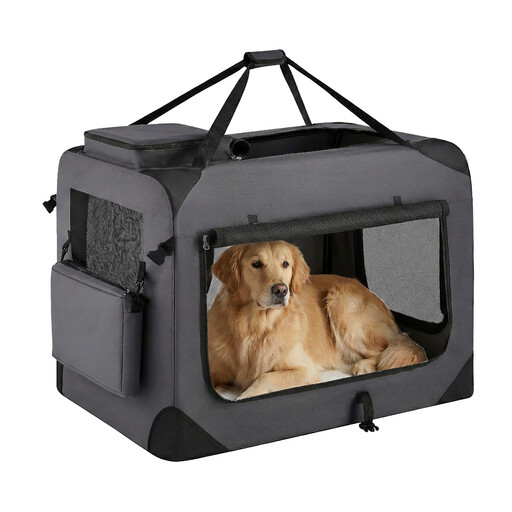
Product Feature Analysis: This model offers a well-balanced combination of spaciousness and portability. It is aimed at owners of medium to large-sized dogs. The construction, featuring 600D Oxford fabric with a PVC coating and a metal frame, promises high durability.
Advantages:
Best Suited For: Owners of medium to large dog breeds such as Huskies, Retrievers, or Border Collies who are looking for a reliable and easy-to-handle dog travel crate for various scenarios.
If the models presented here do not exactly meet your size or feature requirements, a broader selection of transport solutions may offer the right alternative. Discover more styles and sizes in our collapsible carriers category.
1. How large does a dog crate need to be? The crate should be sized to allow your dog to stand up comfortably, turn around, and lie down in a natural position. Measure your dog's shoulder height and length (from nose to the base of the tail) and add about 10 cm to each measurement to determine the required minimum internal dimensions.
2. How do I get my dog accustomed to a travel crate? Start by placing the open crate in your living area. Place a familiar blanket and toys inside to create a positive association. Reward your dog whenever it explores the crate on its own. Start with short periods of closing the door, gradually increasing the duration. The first few trips should be short and lead to a positive destination, like a park.
3. Is a soft-sided dog crate safe for the car? A high-quality soft-sided dog crate with a sturdy metal frame offers good protection when properly secured. Make sure to position the crate in the vehicle so it cannot slide, ideally in the footwell behind the front seats or secured in the boot. Use any available fastening loops to secure the crate with the seatbelt. For impact protection comparable to that of hard-shell crates, special, crash-tested models are required. The soft-sided crates featured here are primarily intended for secure containment and to protect the animal during transit.