
Lieferung heute & morgen

Qualitätsgarantie

Willkommens-Angebote freischalten: KOSTENLOSE Lieferung | Bis zu 80 % RABATT | Kostenlose 30-Tage-JoyPlus-Testphase
App herunterladen
A foldable electric wheelchair can be a game-changer for greater independence and quality of life. The ability to stay mobile—whether for daily shopping, a trip to the park, or travelling—is invaluable. But the market can be daunting and is filled with technical jargon. As your Joybuy Product Recommendation Officer, I'm here to help you understand the key features and avoid common purchasing pitfalls, so you can make an informed decision.
When researching a suitable model, many buyers encounter promises that don't hold up in practice. Pay close attention to these three points to avoid making a poor investment.
To find the right foldable electric wheelchair for your needs, focus on the following objective criteria.
The frame material is a key determinant of weight and stability.
In addition to weight, pay attention to the folded dimensions. Will the folded wheelchair fit easily into your car's boot? A compact, lightweight foldable electric wheelchair has a clear advantage here.
The drive system's power is crucial for everyday usability.
The type of tyres has a major impact on ride comfort and potential uses.
For users who frequently travel on unpaved paths or poor-quality roads, an all-terrain electric wheelchair with larger drive wheels and good suspension is an option worth considering.
Here are some models tailored to specific needs that cleverly navigate the pitfalls mentioned.
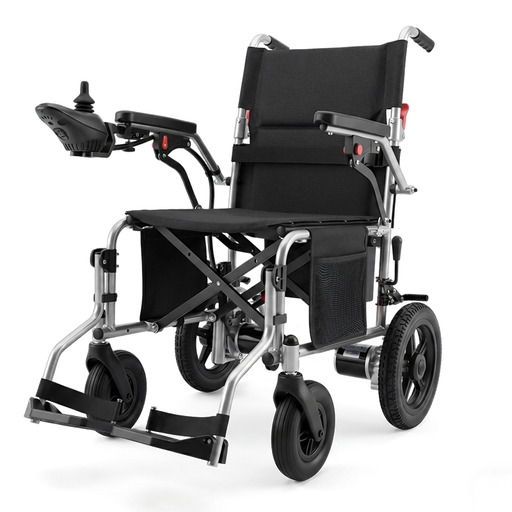
Why this model fits: A solid and reliable choice for daily mobility in the city and for running errands. The robust steel frame and proven technology make it a practical companion for users who value stability and straightforward handling.
The net weight of 23.45 kg is clearly stated, allowing for a realistic assessment of the effort required for transport and avoiding the "Weight Trap." The range of approx. 24 km (15 miles) is a practical figure for daily use.
Two 250-watt motors (500 W total power) provide reliable propulsion, even on urban inclines or uneven pavements.
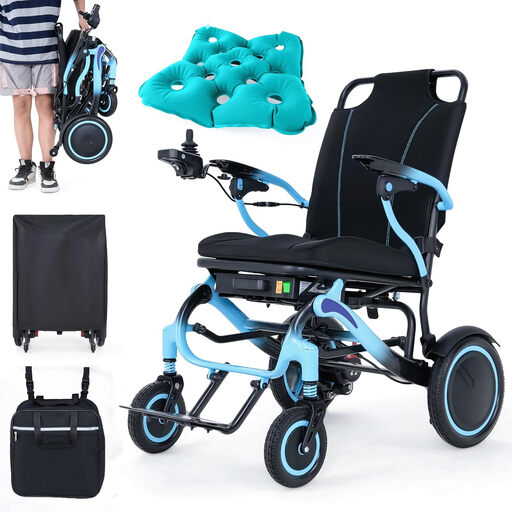
Why this model fits: Ideal for anyone who frequently travels by car or plane. The construction from lightweight materials like carbon fibre and aluminium makes lifting and stowing it significantly easier. A perfect electric wheelchair for travel.
This model addresses the "Complex Folding Mechanism" pitfall with a folding process that, according to the manufacturer, takes just a few seconds. The removable batteries meet a key requirement for taking it on an aeroplane.
The combination of a very low weight, thanks to lightweight materials, and its explicitly mentioned airline approval makes it a specialised solution for maximum mobility while travelling.
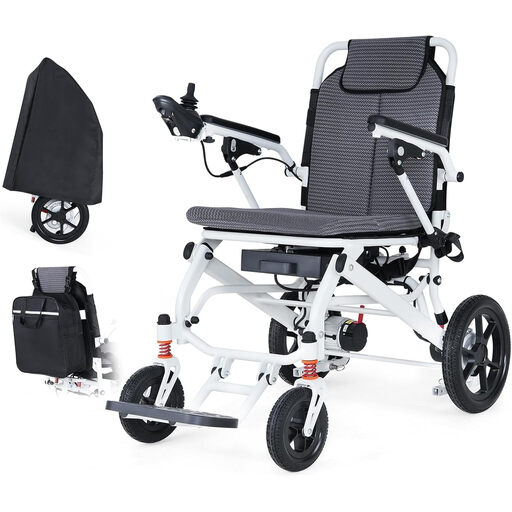
Why this model fits: Perfect for users who want to cover long distances without worrying about recharging. An ideal e-wheelchair for seniors who plan extended day trips and don't want to compromise on comfort.
This model counters the "Range Trap" with a powerful dual battery system (2 x 12 Ah) that provides a range of up to 48 km, according to the manufacturer. At the same time, it bypasses the "Weight Trap" with a low total weight of just 18 kg.
The combination of a very long range and an exceptionally low weight of 18 kg is extraordinary. The ergonomically designed backrest provides additional comfort on longer journeys.
Choosing the right model is a highly personal decision. If you'd like to explore more alternatives based on objective criteria, you can find a broader selection here.
1. How heavy is a "lightweight" foldable electric wheelchair really? The term "lightweight" is not standardised. Weights can range from under 18 kg for premium carbon fibre models to over 25 kg for robust steel-frame models. It is crucial to always compare the total weight including the batteries, as they make up a significant portion of the weight you will need to lift.
2. Can I take any foldable electric wheelchair on an aeroplane? No. You need an airline-approved electric wheelchair. The most important requirement concerns the batteries. As a rule, lithium-ion batteries are permitted up to a certain total capacity (often 300 Wh). They must almost always be removed from the wheelchair and carried in your hand luggage. Be sure to check the specific regulations of your airline before every trip.
3. How long does the battery of an e-wheelchair for seniors last? A battery's lifespan is measured in charge cycles. A modern lithium-ion battery typically lasts for several hundred charge cycles, which corresponds to a usage period of about 2 to 4 years before the capacity noticeably decreases. The daily range heavily depends on the battery capacity (Ah), the user's weight, the terrain being covered, and even the outside temperature.