
Lieferung heute & morgen

Qualitätsgarantie

Willkommens-Angebote freischalten: KOSTENLOSE Lieferung | Bis zu 80 % RABATT | Kostenlose 30-Tage-JoyPlus-Testphase
App herunterladen
A foldable hand truck seems like a simple purchase—until it collapses under a heavy load, the folding mechanism jams, or the wheels give out after just a few uses on uneven ground. Many models promise high load capacity and durability, but in practice, their weak points quickly become apparent. As a Joybuy Product Recommendation Officer, I analyze product data to help you avoid such disappointments and make an informed decision.
This guide focuses on the critical features that separate a good hand truck from a useless one. We'll highlight the most common pitfalls and show you what to look for when making your selection.
Before you choose a model, you should be aware of the typical flaws that often only become apparent after the purchase, severely limiting the product's usefulness.
To avoid a bad purchase, you should focus on objective, technical features. These three aspects are crucial for the durability and functionality of your hand truck.
Choosing the right model starts with a realistic assessment of your needs. Will you be transporting mainly beverage crates, heavy packages for a small business, or bulky equipment for camping?
The frame material is also critical. Aluminum sack trucks are lightweight and rust-proof, while steel frames generally offer greater rigidity and load capacity at the cost of a higher net weight.
The quality of the wheels determines ride comfort and potential applications.
A good folding mechanism should be operable in a few simple steps without much effort. Look for sturdy joints and a secure lock when unfolded. A height-adjustable handle is an important ergonomic feature that allows for back-friendly operation for people of different heights, making the cart a practical moving helper or garden cart.
Here are three models tailored to different user profiles that specifically avoid the pitfalls mentioned above.
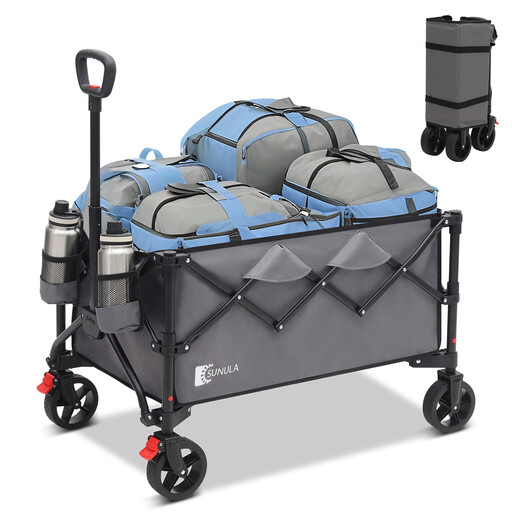
Why This Fits Their Persona: Ideal for users looking for a versatile companion for camping, beach trips, or the weekly grocery run. Its large 150-liter capacity and off-road wheels make it an all-rounder for leisure and gardening.
The sturdy steel alloy frame and 600D Oxford fabric withstand the rigors of outdoor use. The wide PVC wheels with brakes provide stability on uneven ground, avoiding the problem of cheap, unstable wheels.
High Capacity: 120 kg load capacity and 150 L volume. Easy Handling: One-click folding mechanism and detachable wheels for easy cleaning.
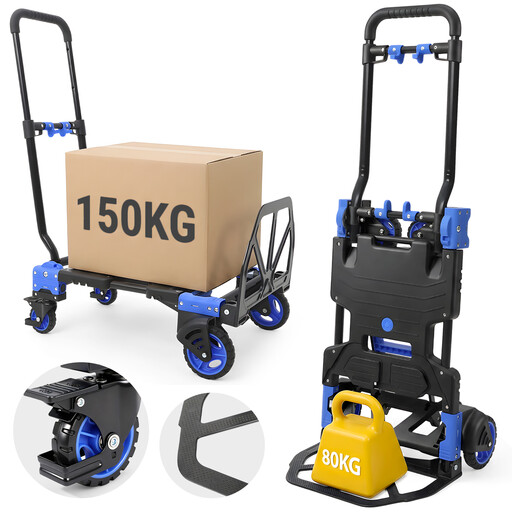
Why This Fits Their Persona: Perfect for individuals during a move or for small business owners. Its ability to convert from a sack truck (80 kg) to a platform cart (150 kg) offers maximum flexibility for different types of cargo.
The reinforced aluminum frame provides a high, reliable load capacity of up to 150 kg, avoiding the misleading promises of cheaper models. The quiet, dual-bearing TPR wheels prevent noise and premature wear.
2-in-1 Functionality: Quickly switches between a sack truck and a platform cart. High Load Capacity: Up to 150 kg in platform mode, ideal for heavy loads.
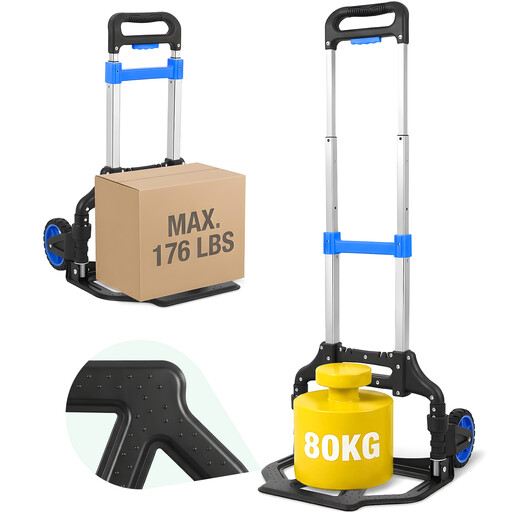
Why This Fits Their Persona: Designed for city dwellers who need an extremely compact and lightweight solution for transporting packages, groceries, or beverage crates. Weighing only 3.5 kg and folding down to 5.7 cm thick, it fits into any car trunk or tight space.
Despite its ultra-lightweight design, the aluminum frame offers a solid 80 kg load capacity, thus avoiding the trap of unstable, cheap carts. The quick-fold mechanism is designed for frequent use and won't jam.
Extremely Light & Compact: Only 3.5 kg net weight and folds very flat. Ergonomic: 3-level adjustable telescopic handle for back-friendly use.
We have compiled a complete, up-to-date list of products that fully meet these strict selection criteria and comply with German safety regulations.
To maximize its lifespan, you should clean off any dirt and moisture after use. Store it in its folded state in a dry place to prevent rust on the joints or bearings. Regularly check that all screws are tight and that the folding mechanisms are free of debris.
A sack truck (or hand truck) has a small loading plate and is designed for the vertical transport of stackable goods like crates or boxes. It is tilted and moved on two wheels. A platform cart has a large, flat loading surface and typically four wheels, making it ideal for transporting bulky or irregularly shaped items that need to lie flat.
Standard hand trucks are not designed for use on stairs. Pulling or pushing them over steps can damage both the cart and the cargo, and it poses a significant safety risk. For this purpose, there are special stair-climbing hand trucks with a star-shaped wheel arrangement. Always check the manufacturer's specifications for the intended use before purchasing.