
Lieferung heute & morgen

Qualitätsgarantie

Willkommens-Angebote freischalten: KOSTENLOSE Lieferung | Bis zu 80 % RABATT | Kostenlose 30-Tage-JoyPlus-Testphase
App herunterladen
A foldable scooter is a practical solution for kids' recreation and for adults' short commutes. But the market is vast, and not every model lives up to its promises. Common problems include wobbly folding joints that give out after a short time, or wheels that are unsuitable for typical city pavements. This guide will help you identify the essential features and make an informed decision.
Before you choose a model, you should be aware of the typical pitfalls that often only become apparent after the purchase.
To avoid a bad purchase, focus on the following technical parameters.
The wheels are crucial for the riding experience. Most scooters use polyurethane (PU) wheels, which offer a good balance of durability and cushioning. However, size is the most important factor:
The maximum load capacity indicates the body weight the scooter is designed for. A typical value for models also suitable for adults is supports up to 100 kg.
A height-adjustable scooter is also essential to ensure an ergonomic and safe posture for different body sizes or for growing children.
A reliable brake is non-negotiable. Most foldable scooters use a rear friction brake, which is activated by pressing your foot on the fender. Look for a wide, non-slip coated deck that provides a secure footing, even in wet conditions.
Here are some models tailored to specific user profiles.
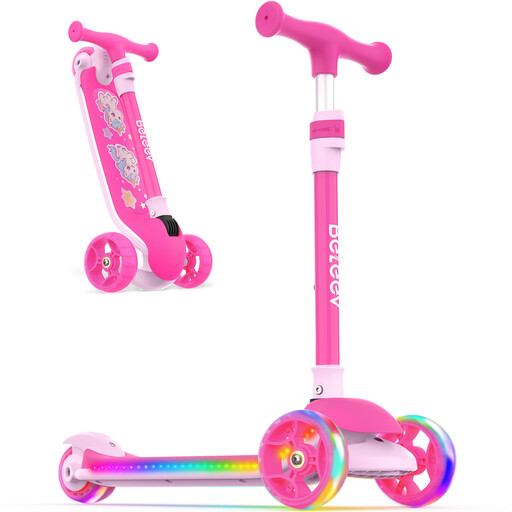
Why This Fits Their Persona: Ideal for young children learning to ride. The three wheels and intuitive lean-to-steer technology safely help develop balance and coordination. The scooter with light-up wheels adds extra visibility and fun.
The three-wheel design inherently offers high stability, avoiding the tipping hazard common with two-wheel models for beginners. The wide, low-to-the-ground deck makes it easy to get on and off.
The handlebar is adjustable to three heights (61 cm to 81.5 cm), growing with the child. The simple folding mechanism makes it easy to transport and store.

Why This Fits Their Persona: A classic scooter for adults and teens, perfect for commuting to work, university, or for leisure. The combination of large wheels and a sturdy frame makes it a reliable daily companion.
With its 205 mm wheels, this scooter avoids the pitfall of unsuitable wheel sizes. It offers a smooth ride on asphalt and cobblestones, where smaller wheels would fail.
The high load capacity of up to 100 kg (220 lbs) and the robust aluminium and steel frame ensure durability. The handlebar is height-adjustable to accommodate different users.

Why This Fits Their Persona: This model is an all-rounder that can be used by older children (ages 6+) and adults. It's ideal for families looking for a single, versatile scooter for different members.
It bypasses the trap of a limited lifespan. Thanks to the height-adjustable handlebar and a 100 kg load capacity, there's no need to buy a new model after one season just because a child has grown.
The combination of 205 mm wheels, a sturdy frame, and a simple folding mechanism makes it a practical companion for family outings and daily use.
We've compiled a complete, up-to-date list of products that fully meet these strict selection criteria and current safety regulations.
1. How do I choose the right wheel size for a scooter? For children under 6 or for use on very smooth surfaces, wheels around 120 mm can be sufficient. For teens and adults who will use the scooter outdoors on pavements and streets, wheels of 200 mm or larger are recommended. They offer more comfort and safety over uneven surfaces.
2. Is a three-wheel or two-wheel scooter better for my child? For toddlers (approx. 3-5 years) who are just starting out, a three-wheel scooter is often the better choice. It offers more stability and helps them learn to balance. Older children with a bit more experience usually do well with a more agile two-wheel model.
3. How do I properly maintain a foldable scooter? Clean the scooter regularly with a damp cloth. Before each ride, check that all screws are tight, especially on the folding mechanism and wheels. Check the brake function. Store the scooter in a dry place to prevent corrosion on steel parts and bearings.