
Lieferung heute & morgen

Qualitätsgarantie

Willkommens-Angebote freischalten: KOSTENLOSE Lieferung | Bis zu 80 % RABATT | Kostenlose 30-Tage-JoyPlus-Testphase
App herunterladen
A foldable solar panel can provide portable solar power when you’re camping, travelling in a motorhome or using a power station. In practice, though, the wattage alone won’t tell you whether a portable solar panel is right for your needs. Connections, dimensions, weather resistance and the power station’s permitted input values are just as important.
A rating of 100 W, 200 W or 400 W describes the panel’s rated output under specific test conditions. In everyday use, the amount of power generated is affected by the sun’s position, shade, temperature, orientation and dirt. So a 200 W foldable solar panel won’t deliver 200 W all the time.
Also look at:
A monocrystalline solar panel can have a compact design for the same rated output. However, efficiency alone doesn’t tell you whether it’s suitable for every power station.
A solar charger with USB-A or USB-C can power smartphones and tablets directly. A power station often requires an MC4, XT60, Anderson or DC connection. Adapters won’t necessarily solve every compatibility issue.
Before buying, compare the technical specifications of both devices:
The panel’s rated output must not exceed the power station’s permitted solar input. Conversely, a panel that’s too small may take longer to charge it.
IP54, IP65, IP67 and IP68 ratings describe protection against dust and water under specific conditions. They don’t mean that every foldable solar panel can be left outside in rain, snow or strong winds indefinitely.
So check:
After use, an outdoor solar panel should be stored somewhere dry and sheltered, unless the manufacturer specifies that it’s suitable for permanent outdoor installation.
A 100 W panel is often enough for smartphones and smaller devices, provided it has direct outputs. If you want to charge a power station, laptop or several devices, you could consider a 200 W foldable solar panel. A 400 W foldable solar panel offers a higher rated output, but is usually larger, heavier or intended for a more permanent setup.
Always compare the dimensions:
MC4 is a widely used solar connector, while power stations often use XT60 or proprietary inputs. An adapter cable included with the panel can make set-up easier, but the electrical values still need to match.
When choosing a solar panel for a power station, Vmp, Voc, Imp and Isc are therefore more relevant than wattage alone. If you’re unsure, check the power station’s instruction manual before buying.
Set up the panel on a stable, level surface and avoid partial shade. Even shade on part of a cell can affect output. Make sure cables aren’t a trip hazard. Don’t continue using damaged panels, plugs or cables.
A grid-connected system has additional requirements. According to its product specifications, the TSUN Easy Solar Kit is an on-grid system with an AC output, so it shouldn’t be confused with a simple DC panel for a power station. It must be connected to the mains in line with local electrical requirements.
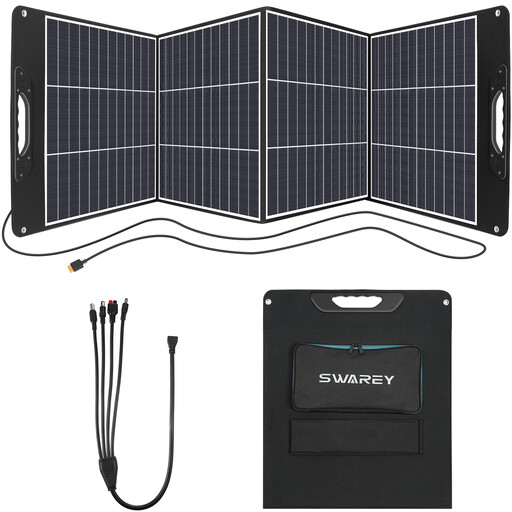
Why it suits this type of user: This 200 W panel has several outputs, including USB-A, USB QC3.0, 18 W USB-C PD and XT60 with adapters. That makes it a good choice for getting started with camping and power station use.
The connections and adapters are clearly listed. This makes it easier to check compatibility with a power station you already own and reduces the need for extra accessories.
According to the product specifications: 200 W rated output, monocrystalline cells, weighs 5,5 kg and has adjustable support legs.
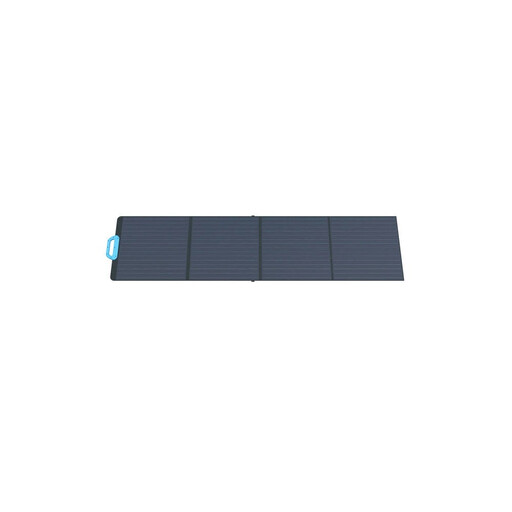
Why it suits this type of user: This foldable outdoor solar panel combines a four-fold design with an MC4 connection and an ETFE surface. It’s a good fit if you’re looking for both easy transport and carefully chosen materials.
The product specifications list the folded size, weight, Vmp, Voc and IP ratings separately. This makes it easier to check compatibility properly, rather than comparing wattage alone.
According to the manufacturer: up to 23,4 % efficiency, weighs 7,3 kg, 200 W rated output and an MC4 cable included.
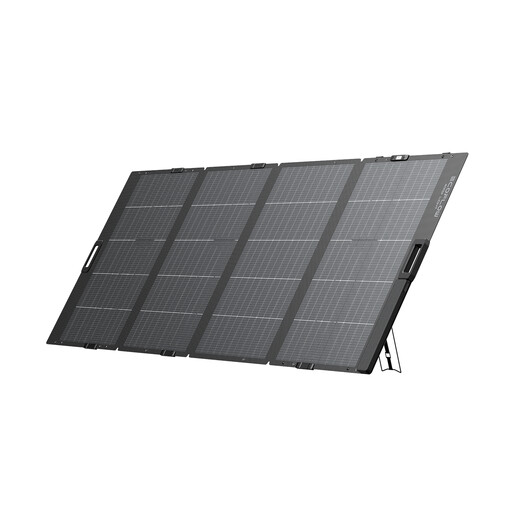
Why it suits this type of user: This 400 W panel is designed for owners of compatible EcoFlow power stations who want to make use of a higher input when camping, in the garden or in a motorhome.
The XT60i, open-circuit voltage and rated output specifications make it clear that you’ll need to check compatibility with your power station before buying.
According to the product specifications: 400 W rated output, monocrystalline cells, built-in support leg, carry bag and IP68 water resistance.
We’ve put together a complete, regularly updated list of products that meet these strict selection criteria and fully comply with the safety regulations in force in the EU.
For solar power while camping, set up the panel somewhere as free from shade as possible and adjust its position regularly to follow the sun. If you’re using it with a motorhome or caravan, also check that there’s enough space for the unfolded panel and that the cables will reach the power station.
A solar panel for backup power isn’t a substitute for a complete home electricity supply. However, used with a suitable power station, it can power individual devices. Before you set off, check the energy requirements of your fridge, laptop, lights or communications devices, and compare them with the battery’s capacity.
First, choose the right cables and adapters. Then connect the panel to the solar input on the power station, which should be switched off or prepared according to the instructions. Before connecting, check Voc, Vmp and the maximum input current. You can then position the panel towards the sun.
Its lifespan depends on the cell type, surface material, how it’s transported and how it’s stored. Common causes of damage include bending, drops, moisture around the plugs and strong winds. Store the panel folded, somewhere dry, and make sure nothing presses on its surface. Always follow the manufacturer’s warranty and care instructions.
There are no fuel costs while the panel is generating electricity. However, you’ll need to cover the upfront costs of the panel, cables, power station and any adapters you need. How much you get out of it depends on how often you use it, which devices you charge and how much sunlight is available where you’re using it.