
Lieferung heute & morgen

Qualitätsgarantie

Willkommens-Angebote freischalten: KOSTENLOSE Lieferung | Bis zu 80 % RABATT | Kostenlose 30-Tage-JoyPlus-Testphase
App herunterladen
A foldable solar panel can provide power on the go for a power station, smartphone or laptop. In practice, however, the stated wattage alone doesn’t determine whether it’s suitable. Connections, dimensions, weight, sunlight and compatibility with your device are just as important.
Outdoor and camping enthusiasts, motorhome and caravan owners, and portable power station users often face three common challenges when buying:
The wattage describes the maximum rated output under defined conditions. A 200W solar panel is generally suitable for mid-sized power stations, while a 400W solar panel can provide more charging power, but is usually larger and heavier.
You should also check:
Before connecting the devices, compare their technical specifications. The manufacturer’s limits for maximum permitted input voltage and current take priority.
A monocrystalline solar panel uses solar cells made from monocrystalline silicon. Efficiency figures such as 23 or 24.3 per cent describe the proportion of incoming energy converted into electrical energy under defined conditions. They don’t guarantee a particular charging time in everyday use.
A higher stated efficiency can be useful when space is limited. Even so, positioning and shade remain important. Even partial shading can significantly affect the output of the entire system.
For a solar panel for camping, the garden or a motorhome, the design should suit where you plan to use it. Look for:
An IP rating doesn’t mean the panel can be left underwater. Keep cable connections dry unless the manufacturer states otherwise. In strong winds, hail or storms, fold up and secure any panel that isn’t permanently installed.
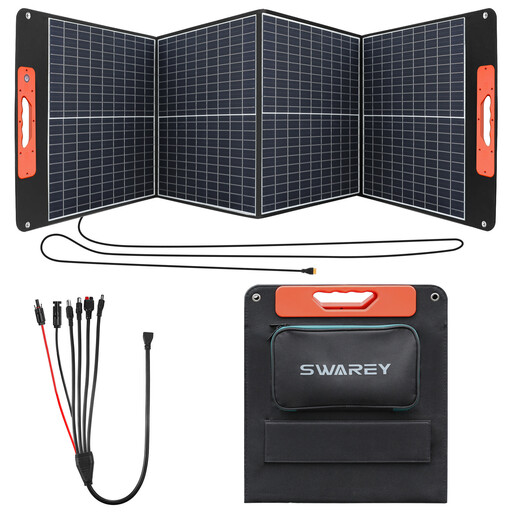
Why it suits this need: This compact 100W solar panel is ideal if you want to charge smartphones, tablets or smaller power stations on the go, and value a space-saving design.
Its output is in a manageable range, and the product specifications list specific USB-C, USB-QC and adaptor connections. This makes it easier to plan how you’ll use it with smaller devices.
According to the product description, it offers conversion efficiency of up to 23 per cent, a 60 W USB-C PD output, an 18 W USB-QC output and a 5-in-1 cable.
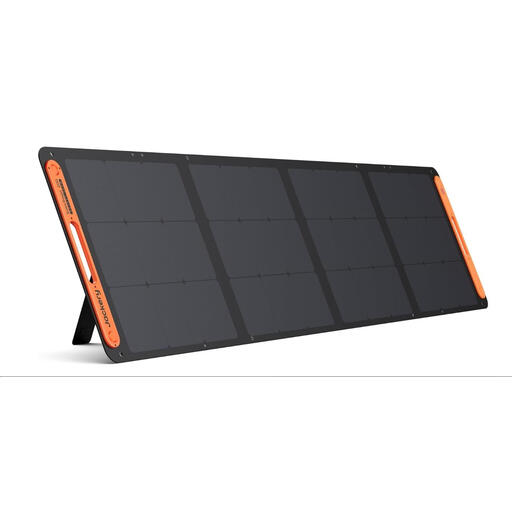
Why it suits this need: With a rated output of 200 W, built-in support legs and a foldable design, it’s made for regular camping, portable power stations and emergency preparedness.
The folded dimensions of 615 × 552 × 40 mm and weight of 6.2 kg are specified. Its IP68 rating and ETFE-coated construction make it easier to assess its suitability for outdoor use.
According to the manufacturer, it delivers 200 W ±5 per cent under STC, offers conversion efficiency of up to 24.3 per cent and is compatible with selected Jackery Explorer models.
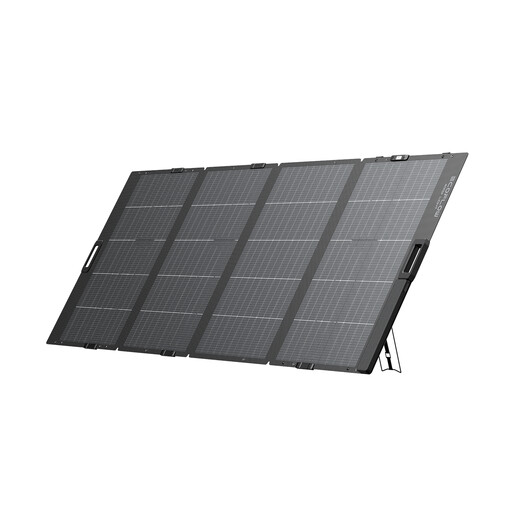
Why it suits this need: This 400W solar panel is aimed at users with larger power stations, as well as motorhome and caravan owners with enough space to set it up.
Alongside the output, the product specifications list its weight, dimensions, voltage and current. This lets you check before buying whether you have enough room to transport it and whether your power station’s PV input is suitable.
According to the product description, it offers a rated output of 400 W, monocrystalline cells, IP68 water resistance and an integrated stand with several angle settings.
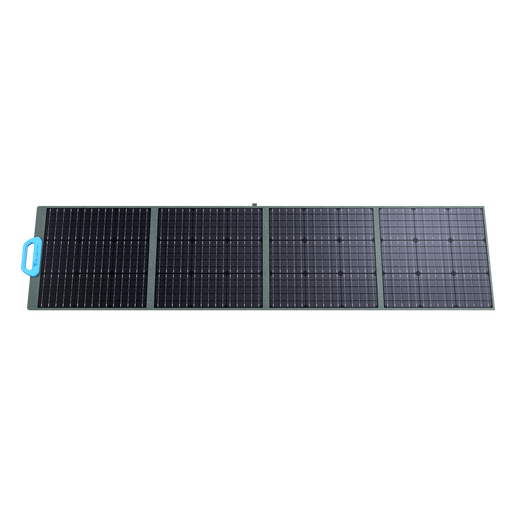
Why it suits this need: This foldable solar panel is a good option if you’re looking for a 200 W model with MC4 connectors that’s compatible with various solar generators.
The listed MC4 connectors make it easier to check compatibility with cables you already own. You’ll still need to check the voltage range of your specific power station before ordering.
According to the product description, it features monocrystalline solar cells with efficiency of up to 23.4 per cent, an ETFE coating and a 24-month warranty.
We’ve put together a complete, regularly updated list of products that meet these strict selection criteria and the applicable EU safety regulations.
Before using it for the first time, read the instructions for both the panel and the power station. Set up your portable solar panel somewhere as free from shade as possible, and reposition it regularly to face the sun. An adjustable angle can make it easier to position, but it can’t make up for a clear view of the sun.
Also bear in mind:
An off-grid solar panel only generates power when sunlight is available. You’ll need a power station or a suitable battery for overnight use or during prolonged cloudy weather. Systems permanently connected to a home electricity supply are subject to additional electrical requirements; a plug-in solar system shouldn’t be confused with a basic portable solar panel.
Actual output depends on sunlight, positioning, temperature, shade, cables and the connected device. In everyday use, the rated output on the specification sheet often can’t be sustained. When planning, take account of the power station’s PV input range and realistic weather conditions.
Its lifespan depends on the cell type, coating, folding mechanism, storage and how it’s handled. Storing it somewhere dry and clean, folding it carefully and protecting it from knocks can help extend its useful life. Always follow the warranty and maintenance information from the manufacturer.
A solar panel for a motorhome or caravan can be a practical choice if you don’t want a permanent roof-mounted system or you often stay at different pitches. Before buying, check the space available for setting it up, its weight when carried, the connection to your power station and how much sunlight your campsite gets.