
Lieferung heute & morgen

Qualitätsgarantie

Willkommens-Angebote freischalten: KOSTENLOSE Lieferung | Bis zu 80 % RABATT | Kostenlose 30-Tage-JoyPlus-Testphase
App herunterladen
A foldable storage box can organise clothing, bed linen, toys or household items while saving space. In practice, however, not every box fits every wardrobe, shelving unit or under-bed compartment. Products often appear more stable, spacious or easy to care for in photos than they actually are in everyday use.
This shopping guide from the Joybuy Product Recommendation Officer explains which specifications matter before buying, which common marketing pitfalls to watch out for and which models suit different household situations.
A box with generous external dimensions does not automatically provide the same amount of storage space inside. Solid walls, lids, reinforcements and rounded edges reduce the interior dimensions. When choosing a wardrobe organiser, compare not only the stated capacity in litres but also the length, width and height with the available compartment.
This is particularly important with a velvet storage box measuring 29 x 29 x 29 cm: it is better suited to shelving compartments than to bulky textiles such as winter duvets.
Many foldable boxes are made from fabric, Oxford cloth, PP material or a combination of these materials with cardboard. They may be suitable for clothing and lightweight items. Heavy books, sharp-edged objects or an overfilled box can nevertheless put strain on the base, seams or side panels.
Always check the specific details regarding material, construction, handles and intended use. If no load capacity is stated, the box should not be planned for heavy contents.
A foldable fabric box can be stored flat when not in use. That is convenient, but it says little about everyday handling. Models without handles can be difficult to remove from a high shelf when full. Boxes with cardboard inserts should also be protected from moisture.
For children’s rooms and frequently used compartments, accessible dimensions, a shape-retaining construction and an easy-care surface are often more important than decorative details.
The ideal size depends on what you plan to store:
A 66-litre storage box is not automatically easier to handle than an 88-litre box. Shape, filled weight and the presence of handles are the deciding factors.
A fabric storage box is generally flexible and can be folded away when not in use. Oxford fabric is often used for larger textile boxes and may offer a different texture and greater shape retention than thin decorative fabric. The exact design depends on the individual product.
Appearance and surface finish are particularly important for open shelving. Velvet or jute can add decorative accents, while Oxford fabric is generally more suitable for wardrobes, utility rooms or under-bed storage. For environments exposed to moisture, direct sunlight or dust, follow the relevant care instructions.
A lid protects the contents from dust but can slow down access. Handles make it easier to pull a box out of a wardrobe. A divided box is useful for smaller items, while a large, undivided box offers greater flexibility for duvets and clothing.
For a clothing storage box, textiles should also be stored clean and completely dry. Heavy or pointed items should not be placed in models reinforced with cardboard.
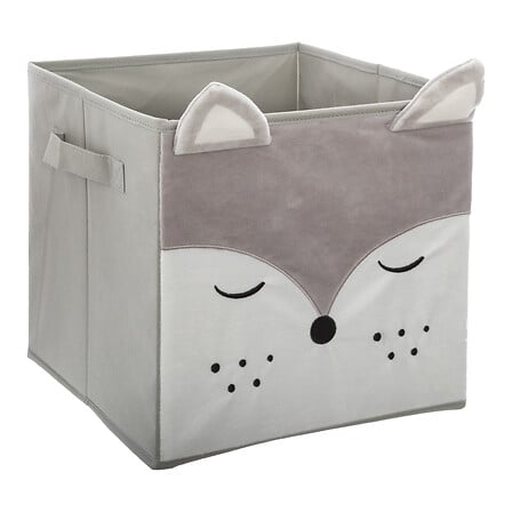
Why it’s a good fit: The compact format is suitable for shelving compartments, smaller clothing items, books or toys in a child’s room.
The stated dimensions of 29 x 29 x 29 cm make it easy to verify the required footprint before buying.
Velvet surface, fox motif, foldable construction and cardboard material; listed without a handle.
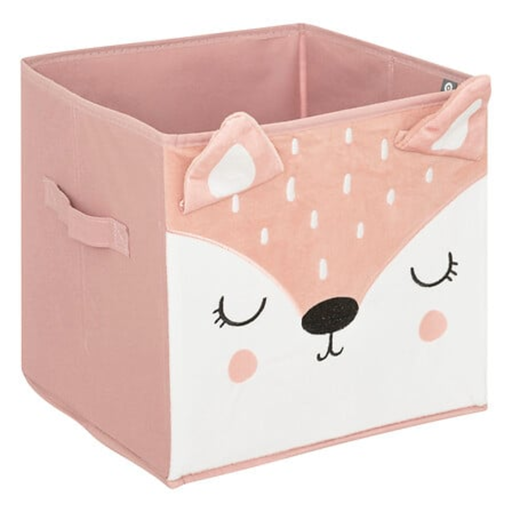
Why it’s a good fit: A decorative solution for nursery shelving, open compartments or a carefully styled wardrobe.
The product details specify the material, dimensions, weight and care instructions, making it easier to plan realistically for the decorative surface.
Pink velvet, embroidered detail, foldable design and dimensions of 29 x 29 x 29 cm; intended for shelving or wardrobes.
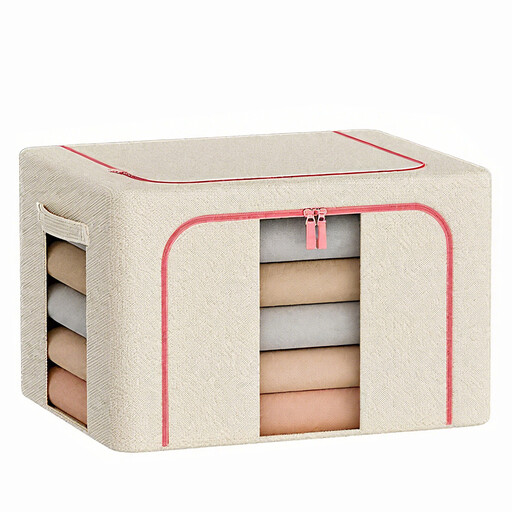
Why it’s a good fit: Two 66-litre boxes can be used to sort clothing, quilts or bed linen by season or household member.
The stated capacity and number of boxes make it easier to plan your actual storage requirements.
Oxford fabric according to the product description, foldable design and two boxes per set; khaki colourway.
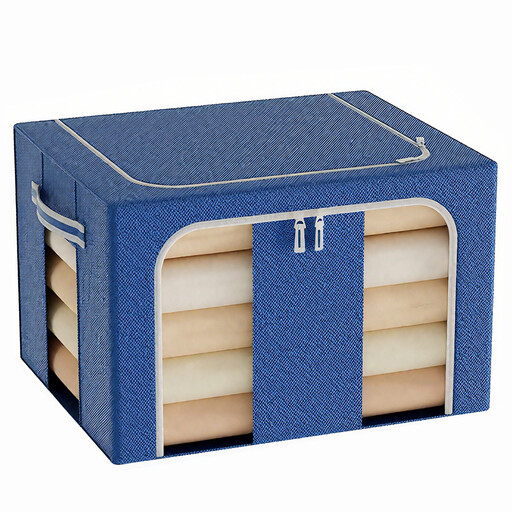
Why it’s a good fit: The 88-litre format is designed for storing large quantities of quilts, bedding or seasonal clothing.
Before ordering, check the wardrobe’s depth and height, as greater capacity also requires more space and results in a heavier filled box.
88 litres per box, two boxes per set and Oxford fabric according to the product description; designed as a foldable quilt storage box.
We have compiled a current selection of products that can be compared by size, material and intended use.
For a child’s room, a toy storage box with a compact footprint can be a practical choice if it fits on a shelf and is emptied regularly. A large fabric box is suitable for soft toys or building blocks, but it should not be overfilled.
Models with capacities of 66, 88 or 100 litres are practical for duvets and winter clothing. With a 100-litre storage box, the furniture should provide sufficient space, and the box must be safe to move when fully loaded. An undivided interior is generally more flexible for bulky textiles.
Service life depends on the material, filled weight, frequency of access and storage location. Boxes reinforced with cardboard should be kept dry and protected from prolonged direct sunlight. Velvet and jute surfaces can be cleaned carefully with a soft, dry cloth. Oxford fabric should be maintained according to the instructions for the specific product.
Only store clothing and bed linen when they are clean and completely dry. Sharp objects, damp textiles and excessive loads can damage the construction. When not in use, a foldable organiser box can be flattened for storage, provided it is completely dry and empty.
Fabric or Oxford fabric models with sufficient capacity are suitable for clothing. A 66-litre box offers a manageable size for folded garments, while 88- or 100-litre models provide more room for seasonal textiles. The wardrobe dimensions and filled weight remain the key considerations.
That depends on the height and depth of the under-bed compartment. Before buying, check the external dimensions, handle position and the clearance required to pull the box out. Boxes containing cardboard components should also be protected from moisture.
Allow textiles to dry completely, fold them loosely and avoid filling the box to capacity. A 66-, 88- or 100-litre model may be suitable depending on the size of the bedding. For frequently used linen, a smaller box is often easier to access.