
Lieferung heute & morgen

Qualitätsgarantie

Willkommens-Angebote freischalten: KOSTENLOSE Lieferung | Bis zu 80 % RABATT | Kostenlose 30-Tage-JoyPlus-Testphase
App herunterladen
A foldable storage cabinet can create extra storage space in rented flats, student apartments, family homes or small cellar rooms. However, before you buy, it is worth taking a close look at the actual product specifications. A large litre capacity alone, for example, tells you little about whether clothing, household items or bulky articles can be stored effectively.
Specifications such as 67 l, 84 l or 107 l capacity usually refer to the internal volume. What also matters is how that volume is distributed across compartments, doors or individual shelves. A high litre value is not automatically suitable if you mainly need to store folded clothes, shoes or smaller household items.
Therefore, check:
A collapsible cabinet is practical when you need to store it away compactly during a move or when not in use. However, the folding function does not replace information about the permitted load. Heavy books, tools or filled liquid containers may be unsuitable for simple organising systems.
Look for specific manufacturer details on the maximum load per shelf. If these are not provided, the cabinet should be planned for light to medium-weight items such as textiles, bedding or seasonal accessories.
A storage cabinet made of plastic can be suitable for dry indoor spaces. For the garage, cellar or loft, however, the local conditions are crucial. Moisture, strong temperature fluctuations and dust can affect the durability of both the contents and the cabinet.
Before ordering, you should clarify:
Without an explicitly stated protection class or seal rating, such a cabinet should not be considered a waterproof storage solution.
For individual clothing items, towels or seasonal accessories, a foldable storage box may be sufficient. A foldable storage cabinet, on the other hand, offers a more structured solution when you need to store several categories separately.
As a rough guide:
The litre capacity should always be considered alongside the external dimensions and the planned location. Before buying, measure not only the floor space but also doors, stairs and passageways.
A foldable cabinet should be reasonably easy to set up and collapse again. Check whether assembly instructions are included and whether additional tools are needed for setup. If you plan to move it frequently, a low weight and a straightforward folding design are particularly important.
The folded state also deserves attention. Ask yourself:
For the SNSP models listed here, each is supplied in individual packaging. Further details, such as specific dimensions or load values, should be checked directly on the respective product page before purchase.
Place the cabinet on a level surface and distribute the weight as evenly as possible. Heavy items belong at the bottom. For a tall or fully loaded structure, additional anti-tip protection may be advisable depending on the design. Do not use the cabinet in areas for which the seller has not stated suitability.

Why this product suits the profile: The 67 l capacity can be suitable for smaller rooms, individual household categories or a modest clothing collection. The foldable design supports space-saving storage when not in use.
The smaller volume class reduces the risk of planning too much cabinet space for a small footprint. Load and dimension details should be checked before purchase.
Foldable design; stated capacity of 67 l; individual packaging.
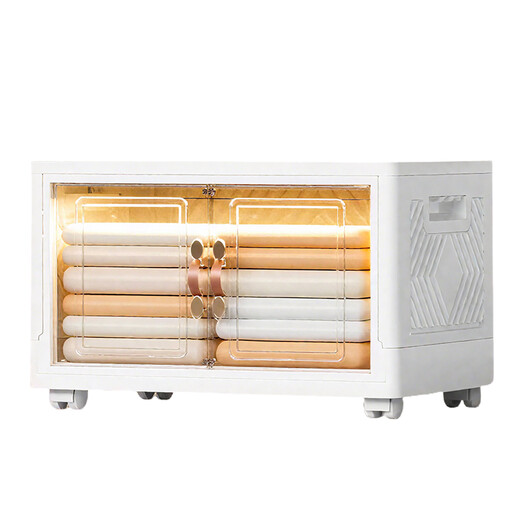
Why this product suits the profile: The medium size offers a balanced starting point for buyers who want to evaluate volume, floor space and future flexibility together.
The 84 l class helps you choose between too little and oversized storage space. The specific external dimensions and load details on the product page remain decisive.
Foldable cabinet concept; stated capacity of 84 l; individual packaging.
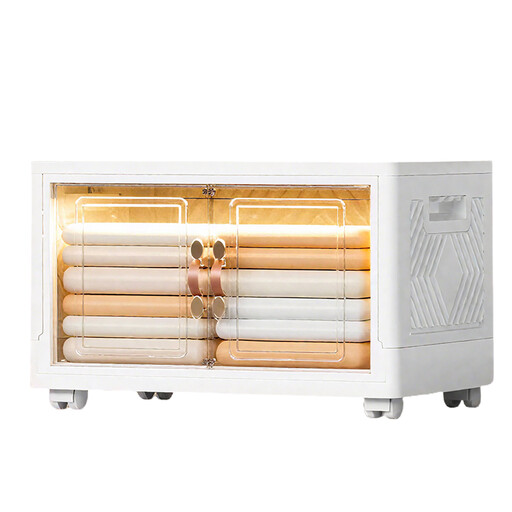
Why this product suits the profile: With a stated volume of 107 l, this model is aimed at households with greater space requirements, for example for seasonal clothing, bedding or several household categories.
The larger volume can replace several small boxes, provided the floor space is suitable. Overloading should be avoided if no specific load limit is stated.
Foldable design; stated capacity of 107 l; individual packaging.
For textiles, a dry, clean location is important. Clothing should be stored completely dry. A plastic cabinet can be easy to clean, but that alone tells you nothing about air circulation, odour build-up or moisture protection. For longer-term storage, it is advisable to check the contents regularly and not to place the cabinet directly against damp external walls.
For household items with a higher weight, you should first clarify the load capacity. A storage box with 67 l, 84 l or 107 l is not automatically suitable for books, tools or heavy supplies. The product description and the manufacturer’s instructions are decisive for this.
We have compiled a complete, regularly updated list of products that fully meet these strict selection criteria and the safety regulations in force in the EU.
This depends on the specific model. Read the included instructions thoroughly and set up the product on a level surface. Before use, check that all elements are correctly connected and that doors or flaps operate without resistance. Heavy items should be placed in the lower section.
It is not possible to give a general lifespan. It depends on factors including material, load, frequency of assembly, location and care. Even weight distribution, a dry placement and adhering to load limits can support its use. If load capacity details are missing, the product should be used carefully and mainly for light items.
In normal use, there are usually no ongoing running costs, as the cabinet does not require a power supply. Possible additional costs may arise from extra baskets, inserts, fixings or a replacement if it is incorrectly loaded. Therefore, the size, material and intended use should match as closely as possible before ordering.