
Lieferung heute & morgen

Qualitätsgarantie

Willkommens-Angebote freischalten: KOSTENLOSE Lieferung | Bis zu 80 % RABATT | Kostenlose 30-Tage-JoyPlus-Testphase
App herunterladen
A foldable transport trolley can make it much easier to move shopping, luggage, garden materials or moving boxes. In practice, however, it quickly becomes clear whether a model is suitable for its intended use. A high kilogram rating alone says little about stability, ease of handling or safety.
Before buying, you should therefore check what load actually needs to be transported, what type of surface the trolley will be used on and how much storage space is available. The following criteria will help you avoid common buying mistakes.
With a 150 kg transport trolley, it is important to know whether the stated capacity applies to the hand-truck or platform function. Some models carry less when upright than on the loading platform. Uneven weight distribution can also reduce stability and increase the risk of tipping.
You should therefore check:
A trolley with a 150 kg load capacity is not automatically suitable for steep paths, stairs or loose surfaces.
A foldable pull-along wagon or foldable shopping trolley is often purchased because it is intended to take up little space in the boot, cellar or storage room. It is not enough simply to know that the product folds. You should also check:
With large garden and camping wagons, the packed size can still be considerable despite the folding function. Measure the intended storage space and the boot before placing your order.
Small, hard wheels are more suitable for even floors in the home, office or warehouse. For grass, gravel, sand or uneven paths, larger wheels with bearings and sufficient ground clearance are more practical. A brake is primarily intended for parking and does not replace controlled handling on slopes.
Check the following:
For light shopping, a foldable shopping trolley with a moderate load capacity is usually sufficient. For crates of drinks, tools or moving boxes, a reinforced aluminium or steel frame and a non-slip loading surface are advisable. A heavy-duty transport trolley should also have sturdy connection points and a clearly defined load distribution.
A combination model can offer particularly flexible use: a 2-in-1 trolley can be used as both a sack truck and a platform trolley. The first product in our selection has a stated load limit of 80 kg in hand-truck mode and 150 kg in platform mode. These figures must not be added together.
An adjustable-height handle helps you adapt the trolley to your height. This can be useful when regularly transporting shopping, garden waste or boxes. Make sure that the handle locks fully into place and has a non-slip surface.
For older people and anyone who moves the trolley frequently, a low overall weight, controlled steering and an easily accessible brake mechanism are also important.
Textile trolley bodies made from polyester or Oxford fabric provide plenty of storage space and can often be folded down compactly. For sharp-edged or very heavy items, a solid platform with securing straps is more suitable.
Practical features include:
A water-repellent coating does not automatically mean that the trolley should be stored outdoors permanently. Dry storage protects the frame, fabric and wheels from unnecessary wear.
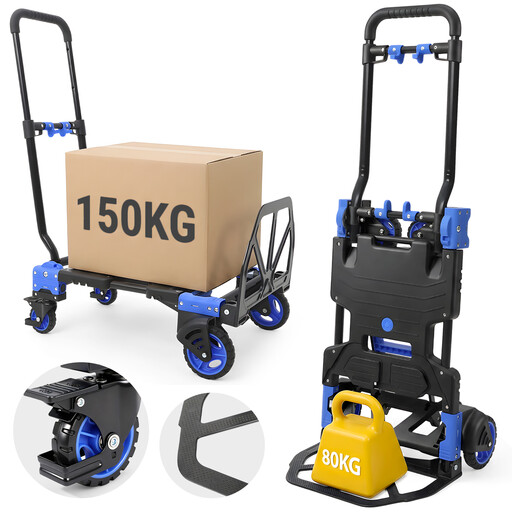
Why this product suits this profile: The combination of hand truck and platform trolley handles shopping, crates and smaller moves without the need for two different trolleys.
The two stated load limits are separated by operating mode. The integrated parking mechanism and adjustable handle position make controlled use easier.
Aluminium frame, TPR wheels with double bearings and one-handed folding; 80 kg in hand-truck mode and 150 kg on the platform.
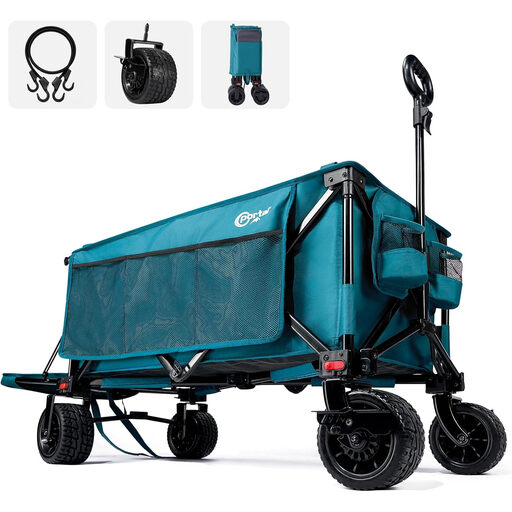
Why this product suits this profile: This large garden and camping wagon is designed for bulky equipment, garden tools, shopping and outdoor luggage.
The stated 132 kg load capacity and dimensions should be checked against the intended use. The double parking brakes are designed to secure the wagon when stationary, not to brake it while moving.
300-litre capacity, PU wheels with bearings, removable wheels and folded dimensions of 35 × 26 × 80 cm.
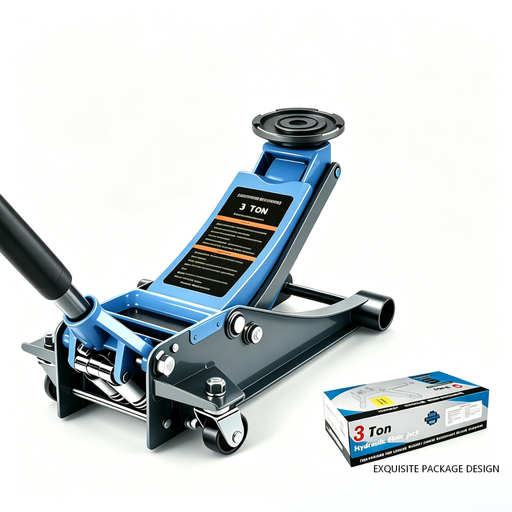
Why this product suits this profile: For car owners and workshops that need a lifting aid for changing tyres or carrying out maintenance work in addition to a transport trolley.
The stated 3-tonne load capacity must be suitable for the vehicle’s weight and the lifting points specified by the vehicle manufacturer. A trolley jack is not a car manoeuvring aid and must not be used as the sole support beneath a raised vehicle.
Low-profile design, double-pump system, removable handle and a rotating, padded saddle.
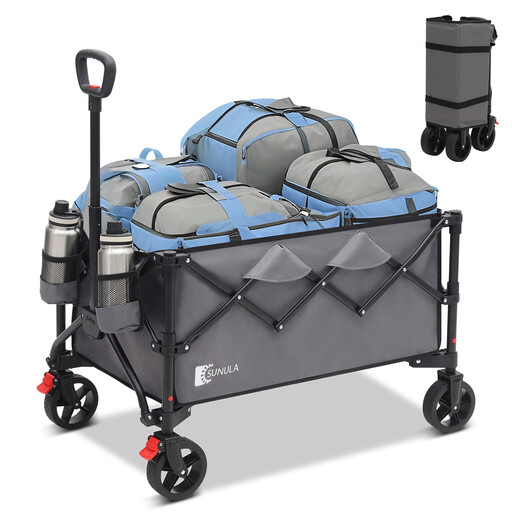
Why this product suits this profile: This trolley is suitable for gardening, camping, beach trips and shopping when you need textile storage space combined with compact folding.
The 120 kg load capacity and 150-litre volume are clearly stated. The brake is intended for parking; careful handling is still required on sloping or very uneven terrain.
600D Oxford fabric with PE coating, one-click handle, all-terrain wheels and a compact folding design.
We have put together a complete, regularly updated list of products that fully meet these strict selection criteria and the safety regulations applicable in the EU.
A car manoeuvring aid or wheel dolly serves a different purpose from a foldable transport trolley. The wheel dolly in our selection is designed for tyres up to a stated width of 12 inches and has a load capacity of up to 1,500 lbs per unit. Two units are specified as having a total capacity of 3,000 lbs. Before use, you must check the tyre width, vehicle weight, safety pin and surface.
A tyre lever is also not automatically included with a trolley jack. When working on a vehicle, suitable axle stands and the lifting points specified by the vehicle manufacturer are part of the necessary safety equipment. A hydraulic trolley jack is designed for lifting, not for providing permanent support.
A lower load capacity is often sufficient for shopping and light gardening work. For crates of drinks, tools or removal items, you should allow some spare capacity. It is also important to consider whether the load will be transported on a platform or in a textile trolley body.
Its service life depends on the load, surface, storage conditions and maintenance. Overloading, permanently damp storage and damaged wheels accelerate wear. Clean the wheels and frame regularly, check the fastenings and store the trolley in a dry place.
A parking brake secures the wagon when it is stationary. It does not replace a braking system for use while moving. On slopes, you should reduce the load, guide the wagon carefully and work only on a stable, preferably even surface.