
Lieferung heute & morgen

Qualitätsgarantie

Willkommens-Angebote freischalten: KOSTENLOSE Lieferung | Bis zu 80 % RABATT | Kostenlose 30-Tage-JoyPlus-Testphase
App herunterladen
A foldable transport trolley can make it much easier to move shopping, gardening tools, camping equipment or moving boxes. At the same time, models vary considerably in load capacity, folded dimensions, wheels and stability. A high kilogram rating alone does not indicate whether the trolley is suitable for the intended surface or the load in question.
Typical purchasing problems arise from three points:
Checking these features before buying makes it easier to find a suitable foldable hand trolley, compact transport cart or folding sack truck for your everyday needs.
The maximum load capacity should suit the intended use, but should not be considered in isolation. A 100 kg transport trolley, for example, is suitable for crates of drinks, shopping or medium-sized gardening tools. For heavy tools, paving stones or extensive camping equipment, models with 150 kg or 200 kg may be more suitable.
The following points are important:
A 150 kg transport trolley may therefore be suitable for moving house or gardening work, while a 200 kg transport trolley offers more capacity for bulky loads. However, the actual handling also depends on the centre of gravity, wheelbase and surface.
A transport trolley with wheels is not automatically designed for every type of terrain. Smaller castors are often sufficient for smooth floors in cellars, garages or storage areas. For camping, grass or gravel, wider wheels with sturdy bearings are more practical.
Look out for:
A folding camping trolley with wide 7-inch tyres may be suitable for trips, garden paths and firm forest tracks. Nevertheless, a loaded trolley should not be left unattended on steep slopes or very uneven terrain.
Foldable trolleys commonly use 600D Oxford fabric, polyester, steel, aluminium, plastic and TPR or PVC wheels. 600D refers to the thickness of the fabric yarn and is a useful material specification. A coating, such as PE, can make cleaning easier. However, it does not automatically make the trolley waterproof.
The capacity should suit the load:
Also check the folded dimensions for your boot, cellar or storage cupboard. A lightweight trolley that folds down to just a few centimetres in width is often easier to keep close at hand in everyday use.
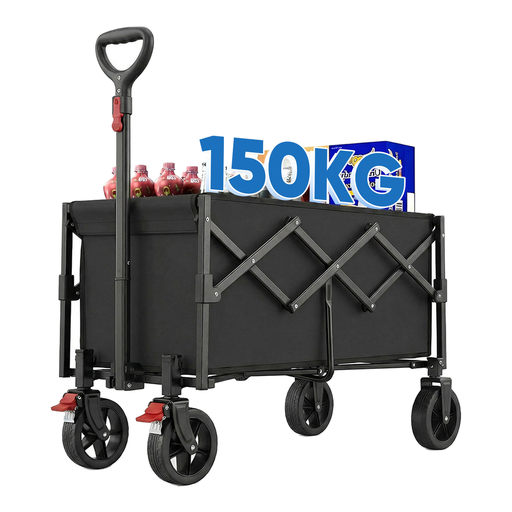
Why this product suits this profile: With a capacity of 80 litres, a net weight of 5.8 kg and a stated load capacity of 100 kg, this model is designed for shopping, smaller gardening tasks and outings with a manageable load.
The load capacity and volume are clearly stated. Removable wheels and a removable fabric insert make cleaning easier.
80 litres of storage space, a stated load capacity of 100 kg, a foldable design and brakes for parking.
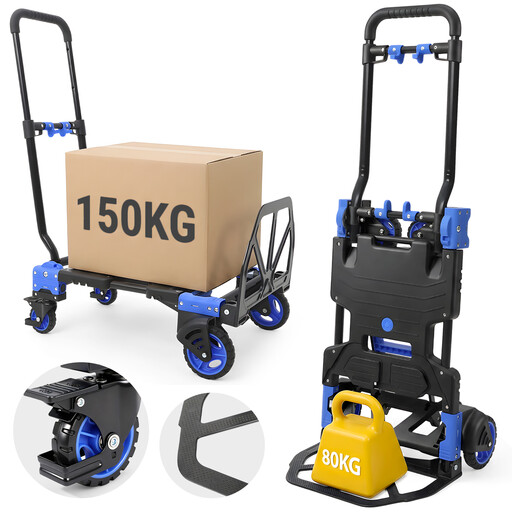
Why this product suits this profile: The aluminium transport cart can be used as a sack truck with a capacity of 80 kg or as a platform trolley with a capacity of 150 kg, making it suitable for a range of tasks around the home, during a house move and in the office.
The load limits are stated separately for each mode of use. The frame has an adjustable handle and an integrated parking brake.
Two modes of use, an aluminium frame, TPR wheels with double-row bearings and one-handed folding.
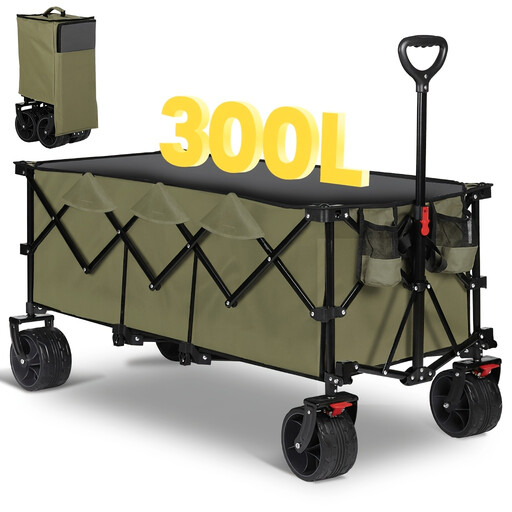
Why this product suits this profile: According to the product specifications, the folding camping trolley offers a capacity of 300 litres, a load capacity of 200 kg and wide 7-inch tyres for extensive equipment or gardening materials.
The product description specifies the volume, tyre size and maximum load. When loading the trolley, distribute the weight evenly and use the brakes exclusively for parking.
300 litres of storage space, a stated load capacity of 200 kg, a four-sided folding mechanism and wide tyres.
We have put together a complete, regularly updated list of products that fully meet these strict selection criteria and the safety regulations applicable in the EU.
A folding transport trolley will remain functional for longer when used correctly. Before each use, check that the frame, joints, wheels and locking mechanisms are properly secured. After using it outdoors, we recommend that you:
A foldable hand cart with an aluminium frame is usually lighter to carry, while a steel frame can add more weight to certain trolley designs. The load limits specified by the manufacturer and the stability of the particular design remain the decisive factors.
For shopping and smaller household tasks, 25 to 80 kg is often sufficient. Gardening work, transporting drinks or moving house may require a model with a capacity of 100 or 150 kg. Trolleys with a stated load capacity of 200 kg are also available for large, bulky loads. The load must be distributed evenly, and the maximum limit must not be exceeded.
That depends on the wheel size, tyre width and frame construction. Wide wheels and bearing-mounted castors make it easier to travel over grass or gravel. Steep slopes, stairs and very uneven surfaces remain unsuitable for many models, particularly when heavily loaded.
There is no general lifespan that applies to every model. It depends on the load, surface, storage conditions and care. Keeping within the load capacity, maintaining a clean folding mechanism and regularly checking the wheels and connections will reduce typical wear risks. The relevant warranty and returns policy should be checked before purchase.