
Lieferung heute & morgen

Qualitätsgarantie

Willkommens-Angebote freischalten: KOSTENLOSE Lieferung | Bis zu 80 % RABATT | Kostenlose 30-Tage-JoyPlus-Testphase
App herunterladen
Foldable UV400 sunglasses should take up little space when you’re out and about, provide reliable protection from ultraviolet radiation and feel comfortable to wear. In practice, however, three common buying mistakes can lead to the wrong choice: assuming dark lenses provide UV protection, choosing a compact folding mechanism without checking its durability, and thinking that one size will automatically fit everyone.
This guide explains which details matter when buying folding sunglasses and which models may suit different needs.
Lens colour alone tells you nothing about protection from UVA and UVB rays. UV400 means that, according to the product information, the protection extends to wavelengths of up to 400 nanometres. Look for a clear statement from the manufacturer rather than relying on the tint as a guide.
Folding sunglasses are handy for carrying in a rucksack, handbag or glove compartment. But the hinges and folding points move more often than they do on a rigid frame. That’s why it’s important to look for a well-defined folding mechanism, a durable frame material and a case for storage.
Labels such as ‘F’ or ‘One Size’ don’t guarantee an ideal fit. The key measurements are frame width, bridge width, arm length and lens height. Oversized sunglasses can block more light from the sides, but they shouldn’t rest on your cheeks or slip down when you look down.
Sunglasses with UV protection should have a specific UV400 rating. An anti-reflective or glare-reducing coating serves a different purpose: it can reduce reflections from the lens surface and make it more comfortable to see in bright conditions. It doesn’t replace the UV rating.
When choosing sunglasses for driving, you should also check the light transmission and filter category. Depending on the category, very dark lenses may not be suitable for certain driving conditions. If this information isn’t included in the product description, check with the seller before buying.
TR90 sunglasses are made from a thermoplastic that can combine light weight with a degree of flexibility. The material isn’t automatically unbreakable. Even so, a flexible frame may be more practical than a very rigid design if you’ll be folding and unfolding it often.
The Beneunder models described here are listed as having TR90 frames and arms. According to the product information, the FD01h version weighs 0.97 oz, or about 27.5 g. The FD421 models are listed as weighing 26 g.
If you’re looking for sunglasses with scratch-resistant lenses, check whether a scratch-resistant coating is specifically mentioned. This kind of coating doesn’t make lenses immune to all damage. Sand, rough fabrics and carrying them loose in your luggage can still cause scratches.
Oleophobic coatings to help prevent fingerprints and an anti-reflective coating are also useful. Use a soft microfibre cloth to clean your sunglasses. When folding them, move the hinges at the intended points, then store them in their case.
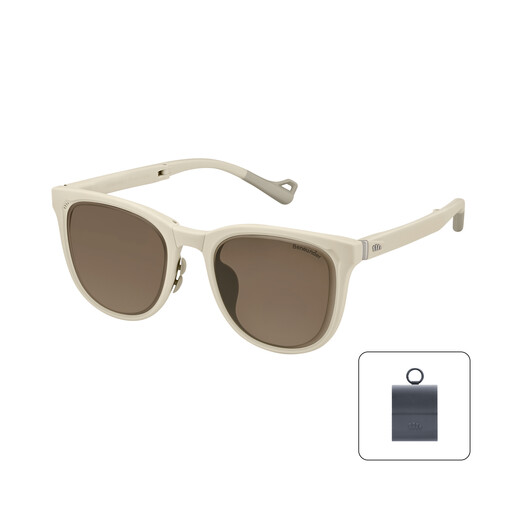
Why this product suits this profile: The classic Boston shape, foldable design and one-size fit make these sunglasses a good choice for the daily commute, walks and trips where space is limited.
The product information lists UV400, anti-reflective, oleophobic and scratch-resistant coatings, as well as a foldable TR90 frame.
Weighing 0.97 oz, with three-way adjustable arms and two-axis nose pads, according to the product description.
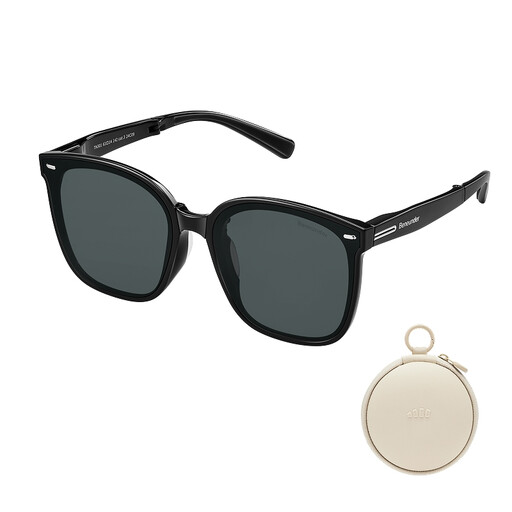
Why this product suits this profile: The larger frame is designed for those who prefer a bolder shape and relatively tall lenses.
The product information lists UV400, an anti-reflective coating and an additional scratch-resistant layer, rather than relying on dark lens colour alone.
Tri-Fold design with a folded thickness of 35 mm and a weight of 26 g, according to the product information; frame width 5.71 inches.
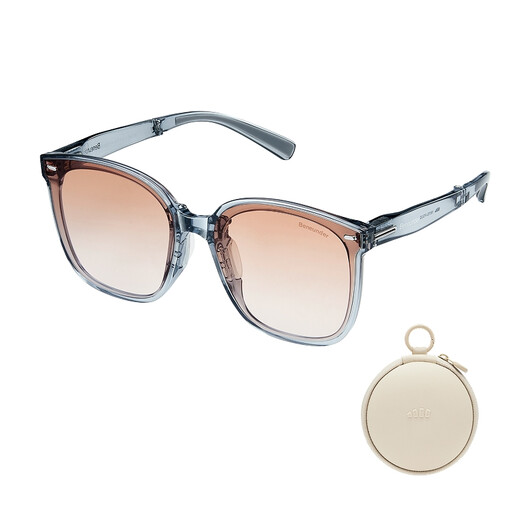
Why this product suits this profile: Designed to be packed away frequently, these travel sunglasses may be a good choice for commuting, holidays and outdoor activities.
According to the product information, the tri-fold design reduces the thickness to 35 mm. A case and soft microfibre cloth are recommended for care.
TR90 frame, nylon lenses, UV400 rating and anti-reflective coating, according to the manufacturer.
We’ve put together a complete, regularly updated list of products that meet these strict selection criteria and fully comply with the safety regulations in force in the EU.
UV400 refers to the stated protection range up to 400 nanometres. This should be clearly stated in the product information. However, it doesn’t automatically tell you anything about the tint, polarisation, scratch resistance or suitability for driving.
Their lifespan depends on the hinges, materials, care and how often they’re folded. There’s no reliable way to give a general lifespan. Moving the arms gently, avoiding dry-wiping the lenses and storing the sunglasses in their case can help reduce typical wear and tear.
You can only tell by checking the filter category, light transmission and labelling of the specific model. UV400 on its own isn’t enough. If you’re unsure, check the full product information and don’t wear the sunglasses when visibility is reduced.