
Lieferung heute & morgen

Qualitätsgarantie

Willkommens-Angebote freischalten: KOSTENLOSE Lieferung | Bis zu 80 % RABATT | Kostenlose 30-Tage-JoyPlus-Testphase
App herunterladen
Foldable UV400 sunglasses need to do more than just look good. They should reliably reduce sunlight, feel comfortable and pack away neatly in a bag, rucksack or glove compartment. Whether you’re looking for travel sunglasses, a pair that folds away or sunglasses for driving, the design makes all the difference to how practical they are.
Many products are advertised as having lightweight materials, anti-glare coatings or flexible arms. But these terms don’t automatically prove quality. Before you buy, watch out for these three common pitfalls.
UV400 describes the level of protection the lenses offer against ultraviolet radiation up to 400 nanometres. On its own, however, the term doesn’t tell you how much visible light the lenses filter out. That’s determined by the filter category. So if you’re looking for sunglasses for bright days at the beach, walks or driving, check the tint and light transmission details too.
An anti-glare or OAR coating can reduce reflections on the lens surface. But it doesn’t replace a suitable tint, and it’s not the same as polarisation.
Lightweight foldable sunglasses can be comfortable to wear. But with very slim designs, the arms, hinges and nose pads matter. If they’re difficult to open, press against your temples or catch when you fold them, the compact design can quickly become a drawback.
Materials such as TR90 are often used because they’re lightweight and flexible. Even so, check the specific details for frame width, arm length and hinge design.
Women’s sunglasses in cat-eye, Boston or oversized styles can fit differently depending on your face shape. Lenses that are too wide may slip, while arms that are too tight can press behind your ears. Measurements matter more than the “One Size” label.
Look for sunglasses explicitly described as offering UV protection and compare the manufacturers’ specifications. The Beneunder models featured here are described as having nylon lenses with UV400 protection. According to the product details, various models block at least 99.8 or 99.9 per cent of UV radiation. These figures are based on the manufacturer’s claims and shouldn’t be taken as a statement of medical effectiveness.
Grey, brown or lightly coloured lenses can work well for everyday wear. When driving, check the tint, light transmission and the applicable requirements for road use. Sunglasses aren’t equally suitable for every driving situation.
Sunglasses with anti-reflective lenses can reduce distracting reflections on the lens surface. This can be useful in changeable light, when light hits from the side or around bright surfaces. According to the product details, selected Beneunder models have an OAR coating that is stated to reduce reflections.
Important: anti-reflective coatings, glare protection and polarisation are different features. Before you buy, be clear about which ones you actually need.
For compact sunglasses, the folded size is a useful point of comparison. According to the product details, the FD421 models have a triple-fold mechanism, weigh 26 grams and fold down to a thickness of 35 millimetres. The FD315 models have a foldable design with flexible five-point hinges.
To help prevent scratches, store your sunglasses in their case and clean them with a soft microfibre cloth. When folding them, use a smooth, even motion and avoid putting unnecessary pressure on the arms.
Cat-eye sunglasses emphasise the upper line of the frame and suit a fashion-forward look. A Boston frame feels more understated, thanks to its rounder shape. Oversized sunglasses offer greater coverage, but need sufficiently wide arms and a well-fitting nose pad.
Before you order, check at least these measurements:
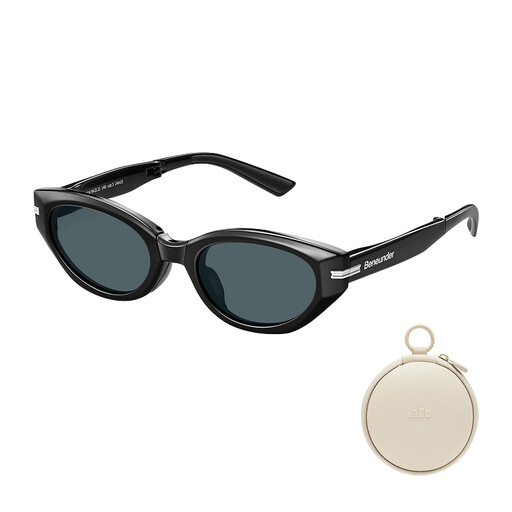
Why this product suits this profile: This black cat-eye design combines a compact folding frame with a clean, practical style for everyday wear. The frame width and arm length are clearly stated.
The TR90 frame, UV400 nylon lenses and stated measurements make it easier to assess key buying criteria.
Folding TR90 frame, OAR anti-reflective coating, and soft nose pads and arm tips, according to the product details.
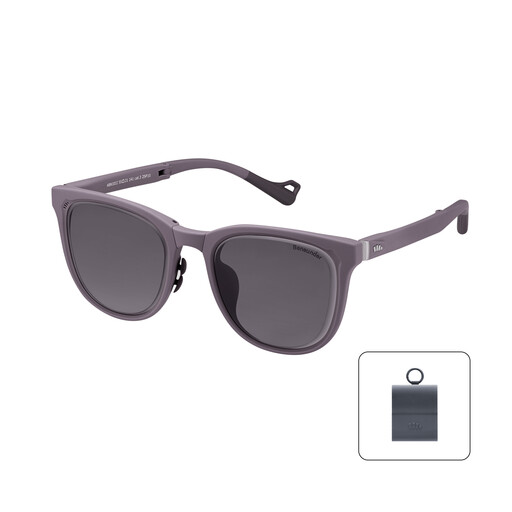
Why this product suits this profile: The Boston silhouette is a versatile choice for everyday wear. Three arm positions and adjustable nose pads help you find a more personalised fit.
Rather than relying on the “One Size” label, the fit is supported by specific adjustment options.
TR90 frame, UV400 nylon lenses and OAR, oleophobic and scratch-resistant coatings, according to the product description.
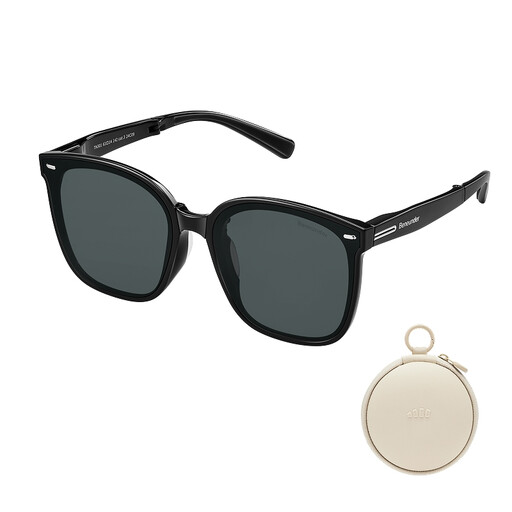
Why this product suits this profile: This oversized style is designed for people who prefer larger lenses and a particularly slim folded size for travel or everyday carry.
The weight, folded size, frame width and coating details are all clearly listed, making it easier to compare before you buy.
26-gram weight, triple-fold design that folds down to 35 millimetres, and UV400 lenses with OAR coating, according to the product details.
We’ve put together a complete, regularly updated list of products that meet these strict selection criteria and the applicable EU safety requirements.
It depends on the tint, light transmission and filter category. Before wearing them on the road, check whether the specific sunglasses are suitable for driving. Anti-reflective lenses can reduce reflections, but they don’t replace the right filter category.
Their lifespan depends on the hinges, materials, how often you wear them and how well you look after them. Only fold the arms in the intended direction, clean the lenses with a microfibre cloth and store the sunglasses in their case. Scratches, jammed hinges or visible warping are signs that it’s time for a replacement.
TR90 is a lightweight, flexible frame material. But that alone doesn’t guarantee the best durability or fit. Hinge design, arm construction, nose pads, measurements and the overall build quality all matter too.