
Lieferung heute & morgen

Qualitätsgarantie

Willkommens-Angebote freischalten: KOSTENLOSE Lieferung | Bis zu 80 % RABATT | Kostenlose 30-Tage-JoyPlus-Testphase
App herunterladen
Foldable UV400 sunglasses need to meet several requirements at once: they must protect your eyes from ultraviolet radiation, reduce glare, feel comfortable and take up little space when you’re out and about. With compact designs in particular, however, marketing claims don’t always point you towards the right purchase.
Common pitfalls include unclear UV protection, an unstable folding mechanism and a fit that looks convincing only in product photos. Even supposedly lightweight foldable sunglasses can become uncomfortable if the nose pads or arm length don’t suit your face. So before you buy, it’s worth considering the technical details separately from how and where you plan to use them.
UV400 describes protection against ultraviolet radiation with wavelengths of up to 400 nanometres. It doesn’t automatically tell you how much visible light or reflected light the lenses reduce. So if you’re choosing sunglasses for driving or for time by the water, in the snow or at the beach, it’s also worth checking the lens tint and, where relevant, whether the lenses have an anti-reflective coating.
Sunglasses with an anti-reflective coating can reduce distracting reflections on the lens surface. But this doesn’t replace careful checks of your vision when you’re on the road. Your sunglasses shouldn’t distort what you see, and they should be suitable for the light conditions.
On some models, only the arms fold in. Others use a multi-part mechanism to achieve a much smaller packed size. Check the exact folded thickness and whether a case is included.
According to the manufacturer’s specifications, the Beneunder FD421 folds down to 35 mm thick and weighs 26 g. This makes it easy to store in a small bag, rucksack or travel case, for example. Even so, handle the folding mechanism carefully to avoid putting unnecessary strain on the hinges and coatings.
Oversized sunglasses can offer wide coverage at the sides, but may look too broad on narrower faces. Frame width, bridge width, arm length and lens height all matter. If these measurements are given only in inches, converting them to millimetres can help: a frame width of 5.71 inches is approximately 145 mm.
Comfort also depends on how pressure is distributed. Soft nose pads and arm rests can help improve the fit. Arms that are too loose, on the other hand, can make your sunglasses slip when you walk or cycle.
Check whether UV400 is explicitly listed in the product details. The Beneunder models featured here combine UV400 protection with nylon lenses, according to the manufacturer. The FD421 models are also described as having an OAR anti-reflective coating. The manufacturer states that this series reduces glare by at least 99.6 per cent. This should be treated as manufacturer information, not as a claim of medical efficacy.
For everyday wear, glare-reducing sunglasses can feel more comfortable around bright outdoor surfaces. When driving, make sure the tint doesn’t affect your view of displays, signals or other road users.
TR90 is a thermoplastic frame material often used for lightweight glasses. The product details for the Beneunder models list TR90 as the frame material. However, the material alone doesn’t guarantee a particular level of durability or a perfect fit. Also check:
A lightweight design is especially practical for travel sunglasses. It should still be sturdy enough not to get bent in its case by other items.
At 26 g, these sunglasses weigh less than a typical bar of chocolate, which is light for everyday eyewear. However, how comfortable they feel also depends on the nose pads, arm shape and lens size. According to the product details, the FD421 has a frame width of 5.71 inches, a bridge width of 0.63 inches and arm length of 5.59 inches.
The FD315-CN models are listed as having a frame width of 5.8 inches, a bridge width of 0.83 inches and arm length of 5.6 inches. These measurements can help you compare them with a pair of sunglasses that already fits you well.
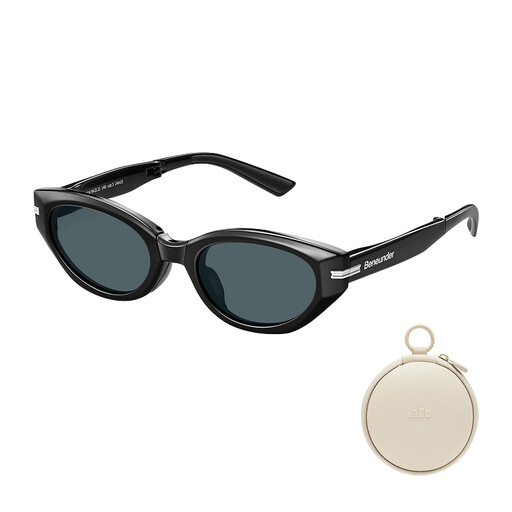
Why this product suits this profile: The cat-eye design combines a compact folding style with a distinctive, fashionable shape for everyday wear and occasional trips.
The product details explicitly list UV400 protection, an OAR anti-reflective coating and a foldable TR90 frame, rather than relying on a vague claim of ‘sun protection’.
TR90 frame, nylon lenses, air-cushion nose pads and soft arm rests, according to the manufacturer.
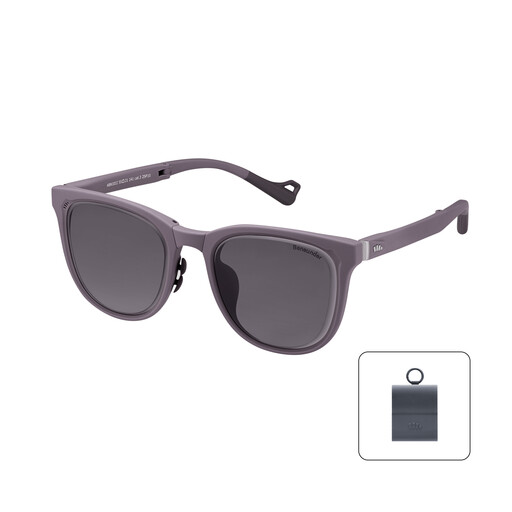
Why this product suits this profile: The classic Boston silhouette is a versatile choice if you’re looking for adjustable features and multiple lens coatings.
As well as UV400, Beneunder lists OAR anti-reflective, oleophobic and scratch-resistant coatings. This makes it easier to assess the features that matter.
Three-way adjustable arms, two-axis nose pads, TR90 frame and a stated folded thickness of 1.15 inches.
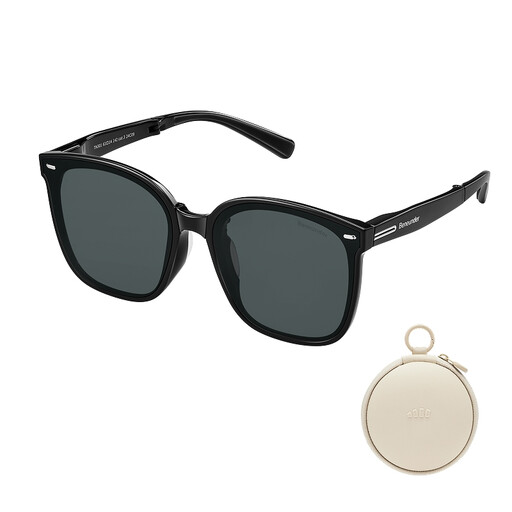
Why this product suits this profile: The larger lenses and triple-fold design make these sunglasses a good fit for travel, outdoor activities and regular everyday wear.
The weight, folded thickness, frame measurements, UV400 protection and anti-reflective coating are all specified. This makes it easier to compare the sunglasses with your own requirements.
According to Beneunder, they weigh 26 g, fold to 35 mm thick and feature a TR90 frame with nylon lenses and UV400 protection.
We’ve put together a complete, regularly updated list of products that meet these strict selection criteria and fully comply with the safety regulations in force in the EU.
Their lifespan depends largely on how you handle the hinges, lenses and coatings. Clean the lenses with a soft microfibre cloth, and don’t wipe away dust with rough fabrics when they’re dry. Fold the sunglasses and place them in a suitable case, and keep them away from direct heat, such as on a car dashboard in summer.
Fold and unfold the arms evenly, without applying sideways pressure. If a hinge becomes stiff, don’t treat it with household oil. A damaged or badly scratched lens can affect your vision and should be replaced.
UV400 describes the level of UV protection, but on its own it doesn’t tell you about the tint, how the lenses handle reflections or whether they’re suitable for every driving situation. When choosing sunglasses for driving, look for clear vision, a suitable tint and a good fit. Dark sunglasses aren’t suitable at dusk or when visibility is poor.
It depends on the folding mechanism. According to the product details, the Beneunder FD421 folds down to 35 mm thick. Other models may be wider when folded or have a different folded thickness. So compare the folded measurements and store your sunglasses in a case to protect them.
There’s no reliable one-size-fits-all answer. Frequently opening and closing them one-sidedly, exposure to heat, scratches and loose hinges can all shorten their lifespan. Careful handling, using a case and following the manufacturer’s instructions can help you get more use out of them.