
Lieferung heute & morgen

Qualitätsgarantie

Willkommens-Angebote freischalten: KOSTENLOSE Lieferung | Bis zu 80 % RABATT | Kostenlose 30-Tage-JoyPlus-Testphase
App herunterladen
Foldable UV400 sunglasses need to fulfil several requirements at once: They should filter sunlight, take up minimal space on the go and remain comfortable during everyday wear. However, unclear UV protection specifications, delicate hinges or an unsuitable frame can quickly turn an inexpensive offer into a poor purchase.
As a Joybuy Product Recommendation Officer, I filter the most important product details according to transparent criteria. This makes it easier to identify which features are genuinely relevant for driving, travel and outdoor activities.
UV400 protection refers to filtering ultraviolet radiation up to a wavelength of 400 nanometres. On its own, however, the term does not indicate how effectively visible light, reflections or glare are reduced. When choosing sunglasses for driving, you should therefore also look for information about tint and anti-reflective properties.
Sunglasses with anti-glare lenses can reduce reflections, but they are not automatically polarised. If you frequently drive on wet roads, near water or in low sunlight, carefully check the product description for details on reflection reduction, tint level and field of vision.
Some models can be folded but remain relatively thick or contain numerous small components around the hinges. For compact travel sunglasses, three details are therefore particularly important:
A protective case should also be included if the sunglasses are used regularly. When carried loose in a handbag or backpack, even lenses described as scratch-resistant sunglasses can be damaged by keys, sand or other hard objects.
Oversized sunglasses can provide extensive side coverage, but they must match the width of your face. Temples that are too wide may press against your head or slip out of position. Excessively large lenses can also interfere with your field of vision or create an awkward view of the rear-view mirror while driving.
Pay attention to specific measurements such as frame width, temple length, bridge width, and lens width and height. Product photos alone are not a substitute for these details.
Look for a clear specification such as UV400 and check whether the information comes from the manufacturer or appears in the technical product data. For anti-glare coatings, the description should include specific values or a clear explanation of their effect.
For the Beneunder FD421, the product description specifies a UV400 coating and an OAR anti-reflective coating. The stated values of at least 99.9 per cent UV filtration and at least 99.6 per cent glare reduction should be understood as manufacturer specifications from the product description, not as a general claim that applies to all sunglasses.
TR90 is a thermoplastic material commonly used in eyewear because of its low weight and flexible properties. The material alone, however, does not guarantee a specific service life. The hinges, folding mechanism and overall workmanship also affect everyday usability.
According to the product data, the Beneunder FD421 weighs 26 g. This places it in the lightweight sunglasses category. Low weight can improve wearing comfort, but it should always be assessed together with the fit.
According to the product description, the FD421 features a triple-fold mechanism and measures approximately 35 mm thick when folded. This makes it practical for luggage compartments, jacket pockets or small travel cases.
Do not apply excessive pressure to the hinges when folding or unfolding the sunglasses. The manufacturer recommends using a soft microfibre cloth for cleaning. Storing the sunglasses in a case helps protect the lens coating and surface from scratches.
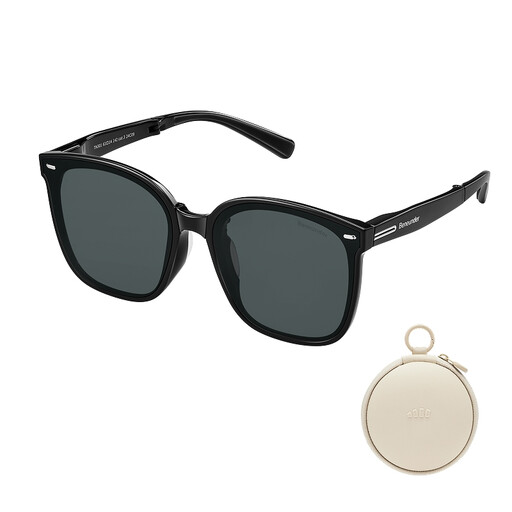
Why this product suits the profile: The black colour option pairs easily with a wide range of everyday outfits and is suitable for city commutes, day trips and occasional travel.
The product data specifies UV400, an anti-glare coating, a TR90 frame, a weight of 26 g and folded dimensions of approximately 35 mm, rather than relying solely on general design terminology.
Specific details on weight, material and folding mechanism, combined with a black frame for a discreet look.
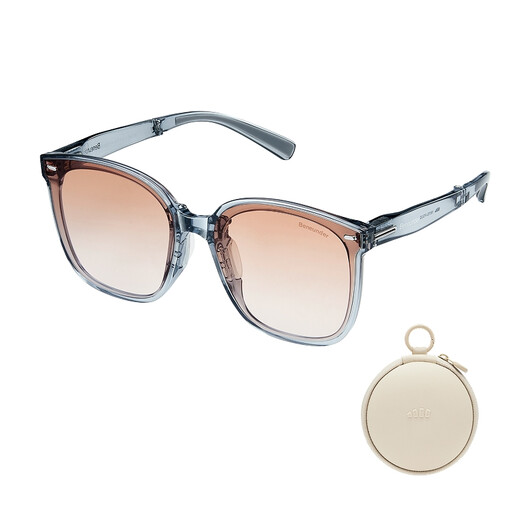
Why this product suits the profile: The light grey colour option appeals to buyers who want to combine technical features with a less dark frame aesthetic.
The selection is not based on colour alone: the product also specifies nylon lenses, UV400 protection and a two-layer protective coating.
TR90 frame, 26 g weight and documented care instructions to help reduce scratches and damage.
Why this product suits the profile: For commuters, frequent drivers and travellers, low weight and a compact folded size are especially valuable when the sunglasses are stored and used repeatedly.
The triple-fold system and stated thickness of approximately 35 mm address the problem of bulky travel sunglasses.
26 g weight, TR90 frame and nylon lenses; suitability for driving should nevertheless be assessed based on individual fit and unobstructed visibility.
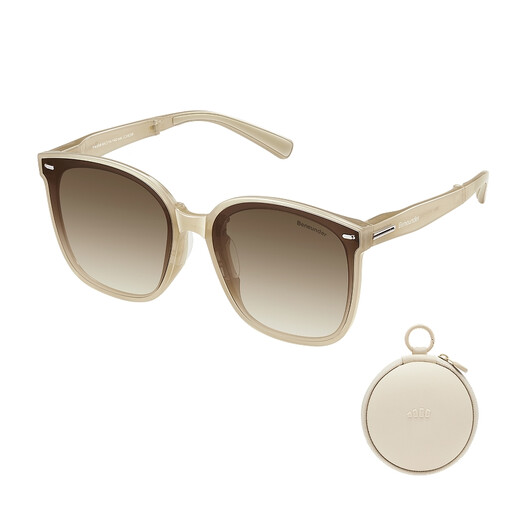
Why this product suits the profile: Beige is ideal for users looking for a subtle, light colour scheme for everyday wear, holidays and leisure activities.
Beyond the design, the product data provides clear details on folded dimensions, weight, frame material and care instructions.
Light-coloured frame, 26 g weight and UV400-coated nylon lenses for use on the go.
We have compiled a complete, regularly updated list of products that fully meet these strict selection criteria and the safety regulations applicable in the EU.
That depends on the tint, fit, field of vision and anti-reflective properties. A UV400 designation concerns UV filtration and, on its own, says nothing about suitability at night, during twilight or in specific lighting conditions. Before buying, check that the sunglasses remain securely in place when seated and do not obstruct important areas of your vision.
There is no universally applicable service life. Frequent folding, improper cleaning, heat inside a vehicle and loose storage can place additional strain on the frame and coating. A protective case, a microfibre cloth and careful opening and closing all help preserve the product.
No. Anti-glare, or anti-reflective, refers to a coating or property designed to reduce reflections. Polarisation is a separate technical feature. If you specifically want polarised sunglasses, this characteristic should be clearly stated in the product data rather than inferred from the term UV400.