
Lieferung heute & morgen

Qualitätsgarantie

Willkommens-Angebote freischalten: KOSTENLOSE Lieferung | Bis zu 80 % RABATT | Kostenlose 30-Tage-JoyPlus-Testphase
App herunterladen
A foldable wagon is a handy companion for family outings, transporting groceries, or hauling gear for your next festival. However, the vast selection of models can quickly become overwhelming. Many buyers discover only after a short time that their new wagon isn't up to the demands of daily use. To help you make an informed decision, we'll highlight the most common weaknesses and show you which features truly matter.
When you purchase a collapsible utility cart, you expect flexibility and durability. However, certain design flaws often lead to disappointment.
To avoid buyer's remorse, you should check three key parameters before making a decision. These determine whether a foldable wagon is suitable for your needs.
The stability of a wagon depends directly on its frame material. Most models use a frame made of steel tubing, which offers high durability. The specified maximum load capacity (e.g., 100 kg) is an important indicator but shouldn't be the sole criterion. A solid construction with clean welds and bolted joints is crucial for longevity, especially if it's regularly used as a camping wagon.
The wheels are the most important component for mobility. There are significant differences here:
A good foldable wagon can be collapsed in just a few simple steps without any tools. The accordion-style folding mechanism, where the wagon is compressed toward the centre, has proven to be particularly practical. Always compare the packed size (length x width x height when folded) with the available storage space in your car or home.
Instead of making a one-size-fits-all recommendation, we have selected models for different use cases.
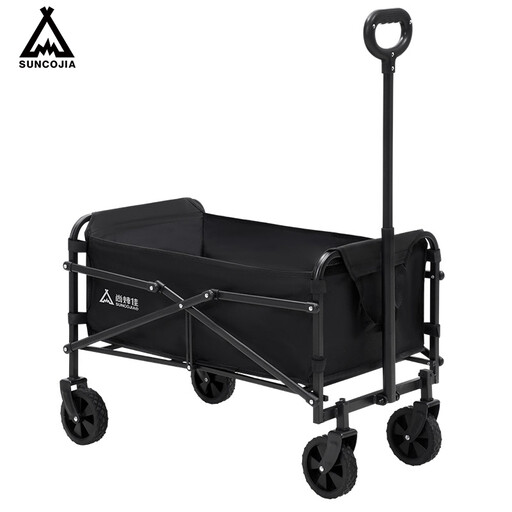
Why this model fits: Ideal for transporting groceries, toys, or picnic gear. With its lightweight design and simple folding mechanism, it's a hassle-free companion for daily errands and spontaneous trips to the park.
The cold-rolled iron frame provides a solid foundation for its 100 kg load capacity. The packed size is designed for easy storage in a car trunk or hallway.
Lightweight: At approx. 4.8 kg, it's easy to lift and store. 360° Swivel Wheels: Ensure high manoeuvrability on paved surfaces.
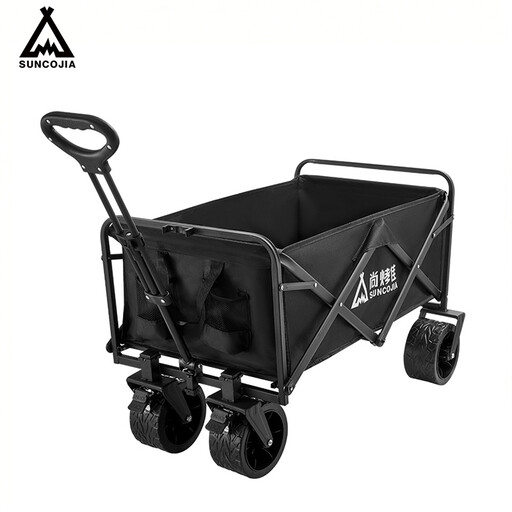
Why this model fits: Designed for use off the beaten path. Anyone who regularly camps, goes to the beach, or attends festivals needs a wagon that can handle difficult terrain.
The wide, off-road wheels prevent it from sinking into sand or mud. The carbon steel frame is designed for heavy loads and withstands the forces encountered on uneven terrain.
Large Cargo Volume: With 350 litres, it offers plenty of space for tents, coolers, and beach gear. All-Terrain Wheels: Wide, shock-absorbing wheels for a smooth ride on various surfaces.
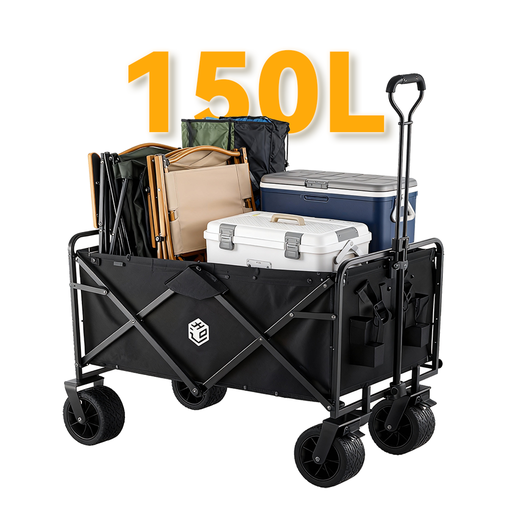
Why this model fits: For anyone who regularly transports heavy or bulky items—whether for gardening, a weekly grocery run for a large family, or hauling equipment. Here, stability and load capacity are the top priorities.
The reinforced carbon steel frame and thickened PP base plate are explicitly designed for heavy loads up to 260 kg. The robust wheels with dual brakes ensure control and safety with heavy cargo.
Very High Load Capacity: With a capacity of 260 kg, it's suitable for demanding transport tasks. Reinforced Construction: Provides the necessary stability to move heavy loads safely.
We've compiled a complete, up-to-date list of products that meet these strict selection criteria.
Most models have a removable fabric liner made of Oxford cloth. This can usually be cleaned with a damp cloth and mild soapy water. Let the fabric dry completely before folding the wagon again. The metal frame should also be wiped dry to prevent rust. Periodically check the screws on the wheels and joints and tighten them as needed.
Yes, wide tires distribute the weight over a larger surface area, preventing the wagon from sinking into the sand. A wagon with narrow wheels will be nearly impossible to move on a beach. For best results, the tires should be at least 7-10 cm wide and made of a flexible material like rubber or PU.
Most foldable wagons are designed purely as utility carts for objects and are not approved for transporting people. Transporting children can be a safety risk, as the wagons often lack necessary safety features like seat belts or a stable passenger compartment. Always check the manufacturer's specifications. If a model is not explicitly certified for child transport, you should refrain from using it for that purpose.