
Lieferung heute & morgen

Qualitätsgarantie

Willkommens-Angebote freischalten: KOSTENLOSE Lieferung | Bis zu 80 % RABATT | Kostenlose 30-Tage-JoyPlus-Testphase
App herunterladen
By Joybuy Product Recommendation Officer, July 28, 2026
A foldable wagon is a game-changer—whether for a family trip to the lake, hauling groceries, or as a handy assistant in the garden. But the market is crowded, and not every model lives up to its promises. Before you make a decision you'll later regret, it's crucial to understand the most common weak points that can quickly render a seemingly good purchase useless.
Many buyers focus on a low price or a large cargo capacity, overlooking critical design details. The result is often frustration and a bulky, useless device taking up space in the garage. We'll show you the three pitfalls to watch out for and how to find the right model for your needs.
A closer look at the details separates durable models from those that cause problems after just a few uses. Pay special attention to these three points:
To avoid the problems mentioned above, you should check three technical features before buying. These are the primary determinants of your foldable wagon's functionality and longevity.
The wheels are the most critical component for mobility. Their quality determines where you can use the wagon.
A wagon's stability is directly dependent on its frame. No compromises should be made here.
The cargo volume indicates how much fits into the wagon, but the quality of the container is also crucial.
Based on the criteria mentioned, we have identified a few models that represent a smart choice for specific user profiles.
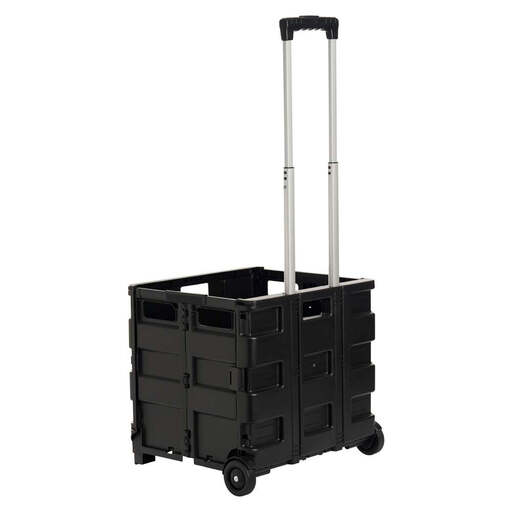
Why This Fits Their Persona: Ideal for weekly grocery runs or transporting toolboxes. This model is extremely compact and lightweight, making it perfect for urban life and storage in small apartments.
Instead of fragile fabric, this uses a sturdy plastic box that is robust and easy to clean. The wheels are designed for firm, flat surfaces and perform this function reliably.
Extremely small folded size (only 8 cm deep). Telescopic handle for an ergonomic posture. Low unladen weight of 2.65 kg.
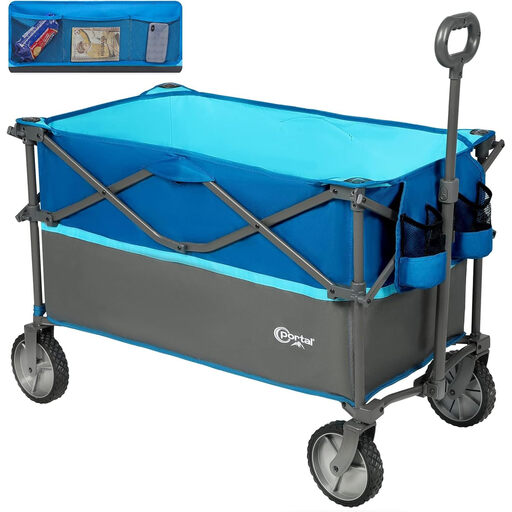
Why This Fits Their Persona: A classic all-rounder for transporting camping gear, beach essentials, or picnic baskets. The large volume and practical side pockets offer plenty of space for the whole family.
The robust steel frame and durable polyester fabric are designed for a high load of 120 kg. The wide wheels offer better performance on grass and forest paths than simple plastic rollers.
Large cargo volume (228 litres). No assembly required. Adjustable handle and practical drink holders.

Why This Fits Their Persona: For users who regularly transport heavy or bulky items, such as festival equipment, garden soil, or heavy tools. The enormous load capacity offers maximum safety and reliability.
The reinforced tubular steel frame is explicitly designed for a very high load capacity of 200 kg, avoiding the trap of unstable constructions. The dual front wheel brakes provide additional safety on slopes.
Extremely high load capacity of 200 kg. Front wheel brakes for a secure stance. Quick folding mechanism (in 3 seconds, according to the manufacturer).
We have compiled a complete, up-to-date list of products that fully meet these strict selection criteria and German safety regulations.
Most models are low-maintenance. Clean the fabric cover with a damp cloth and mild soap. The frame can also be wiped down with a damp cloth. It's important to let the wagon dry completely before folding and storing it to prevent rust on the frame and mould on the fabric. Regularly check that the screws on the wheels and joints are tight.
Two things are crucial for beach use: very wide wheels and a corrosion-resistant frame. Narrow wheels will immediately dig into the sand. Specifically look for models designated as a beach wagon that have off-road tyres. After use at the sea, you should rinse the wagon with fresh water to remove salt residue.
Not necessarily. A higher load capacity often comes with a more robust and therefore heavier frame. If you mainly use the wagon for light shopping and frequently need to lift it into your car, a lighter model with a lower load capacity (e.g., 50–75 kg) might be the more practical choice. Choose the load capacity that fits your actual needs, with a reasonable safety margin.