
Lieferung heute & morgen

Qualitätsgarantie
App herunterladen
Kategorien
A collapsible wagon is a mobile transport solution that combines a high load capacity with a compact packed size. This feature makes it a functional tool for a wide range of applications, from family outings and grocery hauling to outdoor activities like camping or festivals. The design aims to move heavy or bulky items with minimal effort and allow for space-saving storage when not in use.
Selecting the right model is based on an analysis of its technical specifications. The following criteria are relevant for making an informed decision.
The maximum load capacity, specified in kilograms (kg), defines the heaviest weight the wagon can safely carry. Models for everyday use often offer a capacity of 75 kg to 100 kg. For more demanding tasks, such as transporting camping equipment or heavy garden tools, versions with a load capacity of 200 kg or more are available. The cargo volume, measured in litres (L), describes the available storage space. A larger volume allows for the transport of more or bulkier items. Some manufacturers also specify a stackable capacity, which describes the volume when carrying a secured load that extends above the rim.
The folding mechanism is crucial for ease of use. Modern systems often allow the wagon to be collapsed in just a few steps, sometimes even with one hand. The resulting packed size (length x width x height) determines how and where the wagon can be stored—for example, in the boot of a small car, a storage closet, or a cellar. A small packed size is a key feature of a foldable wagon.
The design of the wheels affects the wagon's suitability for different surfaces.
The durability of a foldable hand cart depends significantly on the materials used.
Based on an analysis of technical specifications and practical utility, we present a few selected models here.
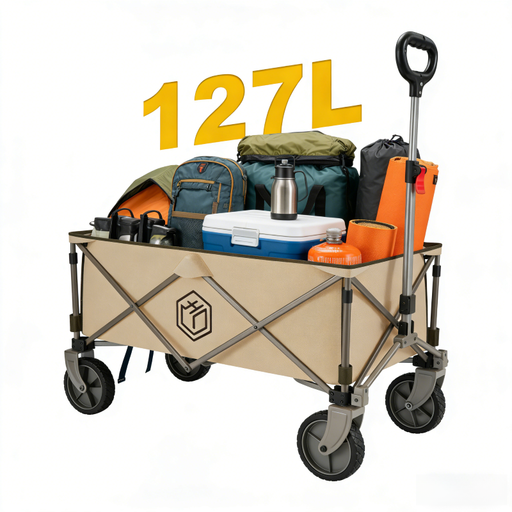
Why we recommend this product: This model stands out with an exceptionally high load capacity of 200 kg and a generous cargo volume of 127 litres. Its robust steel tube construction and 360° swivel wheels with a dual-brake system make it a high-performance solution for demanding transport tasks.
Pros:
Who it's for: Individuals and families who need a utility wagon for camping, moving, or transporting heavy loads. Its high capacity is also advantageous for mobile sales stands.
View Product: ochama Camping Wagon 127L
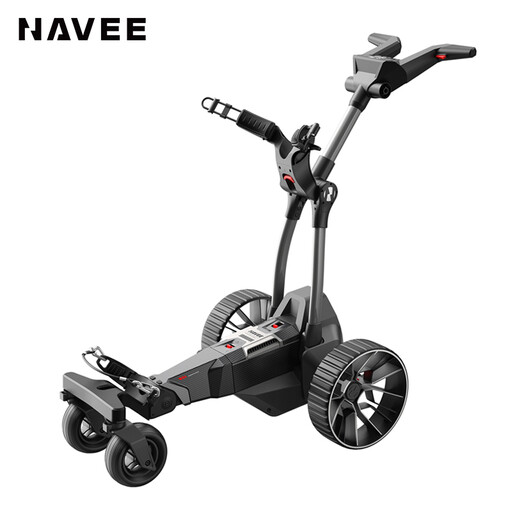
Why we recommend this product: The NAVEE Birdie 3 is a specialised, electric-powered trolley. Although primarily designed for golf, its technical features offer interesting applications beyond the course. Two motors with 240 W of peak power can handle inclines up to 25%, and the remote control allows for effortless transport.
Pros:
Who it's for: Users seeking a motorised and remote-controlled transport solution for specific purposes, such as on large properties, at events, or for comfortably moving equipment over long distances with inclines.
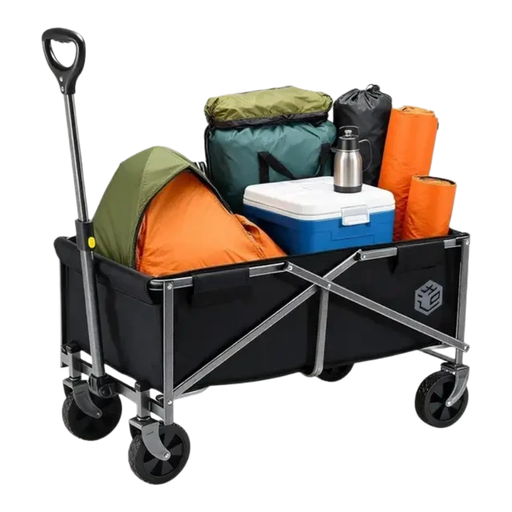
Why we recommend this product: This model is a compact and versatile solution for everyday use. With a load capacity of 100 kg and a volume of 75 litres, it is well-suited as a collapsible shopping cart or for picnics. The integrated folding mechanism allows for quick setup and takedown without any assembly.
Pros:
Who it's for: Users looking for a lightweight and straightforward transport solution for daily use, such as for large grocery runs, trips to the park, or moving garden tools.
View Product: ochama Camping Wagon 75L
If the models presented here do not exactly meet your requirements, a wide range of other utility carts with different specifications is available. You can find a larger selection of specialised carts in our Trolleys & Carts category.
1. How much weight can a collapsible wagon carry? The load capacity varies significantly between models. Compact wagons for everyday use are often rated for 75 kg to 100 kg. Heavy-duty models designed as a foldable hand cart for heavy loads can have a capacity of 200 kg or more. The exact specification can be found in the manufacturer's technical data and should not be exceeded to ensure structural integrity.
2. Which wheels are suitable for which surface? The choice of wheels depends on the primary place of use. For firm, flat surfaces like asphalt or tiles, narrow 360° swivel wheels are ideal as they offer maximum maneuverability. For soft ground like sand, gravel, or grass, wider tires are advantageous because they distribute the weight better and prevent sinking. Models with a combination of fixed rear wheels and swivelling front wheels offer a compromise between stability and maneuverability.
3. How do you clean and maintain a collapsible wagon? The fabric cover, usually made of polyester like 600D Oxford fabric, can typically be cleaned with a damp cloth and mild soap solution. It is important to let the fabric dry completely before folding and storing the wagon to prevent mould growth. The frame can also be wiped down with a damp cloth. Regularly checking the wheel axles for dirt and ensuring the brakes are functional contributes to longevity and safety.