
Lieferung heute & morgen

Qualitätsgarantie

Willkommens-Angebote freischalten: KOSTENLOSE Lieferung | Bis zu 80 % RABATT | Kostenlose 30-Tage-JoyPlus-Testphase
App herunterladen
A foldable wagon is a practical companion for family outings, hauling groceries, gardening, or as an essential Festival Trolley. The market is flooded with options, but not every model lives up to its promises. Before you make a decision, it's crucial to understand the common pitfalls that often only become apparent after purchase, leading to disappointment.
As your Joybuy Product Recommendation Officer, I'm here to help you separate the wheat from the chaff. We'll highlight the critical features that define a quality folding wagon and show you how to sidestep the most common purchasing traps.
Many models look sturdy at first glance but fail when faced with simple, real-world challenges. Pay close attention to these three points:
collapsible wagon must remain stable even when fully loaded and shouldn't give way at the first curb.To avoid a bad purchase, base your decision on objective technical features. The following three parameters are crucial for the durability and functionality of your wagon.
The wheels determine where and how effectively you can use your wagon.
beach wagon or on challenging terrain, wide, treaded rubber wheels are essential. They prevent sinking into soft ground and overcome obstacles more easily.wagon with brakes is an important safety feature. Parking brakes on at least two wheels prevent the wagon from rolling away on a slope or while loading and unloading.The stability of the entire wagon depends on the quality of its frame.
foldable hand cart should collapse and unfold in a few simple steps without any tools. Check that the mechanism locks securely when unfolded and has no wobbly joints. Integrated, assembly-free designs often have an advantage here.These two values define your wagon's transport capacity.
high-capacity wagon (e.g., 100 kg or more) is necessary. Make sure this rating applies to dynamic use.Based on the criteria mentioned, we have identified several models that represent a well-thought-out solution for specific user profiles.
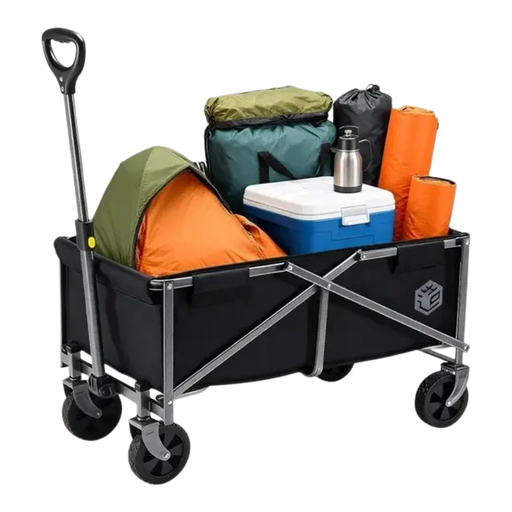
Why This Fits Their Persona: Ideal for weekly shopping, trips to the playground, or carrying picnic supplies. It's compact, quick to set up, and offers a solid set of features for everyday tasks.
The integrated, no-assembly-required design ensures a stable base structure, avoiding the pitfall of a wobbly frame. Its 360° swivel wheels are well-suited for its intended use on paved surfaces.
100 kg load capacity for heavy groceries. Folds in seconds for space-saving storage in a car boot or flat.
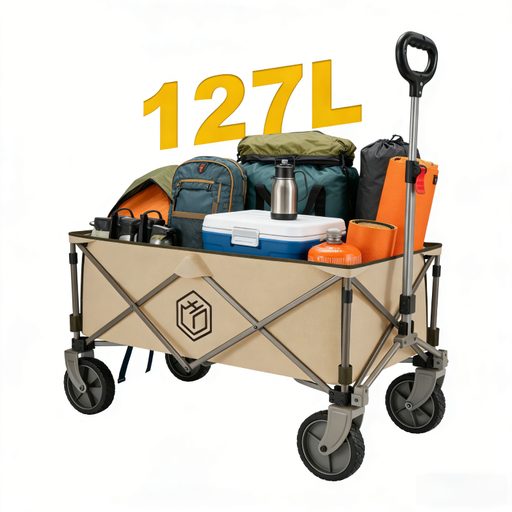
Why This Fits Their Persona: Perfect for campers and festival-goers who need to transport heavy gear like tents, chairs, and coolers over uneven terrain. Its large volume and high load capacity make it a reliable `collapsible transport cart`.
With a 200 kg load capacity and a robust tubular steel frame, this model counters the trap of misleading capacity claims. The construction is designed for transporting heavy goods.
High 200 kg load capacity and 127-litre volume for extensive gear. Dual brakes on the swivel wheels ensure safety on slopes.
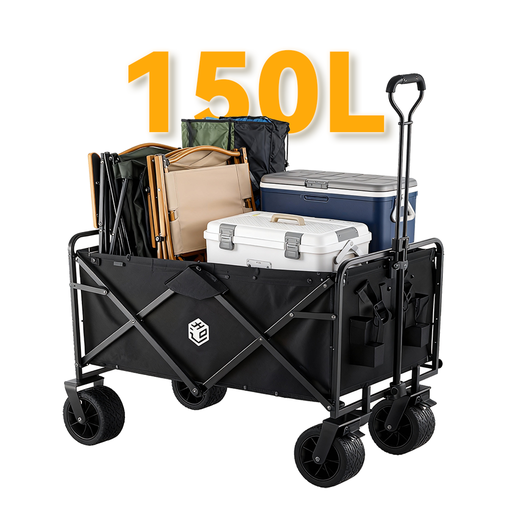
Why This Fits Their Persona: Designed for users who make no compromises. Ideal for beach holidays, heavy-duty gardening, or hauling equipment over muddy or sandy paths. A true `off-road wagon`.
The wide "tank track" wheels are specifically designed not to sink into soft ground—a direct solution to the unsuitable tyre trap. The reinforced carbon steel frame and 260 kg load capacity eliminate any doubts about its stability.
Special off-road wheels for maximum all-terrain capability. Extremely high 260 kg load capacity and a large 150L volume for the most demanding tasks.
We have compiled a complete, up-to-date list of products that fully meet these strict selection criteria and relevant safety regulations.
Most Oxford fabric covers can be cleaned with a damp cloth and a mild soap solution. Let the fabric dry completely before folding the wagon to prevent mould growth. Regularly check the wheels for dirt or trapped stones and inspect the frame's joints to ensure they are secure.
Yes, but only if it's designed for it. A true beach wagon needs very wide wheels, ideally made of rubber or soft PU, to maximise the surface area and prevent it from sinking into the sand. Narrow, hard plastic wheels are unsuitable for the beach.
The load capacity specifies the maximum weight (in kg) that the wagon can safely transport. The load volume describes the available storage space (in litres). A wagon with a large volume but low load capacity is only suitable for light, bulky items. For heavy loads like crates of drinks or soil, a high load capacity is the crucial criterion.