
Lieferung heute & morgen

Qualitätsgarantie

Willkommens-Angebote freischalten: KOSTENLOSE Lieferung | Bis zu 80 % RABATT | Kostenlose 30-Tage-JoyPlus-Testphase
App herunterladen
A foldable electric wheelchair can make everyday life easier when the model suits your body weight, living situation and intended use. For older people, adults with limited mobility and family members, motor power and range are not the only important factors. Weight, folded dimensions, battery transport and safety features determine whether the wheelchair remains genuinely practical in the boot of your car, at home or when travelling.
Figures such as “48 km” or “30+ miles” in product descriptions usually refer to specific test conditions. Hills, a higher user weight, low temperatures, frequent starts and uneven surfaces can reduce the actual range. Therefore, compare:
A foldable wheelchair with a lithium battery is convenient to transport, but clear information about the battery type and charging conditions is essential.
A lightweight electric wheelchair may seem considerably lighter without its battery than it is when ready for use. When lifting it into the boot, the net weight including the battery is therefore what matters. The folded dimensions must also fit your vehicle. Check the following before buying:
A model weighing 20 to 26 kg may still be manageable for some users, while a heavier model is more suitable for predominantly stationary use.
An airline-approved electric wheelchair is not automatically accepted on every route or by every airline. Important factors include the battery type, watt-hours, battery design and the requirements of the relevant airline. Ask for the battery specifications and written approval for transport. The term “aircraft-friendly” in a product description does not replace confirmation from the airline.
The stated maximum load capacity must be suitable for the user’s weight and should not be only marginally higher. Take clothing, luggage and, where applicable, a seat cushion into account. Seat width, seat depth and armrest height are equally important. A seat that is too narrow restricts freedom of movement, while one that is too wide can cause problems with doors and lifts.
Two motors rated at 250 watts each may be designed for level paths and moderate inclines. Motor power alone, however, says little about off-road capability. Also pay attention to:
An all-terrain electric wheelchair is not automatically suitable for every surface. Grass, sand, snow, mud and wet paths all present different challenges. The relevant traffic regulations also apply on public roads and paths. Read the operating instructions in full before your first journey.
An electromagnetic brake can slow the drive when you release the joystick. Check that this function is actually listed in the technical specifications and whether the wheelchair can be pushed when the system is switched off. An easily accessible joystick, a battery-level indicator and adjustable speed help ensure safe operation. Depending on how you intend to use it, a safety belt, anti-tip protection and puncture-resistant or puncture-proof tyres may also be important.
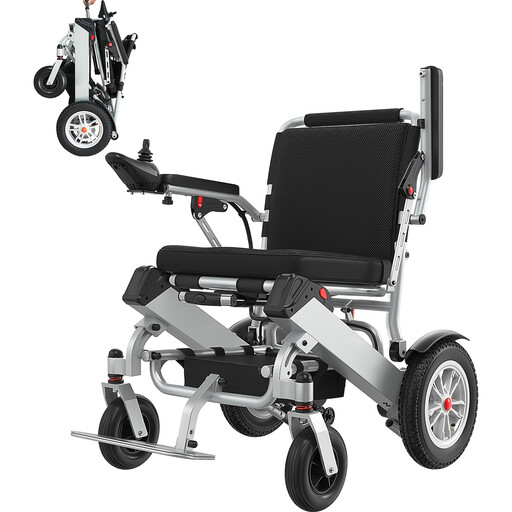
Why this product suits this profile: This model combines an aluminium frame with a net weight of 26 kg including the battery. Its stated load capacity of 120 kg and folding design make it suitable for users looking for an electric wheelchair for adults for use at home, on short journeys and for occasional car trips.
The product details specify the net weight including the battery, a maximum gradient of 9° and an obstacle height of 40 mm. This makes it easier to assess transport and usage limitations than relying on general lightweight-design claims.
Aluminium frame, 10-Ah lithium battery, two 250-watt motors and electromagnetic brake, according to the product details.
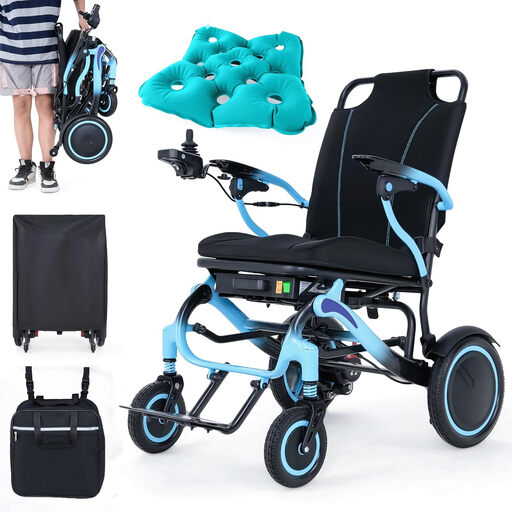
Why this product suits this profile: The product description states a weight of approximately 19 kg, two removable 12-Ah batteries, an LCD display and total motor power of 440 watts. This makes it an interesting option for travellers who load their wheelchair frequently and want to check the battery, speed and system information at a glance.
The batteries are removable according to the description, allowing the transport weight to be split. The stated range of over 30 miles should be treated as the manufacturer’s claim before purchase and should not automatically be expected in everyday use.
Two removable 12-Ah lithium batteries, LCD display, 360-degree joystick and electromagnetic brake, according to the product description. The frame material should be checked again before purchase.
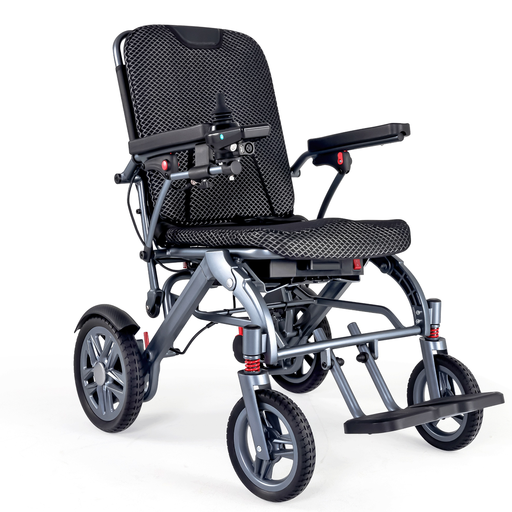
Why this product suits this profile: According to the product description, this model has two 12-Ah batteries, two 250-watt motors, a stated range of up to 48 km and a load capacity of 120 kg. It is aimed at users planning outings, longer journeys and changing surfaces.
The description lists an electromagnetic brake, anti-tip protection and puncture-proof tyres. However, the advertised airline approval must still be confirmed with the airline before every trip and checked against the battery specification.
Two motors with a combined output of 500 watts, two removable lithium batteries and a foldable design, according to the supplier’s information. Accessories listed include a backpack, dust bag and seat cushion.
We have put together a complete, regularly updated list of products that fully meet these strict selection criteria and the safety regulations applicable in the EU.
Only charge the battery with the intended charger in a dry, well-ventilated place. Follow the charging time given in the operating instructions and do not leave the battery or charger unattended in the immediate vicinity of flammable materials. For removable lithium batteries, follow the manufacturer’s instructions before transport and extended storage.
Its service life depends on charging cycles, load, storage, tyres, motors and maintenance. A blanket figure in years would not be reliable. Look for replaceable batteries, readily available wear parts and clear service terms. The range may decrease as the battery becomes worn.
In addition to the purchase price, there are costs for electricity, batteries, tyres, brakes, the charger and potential repairs. The electricity used per charge is usually lower than ongoing vehicle costs, but varies according to battery capacity and usage. When travelling, you may also need to meet the airline’s organisational requirements and arrange suitable transport.