
Lieferung heute & morgen

Qualitätsgarantie

Willkommens-Angebote freischalten: KOSTENLOSE Lieferung | Bis zu 80 % RABATT | Kostenlose 30-Tage-JoyPlus-Testphase
App herunterladen
A foldable rollator for seniors should provide support in everyday life without being too heavy, wide or complicated to use. However, product images and advertising claims do not always show whether a walking aid is genuinely suitable for your height, living situation and mobility needs. Three issues in particular often lead to unsuitable purchases: incorrect dimensions, an overstated weight capacity and a folding mechanism that is impractical when out and about.
If you are looking for a lightweight rollator, a rollator with a seat or a foldable walking aid for use after an operation, you should therefore compare the technical specifications rather than focusing solely on weight or price.
A low product weight makes it easier to lift the rollator into the boot or store it in the hallway. At the same time, a very lightweight frame may be less suitable for certain applications if greater load-bearing capacity or additional stability is needed. The key consideration is the combination of product weight, frame material, maximum load and intended use.
A rollator can be foldable and still not fit into every boot, lift or narrow hallway. Check the folded dimensions as well as the width when fully open. For homes with narrow doorways, a narrow rollator may be more practical than a wider model with a larger seat.
A rollator with a seat is suitable for short breaks, but it does not automatically replace a wheelchair. A shopping basket or bag also has its own load limit. If the seat, basket and frame are all heavily loaded at the same time, the stated maximum total load must not be exceeded.
A height-adjustable rollator should be set so that the handles are easy to reach while you are standing upright. As a practical guide, your arms should hang loosely by your sides while your elbows remain slightly bent. The precise setting depends on your height, footwear and individual use.
Pay attention to:
After an operation or in cases of significant unsteadiness when walking, the settings should be agreed with a medical or care professional. A rollator is a mobile walking aid for seniors, but it is not a substitute for personalised mobility advice.
Depending on the product, the stated load capacity may refer to the user’s body weight or the total load from the user, luggage and accessories. Read the product description carefully. Aluminium is often associated with a lower product weight. Carbon steel may result in a heavier frame on certain models.
Important details include:
Larger front wheels can make it easier to travel over small uneven surfaces, while smaller wheels are often designed for indoor use. This does not mean that a model is automatically suitable for every type of surface. Check whether the product description includes details about wheel size, brake type and intended use.
For everyday use, you should also check:
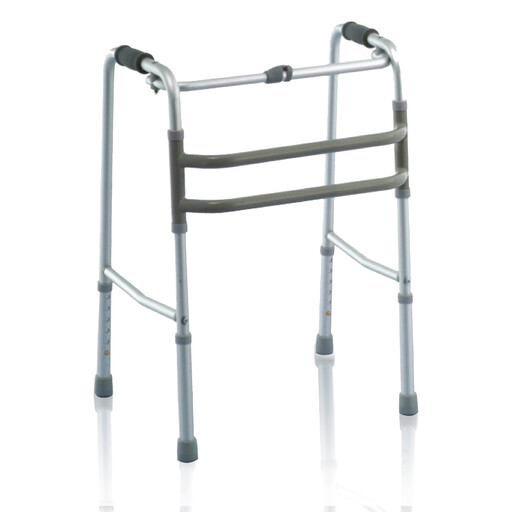
Why this product suits this profile: This height-adjustable, foldable walker is a practical choice for anyone looking for a compact walking aid for use at home, while shopping or on short trips.
The product description specifies a one-hand folding mechanism, several height settings and non-slip handles. This makes key everyday-use details clear before purchase.
Aluminium frame, height-adjustable handles and a foldable design for transport and storage.
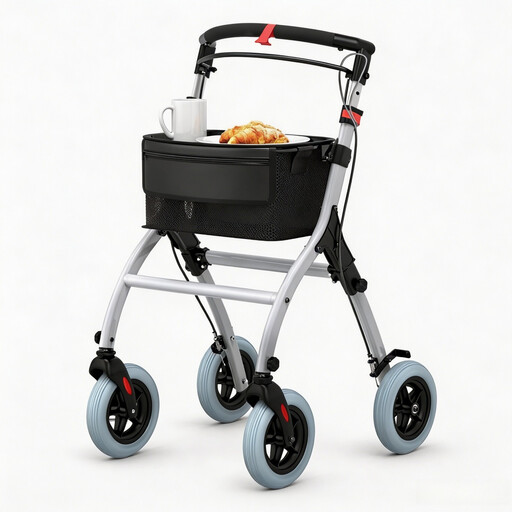
Why this product suits this profile: The five-position forearm support adjustment and stated product weight of 7.8 kg make it easier to assess for regular indoor use.
The folded dimensions of 55 × 32 cm and the height range of 90 to 102.5 cm help you assess storage space and posture.
Aluminium alloy, 8-inch PU wheels and height-adjustable forearm supports.
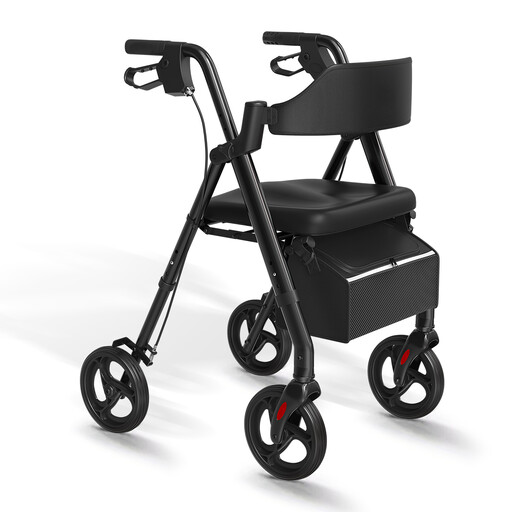
Why this product suits this profile: For longer journeys and breaks while out and about, this model combines a seat with a shopping basket and five-position handle height adjustment.
The specifications state separate limits: a total load capacity of 150 kg and 10 kg for the shopping basket. These limits should be observed during use.
Seat, basket, front and rear folding, and a stated product weight of 9.35 kg.
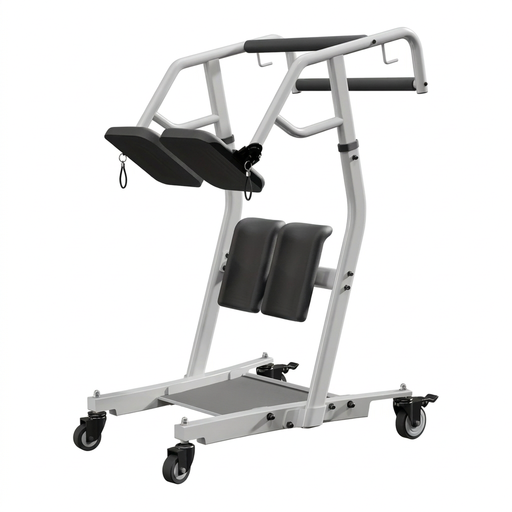
Why this product suits this profile: This transfer aid is designed for situations where more support is needed when standing up and transferring than a traditional rollator can provide.
The product data indicates a net weight of 30 kg, a load capacity of 180 kg, lockable rear wheels and a 180°-rotating seat. This makes it easier to assess the product’s specific intended use.
Steel construction, foldable seat base, two lockable rear wheels and a stated load capacity of 180 kg.
We have put together a complete, regularly updated list of products that fully meet these strict selection criteria and the safety regulations applicable in the EU.
Before using the rollator for the first time, check all screws, brake cables, wheels and locking mechanisms. Unfold the rollator fully and make sure that the frame is securely locked into place. The brakes should initially be tested while the rollator is stationary.
Also bear the following in mind:
A transfer chair for seniors is not functionally equivalent to a traditional rollator. If you have limited ability to stand or are recovering from a procedure, discuss the most suitable type of mobility aid with your healthcare practice or care service.
Stand upright behind the rollator and let your arms hang loosely. The handles should be approximately level with your wrists, with your elbows slightly bent. Then check that you can reach the brake handles comfortably. For forearm supports, follow the instructions for the specific model.
Its service life depends on the load, surfaces, maintenance and storage conditions. Check the wheels, brakes, folding joints and handle fittings regularly. A damp rollator should be dried completely and then stored in a dry, well-ventilated place away from heat sources.
In addition to the purchase price, you may incur costs for wear parts such as wheels, brake pads or handles. The amount depends on the model and how intensively it is used. Before buying, it is worth checking whether replacement parts and maintenance instructions are available.