Documenting folded paper art
If you want the whole figure to fit in the frame from repeatable angles on a small table, suitable framing and a stable setup matter more than extreme magnification. Nikon recommends using a tripod for small subjects.


For full-frame shots on a small table, a mirrorless camera with a standard zoom could be a good choice, provided the framing works from the available camera position. For tiny folded details, you’ll also need to consider the close-focusing capabilities of the specific lens and whether there’s room for lighting. A compact camera such as the OM SYSTEM Tough TG-7 offers a microscope mode without changing lenses, according to OM SYSTEM, while a suitable macro lens gives you more flexibility when choosing a lens.
If you want the whole figure to fit in the frame from repeatable angles on a small table, suitable framing and a stable setup matter more than extreme magnification. Nikon recommends using a tripod for small subjects.
If you want to capture tiny edges or paper textures in close-up, consider the lens’s close-focusing ability alongside the space available for lighting. Sony Germany explains the difference between working distance and minimum focus distance.
For folds with several layers of depth, a stable camera position and focus bracketing may be useful. Canon Germany describes focus bracketing and in-camera depth-of-field compositing for the EOS R50.
A good fit if: You’ll mainly be photographing the whole figure and want a range of framing options. The Canon EOS R50 and Nikon Z50II are both available as kits with a standard zoom.
Consider: A standard zoom isn’t automatically a macro lens. Canon gives the RF-S 18–45 mm a maximum magnification of 0.16× at 45 mm when using autofocus.
A good fit if: You want to capture small details without changing lenses. OM SYSTEM states that the Tough TG-7 can focus from 1 cm in microscope mode.
Consider: At very close range, the camera may cast a shadow over your subject. The LG-1 light guide is specifically included in the TG-7 Micro Adventure Kit; check what comes with the specific package you’re buying.
A good fit if: Tiny paper textures are your main focus. Compare the magnification and working distance of the specific lens that’s compatible with your camera.
Consider: The camera body and lens need to be compatible. For sharpness across the whole subject when photographing still objects, using a tripod and focus bracketing may mean taking and processing extra shots.
| Buying criterion | What to check | Who should consider this? |
|---|---|---|
| Fitting the whole figure on a small table | Focal length range and framing from your intended camera position; a stable setup. | If you want to show the whole folded figure on a small table, getting the framing right is key. Around 33% of consumers prioritise an overall view. |
| Sharpness across several layers of folds | Aperture control and, if needed, focus bracketing; a steady setup and the option to combine the shots. | For three-dimensional folds, you’ll want the sharpness to capture both the front and back clearly. Around 25% of consumers prioritise sharpness throughout. |
| Small folded details | Magnification and working distance of the specific lens or close-up mode; space for light from the side. | If you want tiny edges to appear large in the frame, consider magnification and room for lighting together. Around 25% of consumers put folded details first. |
| Lighting and paper surfaces | Room for an adjustable light and a simple background; check what’s included in the accessory package. | When photographing paper surfaces and folded edges, a controllable tabletop setup matters. Around 17% of consumers prioritise lighting and how the surfaces look. |
Minimum focus distance, working distance and magnification describe different things. A camera may be able to focus close up without making a detail appear particularly large in the frame.
Compare the magnification and working distance of the exact lens you plan to use.
If the camera is very close to the paper, you may have little room to light the edges from the side.
Try the intended camera position with side lighting, and check which accessories are included in the specific package.
A voluntary guarantee does not replace your statutory rights against the seller if a product is faulty.
Keep your proof of purchase and contact the seller first if there’s a fault.
The EOS R50 with the RF-S 18–45 mm is a kit for full-frame shots. For greater magnification, another compatible lens may be worth considering.
The Tough TG-7 is a compact camera with a microscope mode for close-ups without changing lenses.
The Z50II kit with the Z DX 16–50 mm is a standard zoom kit for a range of full-frame shots.
Sony’s information on macro lenses can help you compare the working distance and close-up capabilities of specific lenses.
Joybuy camera options to help you get started when choosing a camera for photographing folded paper art on a table.
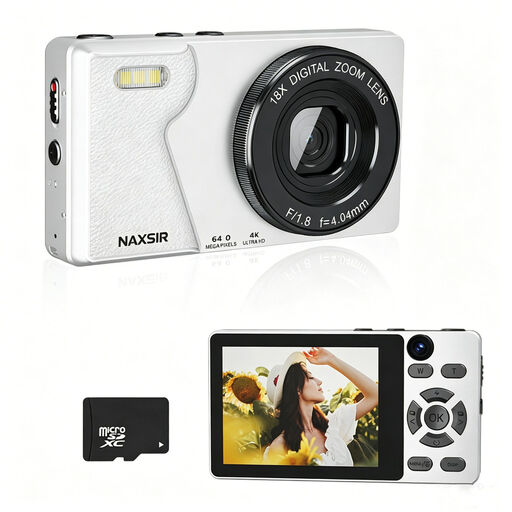 No image available
If you’re considering this camera for paper art, check whether it can capture the details you want at a suitable size from your table setup.
Features listed in the product title: 64 MP photo resolution, 18× digital zoom and autofocus.
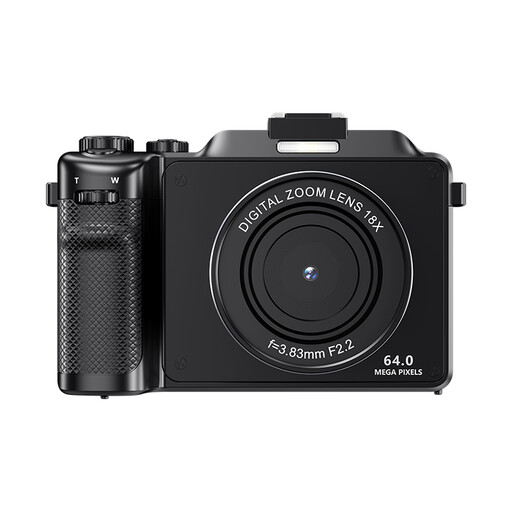 No image available
If you’re considering this camera for folded paper art, pay particular attention to its close-up capabilities and working distance for your tabletop setup.
Features listed in the product title: 4K, 64 MP, 18× zoom, image stabilisation, autofocus and flash.
No. For a whole figure, getting the framing right is the first thing to consider. If you want small folds to appear large in the frame, check the magnification of the specific lens; minimum focus distance alone isn’t enough.
Keep the camera steady and try a simple background with an adjustable light source. Nikon recommends a tripod for small subjects and describes straightforward ways to manage lighting and choose a background.
Depending on your subject, a tripod, adjustable light or additional macro lens may be useful. Check what comes with the specific product: the Canon EOS R50 kit includes a standard zoom, while OM SYSTEM specifically lists the LG-1 light guide as part of the separate TG-7 Micro Adventure Kit.
Contact the seller. The Verbraucherzentrale states that the statutory warranty period is two years from purchase or delivery, and distinguishes this from a voluntary manufacturer’s guarantee.
This depends, among other things, on whether the design is protected and how you intend to use it. Under § 2 UrhG, works of applied art and designs may be protected if they are personal intellectual creations; § 72 UrhG protects photographs. If someone else created the design, check that you have the necessary rights before publishing it.