
Lieferung heute & morgen

Qualitätsgarantie

Willkommens-Angebote freischalten: KOSTENLOSE Lieferung | Bis zu 80 % RABATT | Kostenlose 30-Tage-JoyPlus-Testphase
App herunterladen
Whether for the "last mile" from the station to the office, as a space-saving solution in a city apartment, or as a flexible companion in a camper van – a folding bike offers mobility exactly when you need it. But the market is diverse, and choosing the right model depends heavily on your individual needs. This guide will help you understand the technical features and make an informed decision that fits your lifestyle. We will outline objective criteria and present a selection of models for various use cases.
Before you decide on a model, three key aspects should be considered: wheel size, frame material, and the type of gearing system. These factors significantly determine the ride quality, weight, and maintenance requirements of your future folding bike.
Wheel size is a crucial trade-off between compactness and riding comfort.
The frame material influences weight, riding comfort, and durability.
A folding bike with gears increases flexibility in urban environments and on tours with gentle inclines.
Based on the criteria above, we have compiled a selection of folding bikes that cater to different needs.
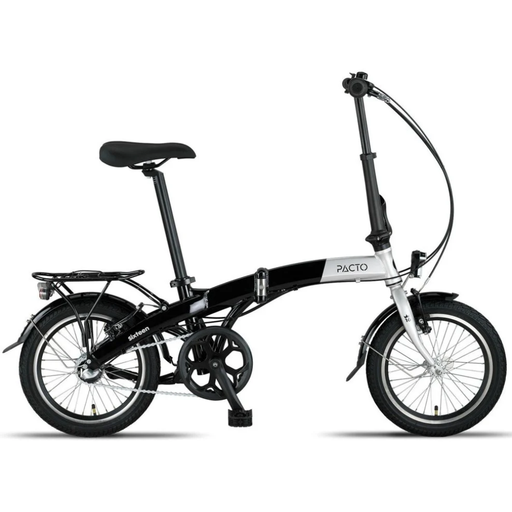
Why It Stands Out: The Pacto Sixteen is consistently designed for maximum portability and low weight. The aluminium frame and 16-inch wheels allow for an extremely compact folded size and a net weight of just 12.0 kg.
Objective Specifications:
Who Is It For? This model is the top choice for the folding bike for commuters who rely on multimodal transport daily. Anyone who frequently needs to carry their bike, store it on crowded trains, or take it on a boat or in a camper van will benefit from its exceptional compactness and easy handling.
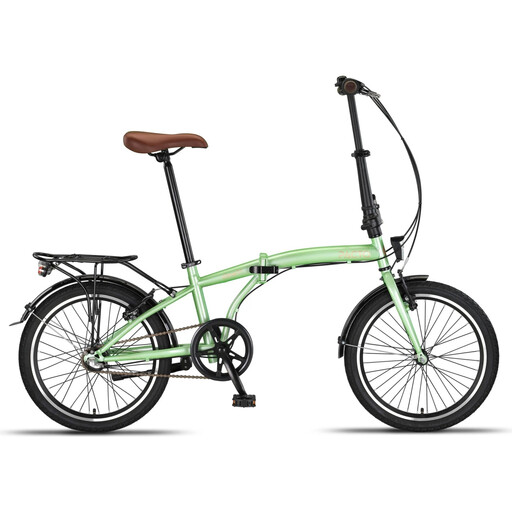
Why It Stands Out: The PACTO ELEVEN combines the comfort of a Dutch-style bike with the functionality of a folding bike. Its core feature is the low-maintenance Shimano Nexus 3-speed internal gear hub, which ensures reliable shifting even in stop-and-go traffic. The step-through frame makes mounting and dismounting easy.
Objective Specifications:
Who Is It For? Ideal for city dwellers looking for a comfortable and straightforward urban folding bike for the daily commute, shopping trips, or relaxed rides in the park. The internal gear hub and easy-mount frame appeal to users who value reliability and low maintenance.
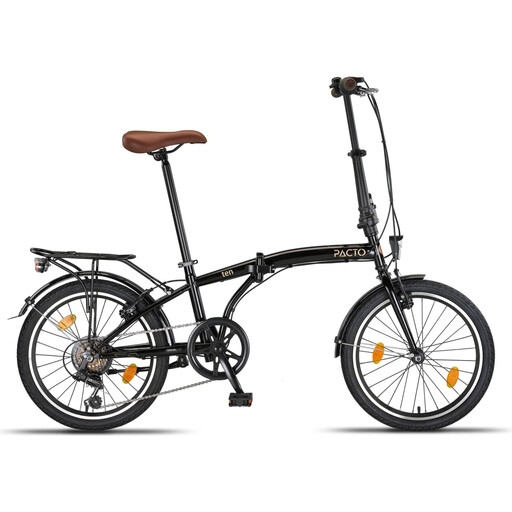
Why It Stands Out: The PACTO TEN is a versatile all-rounder. Equipped with a Shimano 6-speed derailleur system, it offers a wider gear range than the ELEVEN model, allowing it to confidently handle bridges and more demanding urban topographies. The robust steel frame ensures a pleasant ride.
Objective Specifications:
Who Is It For? This folding bike is aimed at everyday and leisure riders who need more flexibility in their gearing. Anyone living in a hilly city or wanting to use their bike for longer weekend excursions will find a reliable and adaptable companion here.
The models presented cover common requirement profiles. However, if you are looking for specific components or accessories to further customise your bike, it's worth taking a look at our broader selection. In our e-bike parts category, you will find a range of components that can help you optimise your riding experience.
A lightweight folding bike designed for frequent carrying typically weighs between 11 and 13 kg. Such models usually have an aluminium frame and smaller 16-inch wheels. Fully equipped models with steel frames and 20-inch wheels can weigh 15 kg or more, but they often offer greater riding comfort.
Folding bikes are primarily designed for short to medium distances in urban areas. However, models with 20-inch wheels and a good gearing system can easily handle tours of 20 to 30 kilometres. For ambitious long-distance rides, classic touring bikes are often the more comfortable choice due to their geometry and larger wheels.
Yes, that is one of their biggest advantages. Thanks to their compact folded size, most folding bikes fit easily into the boot of a small car or the storage compartments of a camper. They are an excellent solution for travellers with a camper van and boat. It is still advisable to compare the exact folded dimensions (length x height x width) of the desired model with the available storage space.