
Lieferung heute & morgen

Qualitätsgarantie

Willkommens-Angebote freischalten: KOSTENLOSE Lieferung | Bis zu 80 % RABATT | Kostenlose 30-Tage-JoyPlus-Testphase
App herunterladen
A folding camping chair needs to meet several requirements at once: it should take up little space when transported, support enough weight, be quick to set up and remain comfortable even after extended use. In practice, however, some common marketing claims can lead to the wrong purchase. A large seat, for example, does not automatically mean a sturdy frame, and fabric that looks weather-resistant is not necessarily suitable for prolonged exposure to rain.
This guide explains which details really matter when buying a folding camping chair, and which portable camping chair is best suited to different situations.
The stated maximum static load usually refers to an even, steady load. Sitting down, leaning to one side or tipping the chair can generate much greater forces. So a sturdy camping chair should not only have a suitable weight capacity; it should also stand fully on firm, level ground.
It’s also important not to exceed the manufacturer’s stated limit and to unfold the chair fully. Uneven ground can affect stability, particularly for a fishing chair or beach chair.
Oxford fabric, mesh and coated metal frames can be suitable for outdoor use. That doesn’t mean a folding chair should be left out in the rain or direct sunlight for long periods. Moisture can damage metal parts, while UV rays and damp can wear down the fabric over time.
After use, clean and dry the seat and frame, then store the chair somewhere dry. Care is particularly important with folding models, as dirt and moisture can collect in the joints and folds.
A wide seat is practical, but it’s only one part of sitting comfortably. Also consider:
Check the maximum static load and compare it with the intended user’s weight. A carbon steel or steel frame can provide a solid foundation, but tube thickness, joints, hinges and feet also matter. Rubberised feet can provide better grip on firm surfaces, but they’re no substitute for a level spot.
A compact outdoor chair should fit in your boot, motorhome or camping gear storage. Packed size is often more useful than the chair’s dimensions when open. A chair with a wide seat can still be easy to transport if it folds down compactly.
For longer walks, a chair weighing around two to three kilograms is often easier to manage than a much heavier reclining chair. A carry bag makes it easier to transport and protects the folded chair from dirt.
Oxford fabric is often used for seats because it can be abrasion-resistant and easy to care for. Mesh offers a more breathable seat and can dry faster after contact with water. Even so, check the manufacturer’s specific guidance and don’t assume the chair is permanently waterproof.
A folding chair with a cup holder is handy for picnics, festivals or the garden. If you fish regularly, a side pocket for small essentials is useful too. For a camping chair set, check whether each chair comes with its own carry bag.
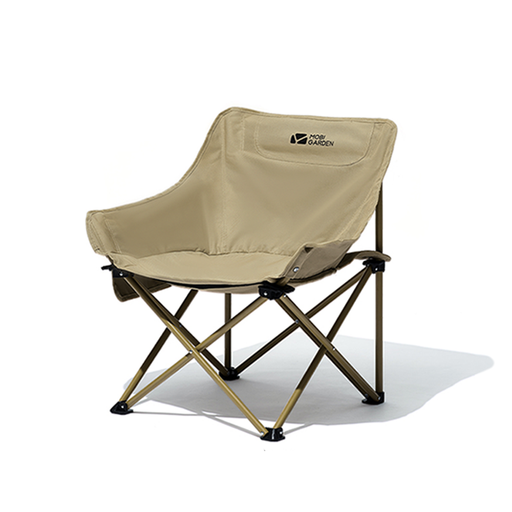
Why it suits this user: This compact model is suited to camping, picnics and occasional fishing trips. It weighs around 2,35 kg and folds down to a packed size of approximately 16 × 16 × 70 cm.
Details on weight, packed size and static load capacity of around 100 kg make it easier to choose than a purely promotional description of comfort.
Wide 64,5 cm seat, side pocket, Oxford fabric and X-shaped folding frame.
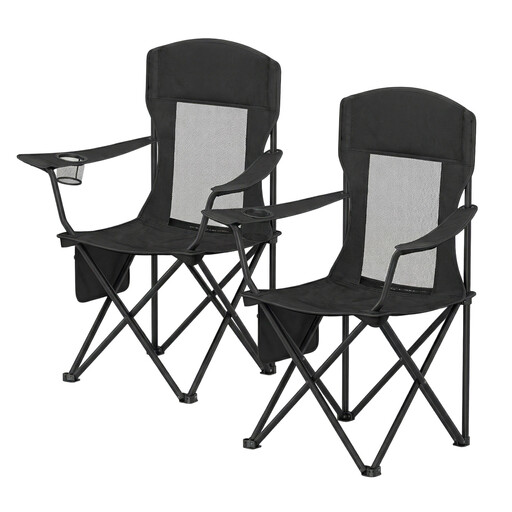
Why it suits this user: These two chairs with high backrests are ideal for couples, families or sharing in the garden, at the beach or on a camping trip.
The product details state a maximum static load of 150 kg per chair and dimensions of 51,5 × 86,5 × 97 cm.
Breathable mesh, adjustable armrests, cup holders, organiser pockets and two carry bags.
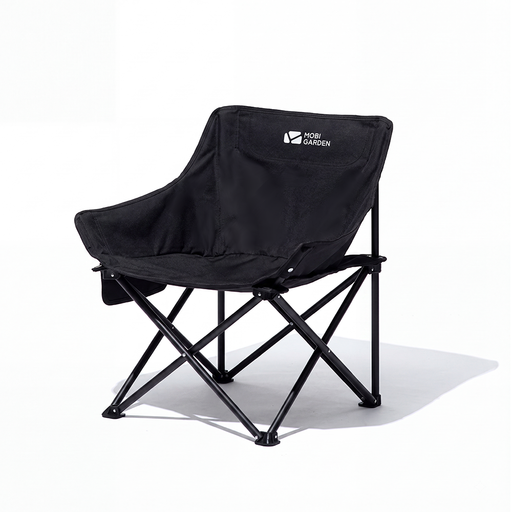
Why it suits this user: The black version is designed for regular fishing trips, camping or picnics, combining a wide seat with a relatively compact packed size.
The care and safety instructions specifically advise using the chair on level ground, unfolding it fully, drying it after rain and observing the load limit of around 100 kg.
Corrosion-resistant coated carbon steel frame, padded Oxford fabric and side pocket.
We’ve put together a complete, regularly updated list of products that meet these strict selection criteria and the safety regulations in force in the EU.
To help your folding camping chair stay in good condition for as long as possible, follow these tips:
Place it on level ground, unfold it fully and check that all the feet are resting securely on the ground. Only then should you sit on it. On uneven ground, moving to a different spot may be safer.
Its lifespan depends on the load, how often it’s folded, how it’s stored and the weather conditions. Keeping it somewhere dry, cleaning it regularly and staying within the weight limit all help reduce unnecessary wear. Prolonged exposure to sun and rain, as well as damp storage, can put extra strain on the frame and fabric.
There are usually no direct running costs. However, you may need to factor in care, replacement or carry bags and, where necessary, spare parts. A model with a compact packed size may also be more convenient to transport, as it takes up less storage space.