
Lieferung heute & morgen

Qualitätsgarantie

Willkommens-Angebote freischalten: KOSTENLOSE Lieferung | Bis zu 80 % RABATT | Kostenlose 30-Tage-JoyPlus-Testphase
App herunterladen
A folding camping chair should be quick to set up, take up minimal storage space and stay reliably stable when you sit down. In practice, however, certain buying decisions can lead to unnecessary costs: an especially compact pack size may come with a narrow seat, and a low weight with a lower load limit. Likewise, material descriptions such as "hard-wearing" or "outdoor fabric" tell you little without concrete data.
This buying guide shows which specifications matter when comparing chairs, and which model suits camping, trekking, fishing or picnicking.
A compact transport size is handy for a rucksack or the boot. What really matters, though, is how that size affects the seat itself. A narrow ultra-light camping chair may be fine for short breaks while trekking, but for longer periods of sitting, a wider seat is far more comfortable.
So pay attention to:
A stated static load capacity usually refers to an evenly distributed load under controlled conditions. It does not automatically mean the chair is suitable for dynamic movements, leaning sideways or uneven ground.
With a camping chair with a high load capacity, you should therefore also look at the frame construction, the feet and the usage instructions. The chair must be fully unfolded, and all feet should rest simultaneously on firm, level ground.
"Oxford fabric" describes a type of weave, but not the actual quality or durability on its own. What is far more telling is the combination of material, workmanship and care instructions. A camping chair made from Oxford fabric should be cleaned of sand, mud and moisture after use, and dried thoroughly.
A metal frame is not automatically suitable for prolonged exposure to dampness either. With coated steel tubes, a multi-layer anti-corrosion coating can make care easier, but it does not replace dry storage.
A steel frame gives many camping chairs a higher own weight and can be suitable for stationary camping, picnics or fishing. When you are carrying it over longer distances, that weight becomes much more noticeable.
A camping chair with an aluminium frame is usually designed to keep its own weight low. For trekking and backpacking, the pack size and folding mechanism are also important. When looking at an aluminium chair, check the stated static load capacity and the design of the feet, rather than just relying on the term "aviation-grade aluminium".
An X-shaped folding mechanism or a quick-fold construction can make set-up simpler. Even so, the chair should be fully opened, locked into place or correctly tensioned before you use it. Also make sure the joints stay free of sand and dirt.
A portable outdoor chair with a simple mechanism is especially useful if it is moved frequently between the car, the campsite and the picnic spot. For anglers, a folding fishing chair with a storage compartment can be more practical than a pure trekking chair.
A wide seat of around 64.5 centimetres offers more room than a compact seat of roughly 51 centimetres in width. A U-shaped backrest can support the body differently to a straight backrest, although no medical benefit should be inferred from this.
A side pocket is suitable for a smartphone, magazine or a small water bottle. It should not be loaded with heavy items, as lateral loads can affect the chair's stability.
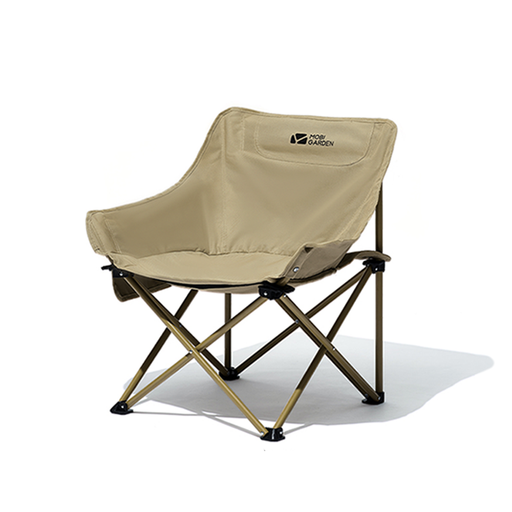
Why this product fits the profile: This moon chair combines a wide seat with a straightforward set-up. It is ideal for camping, picnics and occasional fishing when a small pack size matters more than minimal weight.
The seat width of 64.5 cm and the stated dimensions make your choice clearer than relying on vague comfort promises.
Oxford fabric, coated carbon steel frame, approx. 2.35 kg weight and a stated static load capacity of approx. 100 kg.
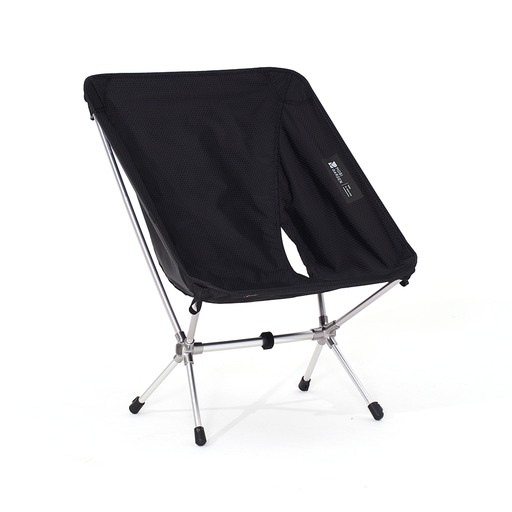
Why this product fits the profile: When trekking and backpacking, every gram counts. This model is designed for users who want to combine a small transport size with a higher stated load limit.
The weight of approx. 765 g and the pack size of approx. 11 × 11 × 36 cm are clearly stated, making comparisons easy.
Aluminium frame, Oxford fabric, triangular structure, quick-fold mechanism and a stated static load capacity of approx. 140 kg.
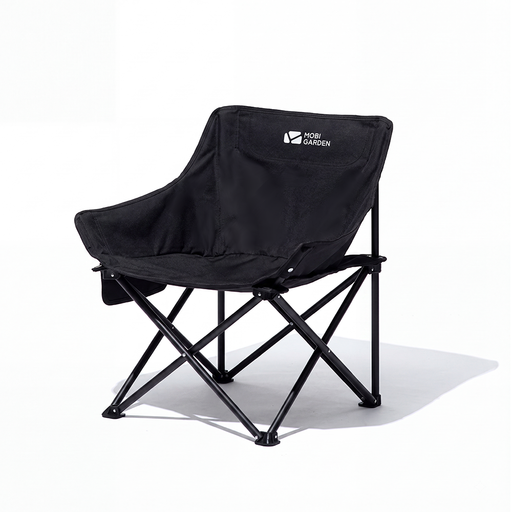
Why this product fits the profile: The wide seat and integrated side pocket make it ideal for long sessions fishing, camping or enjoying a picnic.
The X-shaped folding structure and the stated care instructions show that set-up and storage are part of regular use.
64.5 cm seat width, approx. 2.35 kg net weight, padded Oxford fabric and a side pocket for small items.
To keep a folding picnic chair usable for longer, clean it of dust, grass, mud and insects after every outing. According to the product information, a damp cloth is sufficient; machine washing and harsh cleaning agents are not recommended.
Also bear in mind:
We have put together a full, regularly updated list of products that meet these strict selection criteria and all applicable EU safety regulations.
Models with an X-shaped folding structure or a quick-fold mechanism are generally designed for a short set-up time. The frame must be fully opened before you sit down. Check that all feet touch the ground at the same time and that no joints are blocked.
The lifespan depends on the load, the ground, the weather and how well it is cared for. Regular drying, dry storage and staying within the static load limit reduce avoidable material stress. Oxford fabric and coated frames should still be checked regularly for tears, loose connections and corrosion.
For trekking, backpacking and hiking, a weight of around 765 g can be a real advantage. For longer periods of sitting during stationary camping or fishing, however, a wider seat, a side pocket and a higher own weight may be more important. So the deciding factor is the intended use, not just the lowest weight.